





Victorian Cylinder Desk
When you search for a victorian cylinder desk, you are looking at a masterclass in concealing private correspondence behind a curving wooden shutter.
Victorian Cylinder Desk
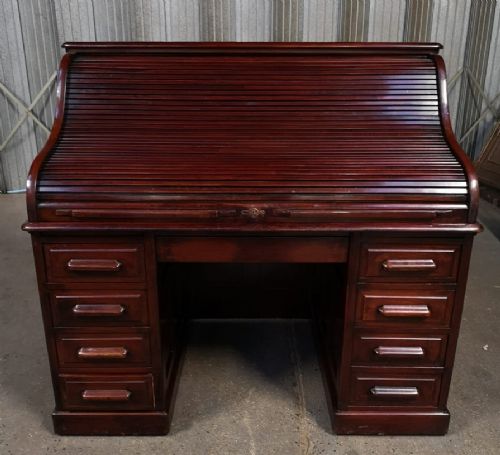
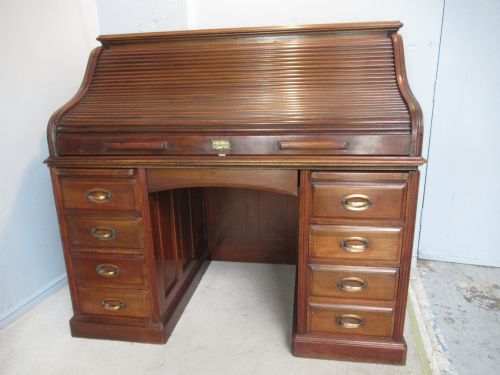
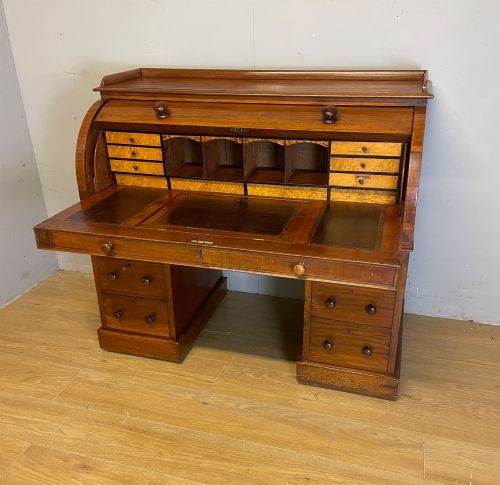
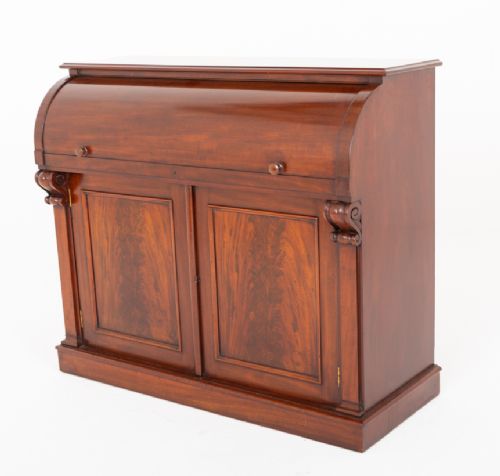
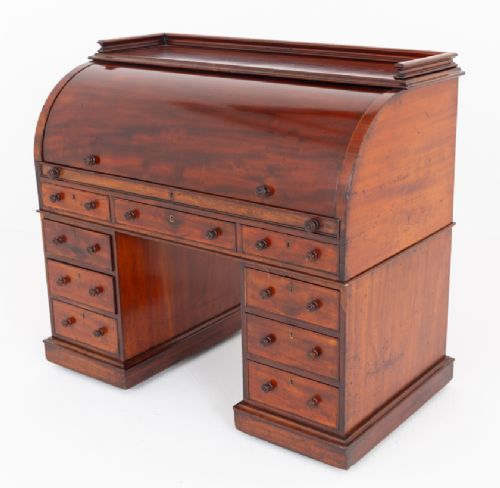
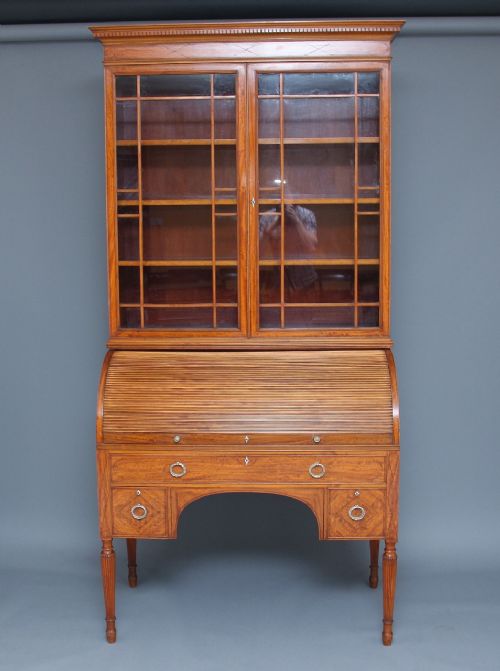
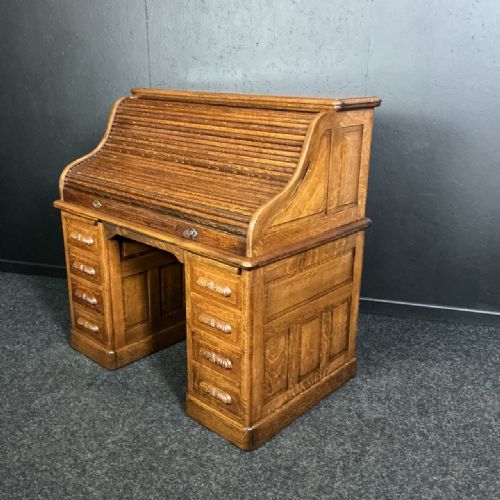
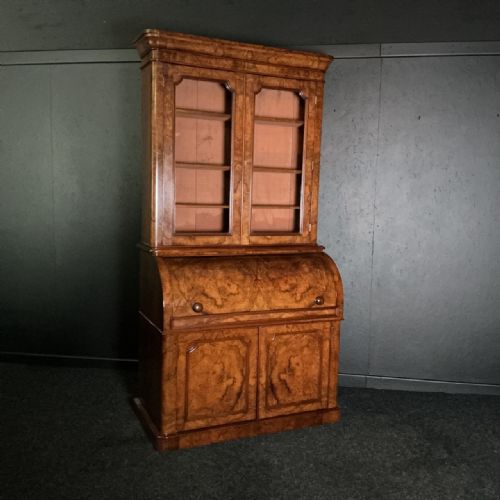
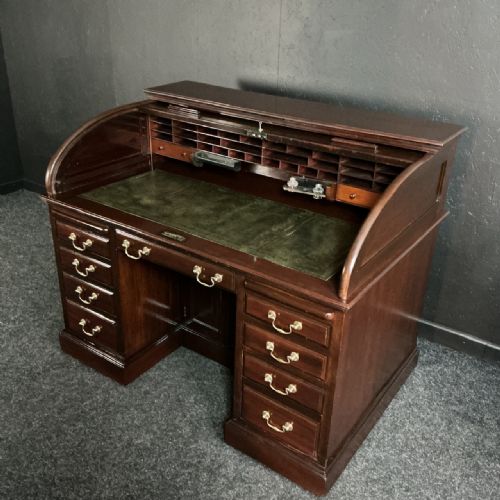
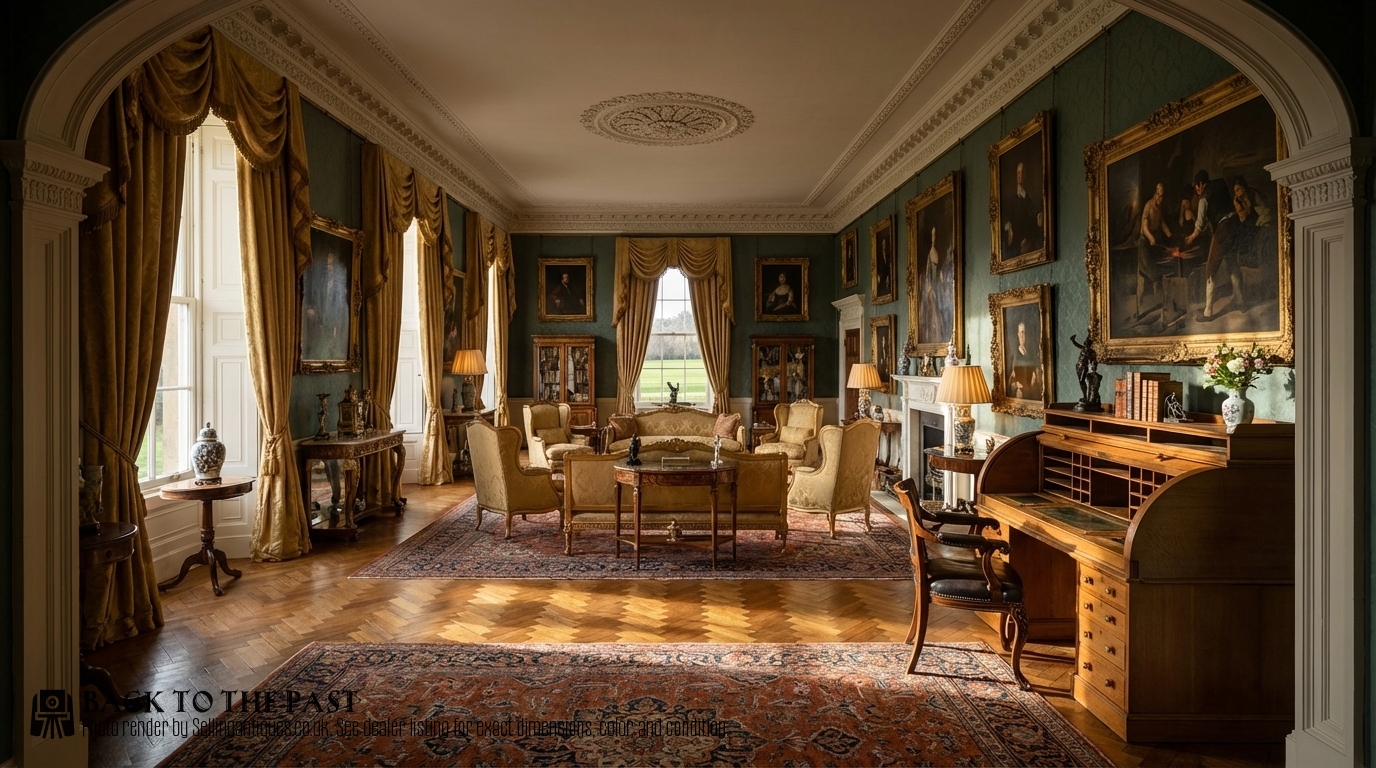
A victorian cylinder desk is a substantial workspace featuring a rounded wooden shutter that rolls back to reveal a fitted interior of small drawers and pigeonholes above a pull-out writing slide. The versions you are most likely to meet on this page take the form of twin pedestal kneehole desks or grand bureau bookcases rising to glazed top sections.
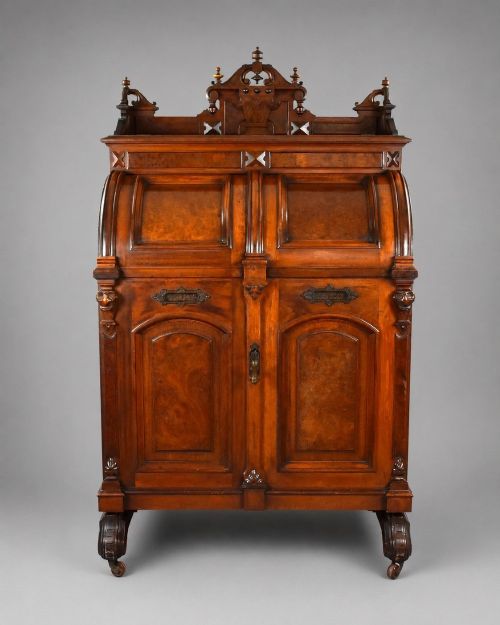
Most examples date from the nineteenth century, spanning periods from William IV through late Victorian and Edwardian revivals, with occasional French Louis XVI and Sheraton Revival influences. They range from compact lady's writing desks to massive architectural pieces in oak, mahogany, and walnut designed for weighty ledgers and professional study.
These forms developed to keep papers secure and out of sight without the need to lock every individual internal compartment. By pushing the curved cylinder back, the writing surface becomes instantly accessible, combining the neatness of a cabinet with the utility of a traditional writing table.
How they were made
Makers constructed the rolling cylinder from narrow vertical slats of timber glued to a strong canvas or leather backing, allowing the curved shutter to slide smoothly along hidden tracks. This technique required precise carpentry so the wood could bend repeatedly without warping or jamming the mechanism.
Primary structures relied on dense hardwoods like mahogany, oak, and walnut, often enhanced with figured veneers such as burr walnut, satinwood, and burr maple. Brass hardware, leather writing inserts, and glazed glass doors completed the construction of these complex furniture pieces.
Victorian Cylinder Desk Retail Price Guide 2026
Typical asking prices for victorian cylinder desk among the pieces listed under this phrase on Sellingantiques today, from the lower quarter to the upper quarter. They describe what is for sale here now, not the wider market.
Some nineteenth-century makers secreted spring-loaded release buttons behind the pigeonholes, requiring a hidden sequence of pushes just to open the main document drawers.
What varies in quality
The distinction between standard utility pieces and top-tier workshop productions lies in the selection of timber and the complexity of the interior joinery. Superior desks exhibit highly figured veneers, intricate satinwood or boxwood stringing, and secret compartments hidden within the pigeonhole blocks.
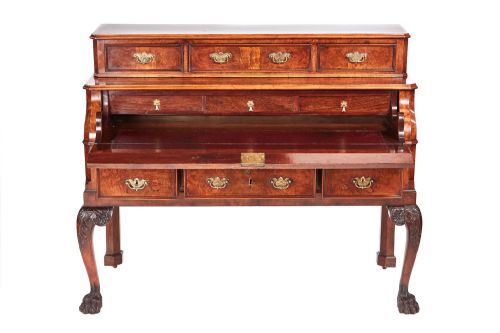
Carved details such as paw feet or blind fretwork demonstrate the skill of the carver rather than machine routing. Smooth operation of the cylinder track and heavy brass drawer pulls further separate mass-produced commercial items from bespoke cabinet-maker commissions.
Edwards & Roberts·Jas Shoolbred·Boston Chair Company·Maple & Co
The Victorian Cylinder Desk Glossary
- Cylinder
- A curved wooden shutter that rolls up and down over the desk interior. It replaces the flat fall-front flap seen on standard secretaires.
- Tambour
- A flexible shutter made of narrow strips of wood glued to fabric backing. This allows the writing surface to be covered with a continuous curving panel.
- Pedestal desk
- A heavy table form supported by two banks of small drawers reaching down to the floor. The user sits in the central kneehole space.
- Bureau bookcase
- A writing desk with a tall shelving or cabinet section built directly onto the top. The upper doors are frequently glazed for the display of books.
- Satinwood
- A pale, lustrous exotic timber native to India and Sri Lanka. It was frequently utilised during the Sheraton Revival for contrasting bandings and light-toned veneers.
Victorian Cylinder Desk: Frequently Asked Questions
How do cylinder desks work?
The curved wooden shutter runs on a grooved track cut into the desk carcass. Pulling the brass knob or lifting the edge slides the slatted cylinder back into the body of the desk.
This movement often simultaneously operates a mechanism that unlocks the internal small drawers, making the entire writing station available in one smooth motion.
What is the difference between a roll top and a cylinder desk?
A cylinder desk utilises a solid curving wooden shutter made from a smooth panel or closely fitted wooden strips on a backing. The surface is planed and polished to appear as a solid barrel shape.
Roll top desks typically use tambour construction with many narrow slats, making them more flexible but visually distinct from the smooth sweep of a fine Victorian cylinder piece.
Were these desks used by women or men?
Both, depending on the scale and form. Smaller satinwood and walnut examples were often designated as lady's writing desks for correspondence in a drawing room.
Massive oak and mahogany pedestal models were built for gentlemen's libraries, studies, and offices to manage extensive commercial and legal paperwork.
How do I spot a Sheraton Revival piece?
Sheraton Revival pieces from the late nineteenth century draw inspiration from eighteenth-century neoclassical designs. Look for bright satinwood veneers, delicate floral marquetry, and contrasting dark stringing.
The overall silhouette remains lighter and more slender than heavy mid-Victorian mahogany furniture.