




Victorian Cut Glass Scent Bottle
When you handle a Victorian cut glass scent bottle, you hold a miniature masterwork of domestic luxury designed for personal fragrance.
Victorian Cut Glass Scent Bottle
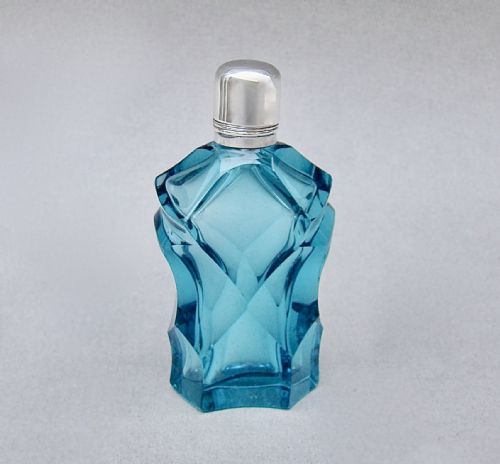
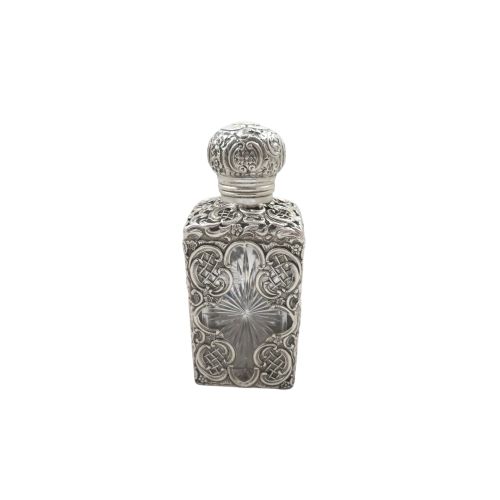
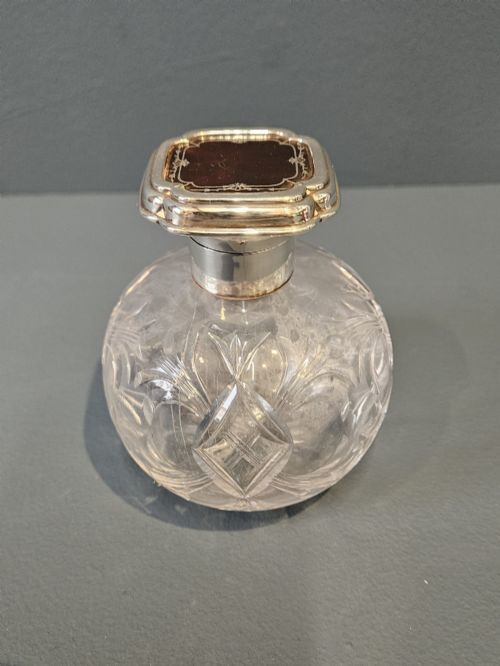
A Victorian cut glass scent bottle is a small vessel designed to hold perfume, eau de cologne or smelling salts during the nineteenth century. These pieces range from simple clear lead crystal flasks to heavily mounted coloured glass variants equipped for daily carriage or dressing table display.
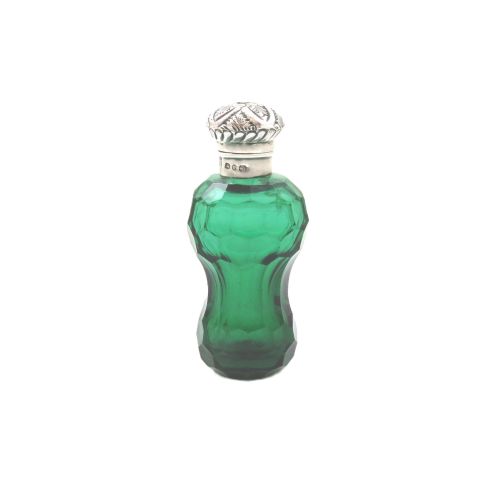
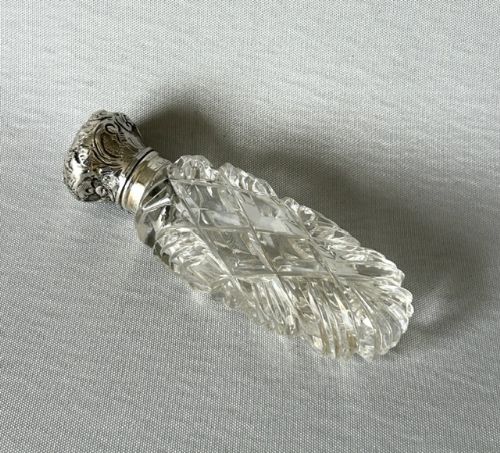
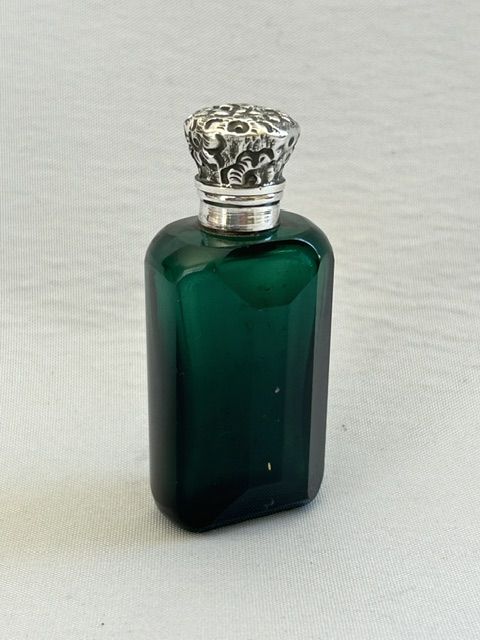
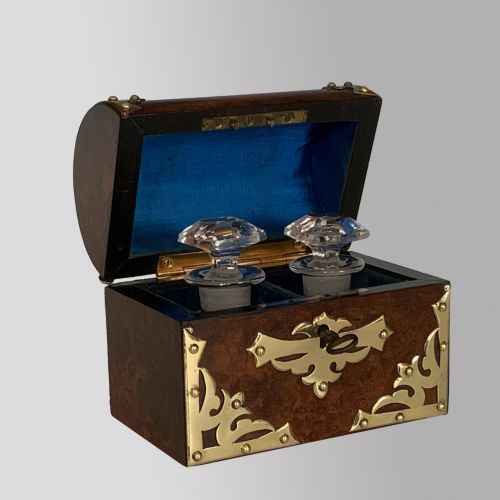
The most common examples encountered on this page feature faceted or slice-cut bodies paired with sterling silver hinged caps, screw tops or embossed collars. Collectors frequently find them housed individually or in fitted caskets alongside matching bottles.
Origins stretch from English workshops to French houses and Bohemian glassworks, spanning the middle decades of the Victorian era through to the early twentieth century. Formats include pocket companions, double-ended tubes and chatelaine pendants meant to be suspended from a belt.
How they were made
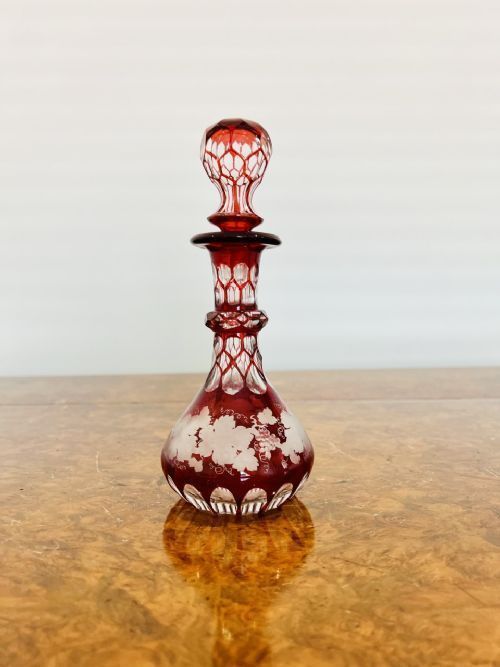
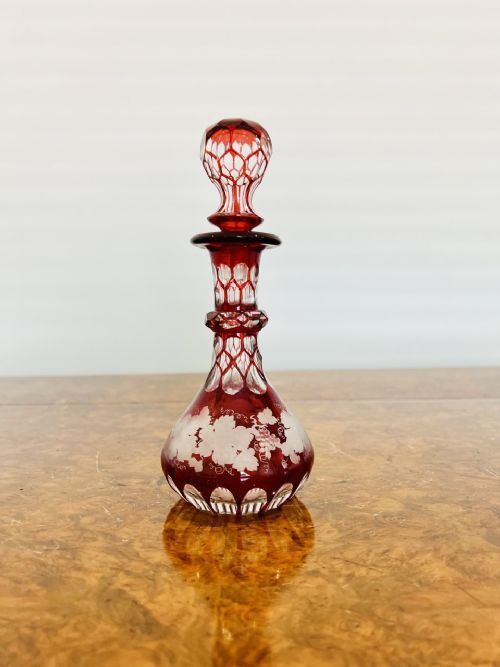
Glassmakers produced these vessels by blowing molten metal into moulds or gathering it freehand before cutting geometric facets, flutes or star patterns onto the hardened surface using rotating wheels. Coloured glass bodies often utilised an overlay technique, where a thin layer of vibrant glass was cased over a clear or contrasting core and cut away to reveal the base material beneath.
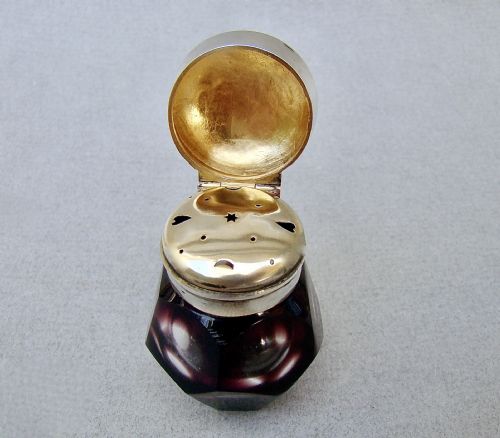
Silversmiths and metalworkers completed the bottles by fashioning slip-on or hinged lids, collars, and decorative mounts from sterling silver, brass or ormolu, frequently incorporating detailed engraving, embossing or hallmarks. Fitted interiors utilised materials such as velvet, leather, coromandel and walnut to cradle the glass securely.
Listings feature glass colours ranging from standard clear crystal to rich cranberry, Bristol green, amethyst, amber and uranium.
What varies in quality
Quality rests upon the crispness of the glass cutting and the weight of the metalwork, where deep, sharp facets reflect light cleanly and substantial silver mounts retain their structural integrity. Lesser pieces display softer wheel work and thin, easily dented collars.
The Mousley Brothers·Charles May·Mappin And Webb·Sampson Mordan And Co·Levi And Salaman·Drew And Sons·William Hutton And Sons·John Newton Mappin
The Victorian Cut Glass Scent Bottle Glossary
- Slice-cut
- A decorative glass-cutting technique featuring broad, flat, polished planes that form geometric patterns around the body of the bottle. This method highlights the clarity and heft of the material.
- Overlay
- A method of casing a core of glass with one or more distinct outer layers of contrasting colour before wheel-cutting through the top stratum. It creates striking visual depth and high contrast.
- Chatelaine
- A decorative belt hook worn with a series of suspended chains carrying utilitarian items such as scent flasks, keys or sewing tools. It served as both a practical accessory and a status symbol.
- Vinaigrette
- A small ornamental box or bottle containing a perforated grille over a sponge soaked in aromatic vinegar. These were carried to revive individuals experiencing faintness in crowded rooms.
- Tantalus
- A locking wooden frame designed to secure decanters or scent bottles while allowing their contents to remain visible. The mechanism prevents unauthorised access to the liquids inside.
Victorian Cut Glass Scent Bottle: Frequently Asked Questions
How do I know if the silver is genuine?
Genuine silver mounts on Victorian bottles usually bear British hallmarks indicating the assay office, standard of silver and date letter. Unmarked mounts are also common, particularly on pieces of continental European origin.
Examining the metal closely under magnification helps reveal rubbed stamps or the characteristic weight and patina of solid sterling silver versus plated alternatives.
Were these bottles meant for travel?
Many examples were specifically engineered for travel, featuring secure screw caps and thick cut glass designed to withstand the rigours of carriage journeys and steamer trunks. Leather-covered caskets and fitted travel cases provided additional protection for delicate sets.
Smaller variants were sized for pockets or chatelaines, while larger decanter-style bottles remained stationary on dressing tables.
What are overlay bottles?
Overlay bottles consist of a clear or tinted glass body encased in one or more layers of saturated colour, such as cranberry, green or blue. Artisans cut away portions of this outer skin to expose the contrasting glass underneath.
This labor-intensive technique produces sharp, geometric patterns that catch the light and accentuate the rich hues of the Victorian palette.