


Edwardian Silver Top Perfume Bottle
An edwardian silver top perfume bottle brings the quiet weight of the dressing table into the hand with heavy cut glass and chased metal.
Edwardian Silver Top Perfume Bottle
When you search for an edwardian silver top perfume bottle, you find vanity accessories designed to hold volatile scents on nineteenth and twentieth century dressing tables. The pieces on this page span the Victorian, Edwardian, and Art Deco periods, reaching from eighteen eighty to nineteen thirty.
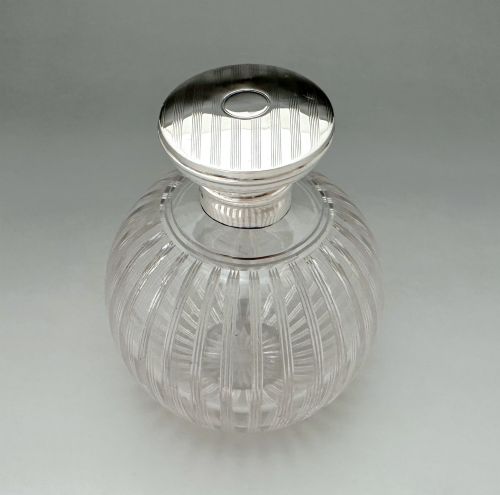
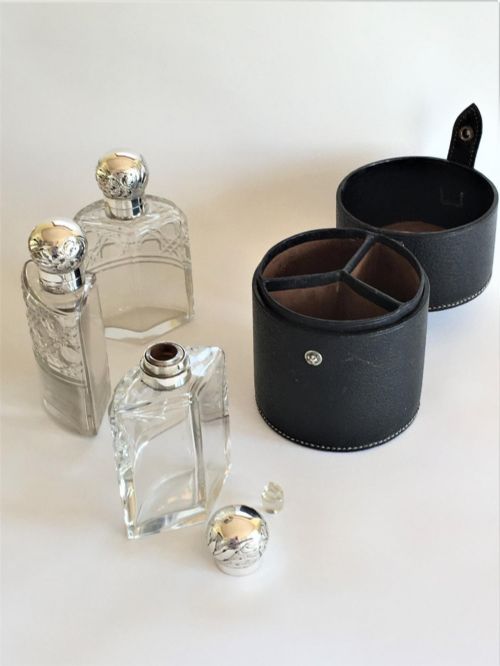
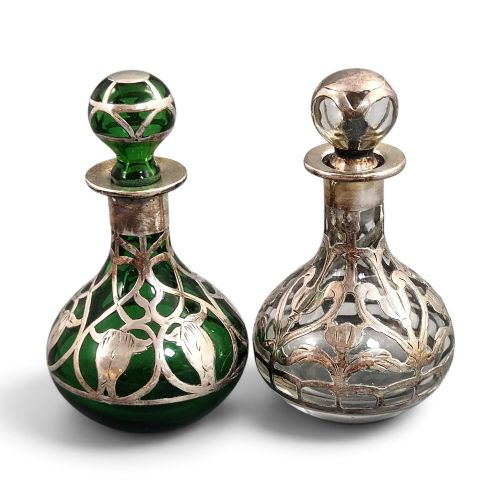
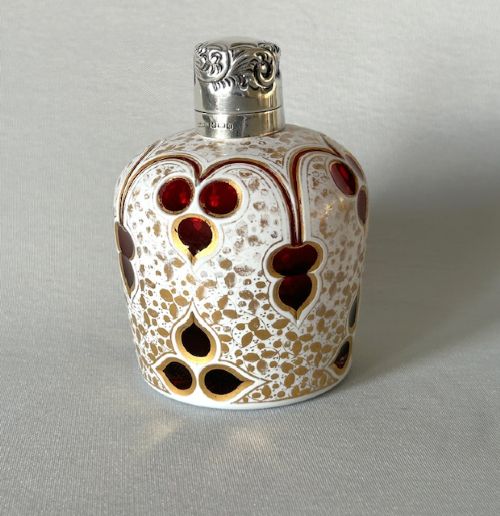
The most common version you meet here pairs a faceted glass body with a hallmarked sterling silver cap or collar. These range from small globular pocket vials to tall Bohemian overlay vessels and travelling cologne trios housed in leather cases.
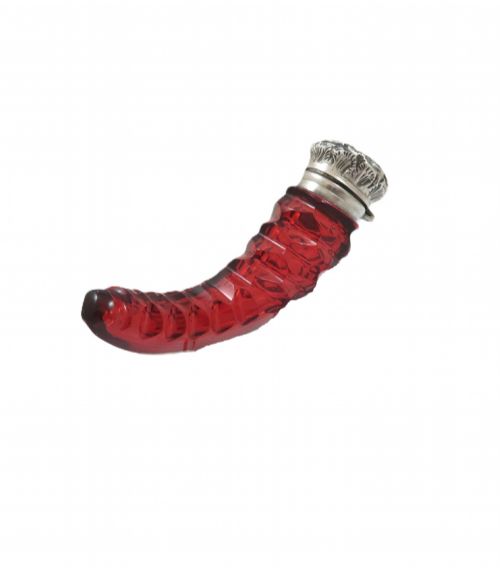
Origins stretch across English assay offices in Birmingham and London alongside continental workshops in France and Bohemia. Makers combine cut crystal, cranberry glass, and ruby glass with decorated metal tops reflecting Art Nouveau and George V styles.
Materials and construction methods
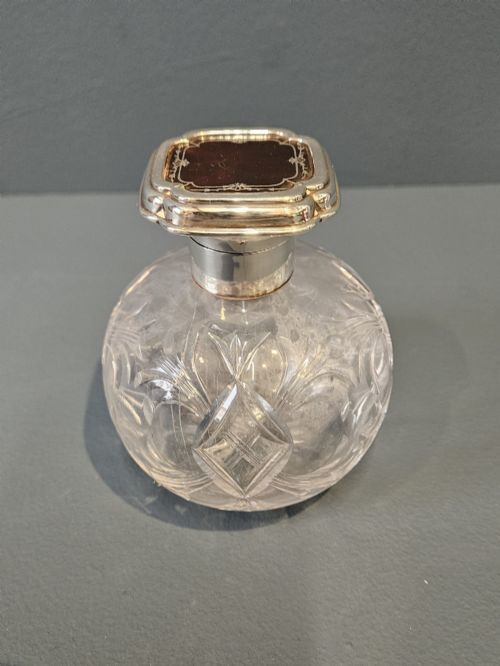
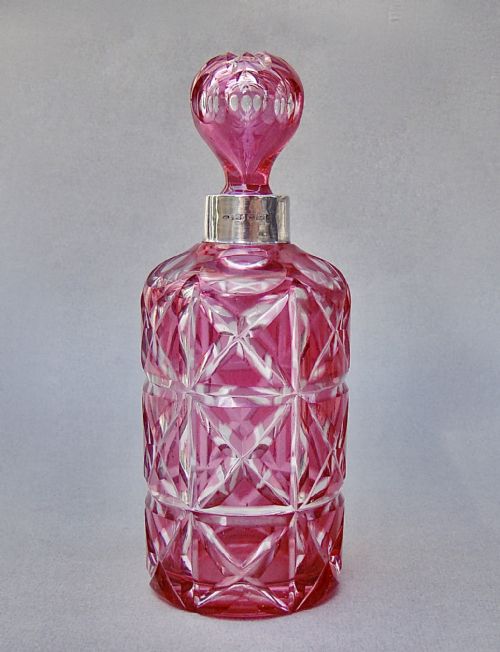
Bodies are formed from heavy clear cut glass, pressed glass, or flashed and cased coloured glass such as cranberry and ruby. Artisans cut deep geometric patterns, flutes, and diamond facets into the glass to catch the light on the vanity table.
Tops consist of sterling silver, frequently shaped through embossing, chasing, or piercing with floral and scroll lattice motifs. Some pieces incorporate organic materials like tortoiseshell or delicate guilloche enamel fused directly to the metal lid.
Internal stoppers of glass or cork create an airtight seal beneath the decorative cap to prevent the evaporation of precious contents. Hallmarks stamped into the silver collars record the assay town, date letter, and standard of metal.
A gentleman's cologne bottle required a tiny lock so nobody else could pinch a dram of scent on the road.
Distinctions in craftsmanship and preservation
The division between standard wares and superior examples rests on the depth of the glass cutting and the crispness of the silver ornamentation. Finer lids display hand-chased detail rather than thin machine stamping, maintaining sharp definition in floral and scrollwork.
Completeness dictates standing, particularly the retention of the original inner glass stopper and matching hallmarks across lid and collar. Enamelled and tortoiseshell panels demand intact surfaces free from chips or hairline fractures to hold their appeal.
Gorham·Harold Bushell and Co·Barnsley and Co
The Edwardian Silver Top Perfume Bottle Glossary
- Sterling silver
- A silver alloy containing ninety-two point five percent pure silver by mass, standard in British hallmarked vanity items.
- Guilloche enamel
- Decorative technique where an engraved metal surface is covered with translucent enamel, creating geometric repeating patterns beneath.
- Cranberry glass
- Transparent red glass coloured with gold chloride, popular across Victorian and Edwardian dressing table wares.
- Assay office
- A statutory body in Britain that tests the purity of precious metals and stamps items with official hallmark symbols.
- Overlay
- Glass production method where a layer of coloured glass is fused over a clear body before portions are cut away to expose the contrast.
Edwardian Silver Top Perfume Bottle: Frequently Asked Questions
How do I date a silver topped bottle?
Dating relies primarily on the silver hallmarks stamped into the metal collar or lid. These assay marks include date letters that correspond to specific years and cities of testing.
Style provides secondary clues, as Art Nouveau curves give way to geometric Art Deco lines by nineteen thirty.
Were these used for travel or home?
Both purposes exist within the selection, spanning static vanity bottles and secure travelling flasks. Travelling versions often feature fitted leather cases or lockable mechanisms to prevent spills in transit.
Heavier globular cut glass examples remained stationary on dressing trays.
Why do some bottles have inner stoppers?
Inner glass or cork stoppers create an airtight seal essential for preventing perfume evaporation. The outer silver cap serves as a decorative cover rather than a liquid barrier.
Finding a bottle with its original matching inner stopper remains a notable bonus for collectors.
What glass colours are most typical?
Clear cut crystal dominates the listings, refracting light through deep diamond and star patterns. Cranberry and ruby coloured glass appear frequently, often styled in Bohemian overlay techniques.
Occasional examples utilise opaque or tortoiseshell finishes for a different visual weight.