


Victorian Curule Chair
A victorian curule chair brings classical X-frame authority to any room, offering robust seating shaped by nineteenth-century revival styles.
Victorian Curule Chair
A victorian curule chair takes its defining cross-frame structure from ancient Roman folding stools, translating a monumental silhouette into domestic seating. When searching for a victorian curule chair, buyers encounter armchairs, side chairs, and desk chairs spanning the nineteenth century alongside later iterations.
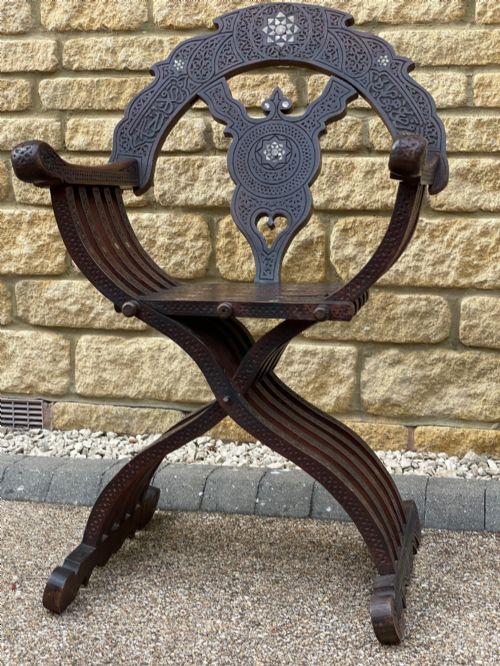
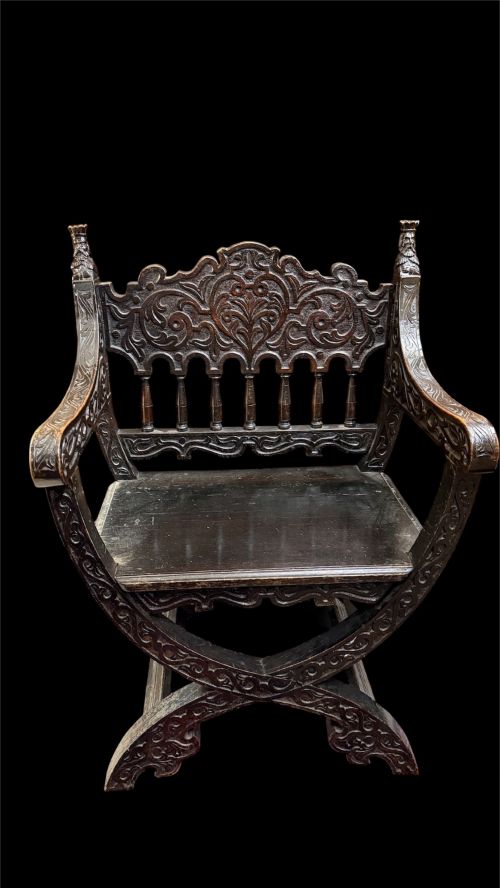
The form appears across multiple revival styles, including Gothic Revival, Renaissance Revival, and Syrian Ottoman designs. Oak and walnut serve as the primary timbers, while upholstery ranges from green leather to tapestry fabric and cane.
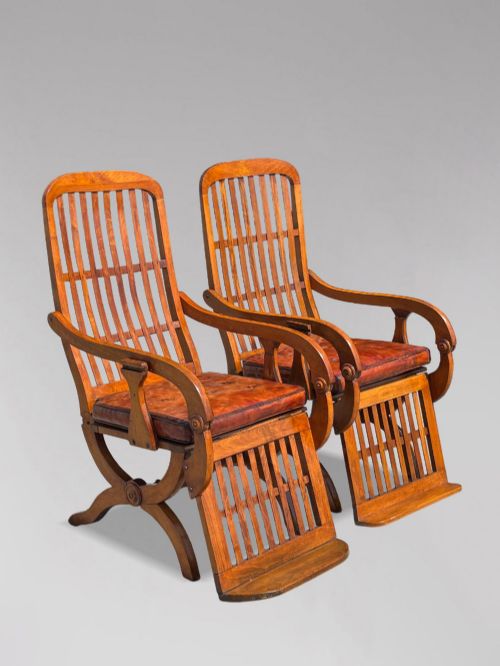
Makers adapted the X-frame geometry for varied domestic uses, producing hall chairs, window seats, and reclining armchairs. Pieces range from plain oak frames to intricately carved walnut structures adorned with mother of pearl inlay or animal heads.
Materials and construction methods
Cabinetmakers constructed these X-frame seats using sturdy hardwoods like oak and walnut to support the structural stress inherent in intersecting curved legs. Joinery relies on traditional framing techniques to ensure stability across heavy armchairs and lighter side chairs.
Surface ornamentation incorporates diverse decorative traditions, from geometric mother of pearl inlay to deep relief carving and classically inspired motifs. Upholstery materials such as leather, fabric, and tapestry secure to the frame with traditional methods, matching the period aesthetic.
Listings feature oak and walnut frames paired with leather, fabric, and mother of pearl inlay across multiple nineteenth-century revival styles.
Distinctions in craftsmanship
Quality reveals itself in the crispness of the wood carving and the precision of the cross-frame joints where the members intersect. Superior examples display carefully selected timber grain and balanced proportions that maintain structural integrity under weight.
Decorative elements such as mother of pearl inlay or carved figural details separate standard production items from finer workshop pieces. The integration of secondary materials like brass or specialised upholstery fabrics further distinguishes the tier of execution.
The Victorian Curule Chair Glossary
- Curule
- An ancient Roman X-shaped magistrate seat design that forms the structural basis for these cross-frame chairs. This silhouette was revived during the nineteenth century for formal domestic seating.
- Gothic Revival
- A nineteenth-century design movement drawing inspiration from medieval architecture and forms. Pieces from this style often feature pointed arches, heavy oak construction, and ecclesiastical motifs.
- Glastonbury chair
- A specific type of folding wooden armchair with an X-frame base and sloped armrests. Welsh oak examples reflect traditional monastic seating patterns adapted for Victorian interiors.
- Aesthetic Movement
- A late nineteenth-century design phase emphasising visual beauty over narrative content. It produced eclectic forms incorporating varied global influences, such as Syrian mother of pearl inlay.
- X-frame
- A structural arrangement where two curved or straight supports cross to form an X shape. This configuration provides inherent strength while creating a distinct classical silhouette.
Victorian Curule Chair: Frequently Asked Questions
What is a curule chair?
A curule chair is a seat built with intersecting X-shaped legs derived from ancient Roman magistrate stools. Nineteenth-century cabinetmakers adapted this classical architecture into armchairs, desk chairs, and window seats.
These chairs rely on cross-frame geometry to distribute weight while creating a striking profile. They appear in various revival styles, utilising timbers such as oak and walnut alongside leather or fabric upholstery.
How were these chairs used historically?
These cross-frame seats functioned as occasional chairs, desk seats, and hall furniture within nineteenth-century homes. Their formal silhouette suited libraries, studies, and entrance halls where a distinct architectural statement was desired.
Reclining variants and window stools provided specialised seating for relaxation or placement beneath windows. The sturdy construction in oak or walnut allowed them to withstand daily domestic use.
Where should I place an X-frame chair?
An X-frame chair works effectively as an accent piece in a living room, hallway, or study where its geometric profile can be appreciated from multiple angles. Desk chairs and side variants fit naturally against a wall or beside a library table.
Because the intersecting base extends outward, these seats require adequate floor space to prevent crowding. Pairing them with complementary nineteenth-century furniture highlights their revival-style characteristics.
How do I identify a Gothic Revival piece?
Gothic Revival examples typically feature heavy oak construction, pointed arches, and structural carving inspired by medieval architecture. Items such as Glastonbury chairs or hall chairs display architectural joinery and solemn, ecclesiastical proportions.
These pieces often lack superfluous ornament, relying instead on the purity of the timber frame and linear rigidity. Their dark patination and robust framing distinguish them from lighter Aesthetic Movement or classical variations.