


Green Leather Oak Chair
A green leather oak chair brings practical utility and period character to a study or library.
Green Leather Oak Chair
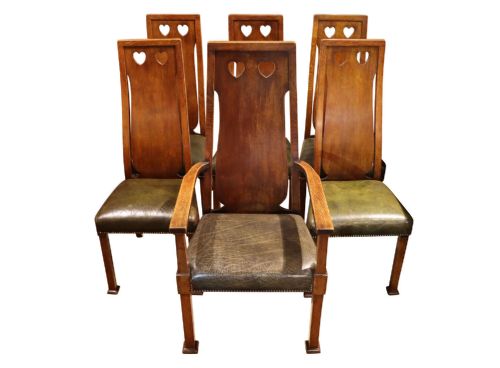
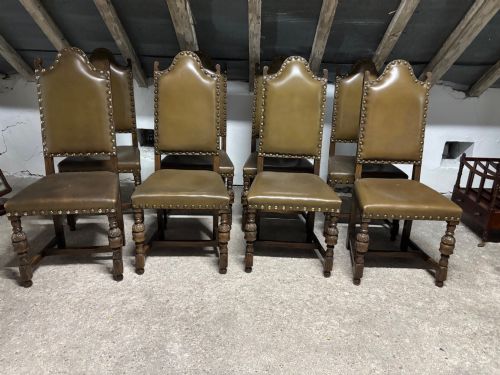
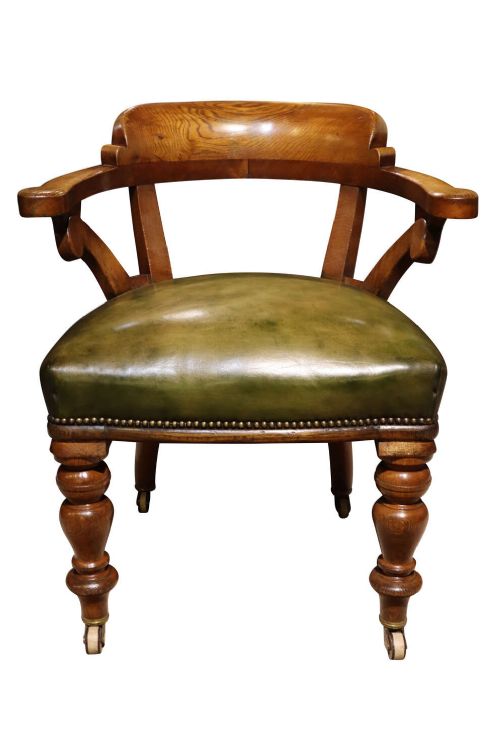
A green leather oak chair encompasses sturdy seating solutions designed for study, library and dining environments across the nineteenth and early twentieth centuries. The selection spans robust Victorian library armchairs, Edwardian revolving office desks chairs, and matching sets of dining chairs rooted in Gothic or Jacobean revival styles.
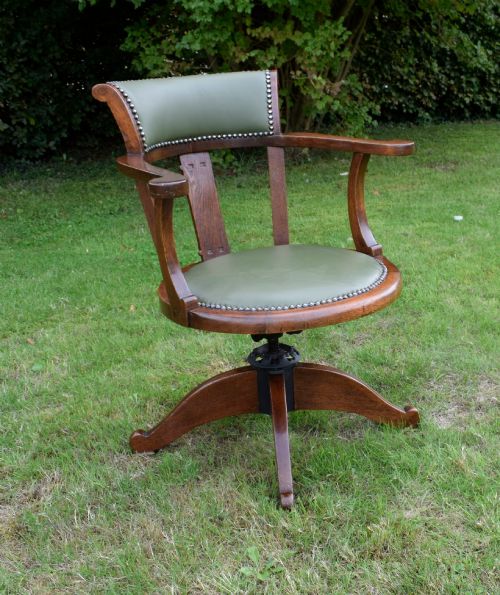
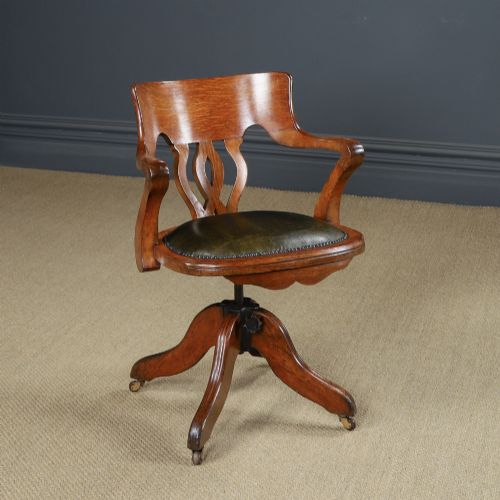
Revolving swivel office models from the Edwardian period and the early twentieth century dominate the available forms. These desk chairs feature upholstered seats and supportive backs, combining functional mechanical elements with traditional timber frames.
Materials and construction methods
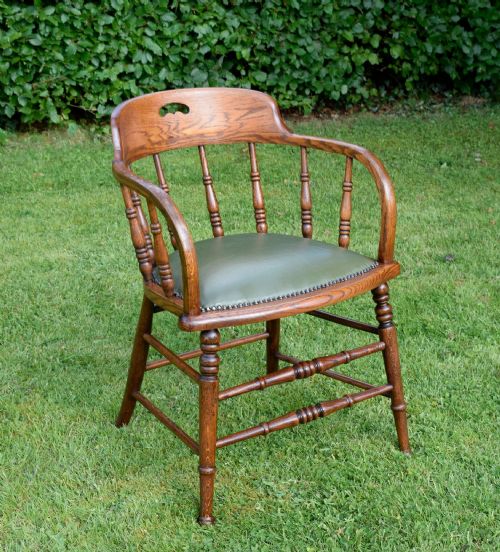
Timbers are primarily solid oak and golden oak, providing a dense, durable framework that supports both carved detailing and steam-bent components. Leather upholstery provides the writing or dining surface, secured with brass studding along the edges.
Swivel desk variations incorporate cast iron, steel, and brass mechanisms beneath the seat to allow rotation and adjustable height. Frame construction relies on traditional joinery, occasionally enhanced by cane panels or copper accents depending on the Arts and Crafts influence.
Listings feature oak, leather, brass, cast iron, and cane across periods ranging from the nineteenth century to the 1920s.
Evaluating craftsmanship and condition
Quality rests in the integrity of the timber framing and the sophistication of the mechanical swivel systems found on office models. Early examples display hand-carved details and heavy solid oak frames, whereas later mass-produced pieces utilise simpler turnings.
The grade of the leather hide and the precision of the brass stud work differentiate standard utility seating from finer library armchairs. Original mechanisms that operate smoothly without excessive play elevate the standing of a desk chair.
Bell Barn Furniture·William Angus & Co.·Heywood Brothers & Wakefield Co.
The Green Leather Oak Chair Glossary
- Revolving desk chair
- A swivelling seat designed for office use, typically featuring a central iron spindle and four or five leg bases with castors.
- Golden oak
- A bright, warm finish applied to oak timber, frequently utilised during the late Victorian and Edwardian periods to highlight the grain.
- Gothic Revival
- A nineteenth-century design movement inspired by medieval architecture, characterised by pointed arches, heavy carving, and quatrefoil motifs.
- Smokers bow
- A low-backed Windsor-style armchair with a rounded continuous arm rail, popular in offices and smoking rooms.
- Tub chair
- An armchair with a continuous curved back and arms that form a deep, enclosed seating bucket.
Green Leather Oak Chair: Frequently Asked Questions
Are swivel chairs from the Edwardian period sturdy?
Edwardian revolving desk chairs utilise robust cast iron and steel mechanisms beneath solid oak frames to ensure everyday durability. The heavy timber bases and four-legged castor arrangements provide a stable foundation for constant office use.
While the internal spindle requires occasional lubrication, the primary construction remains resilient. These mechanisms were built to withstand decades of turning and weight shifts.
How do I care for antique leather upholstery?
Leather seat pads benefit from regular dusting with a soft cloth and periodic treatment with appropriate leather balms to prevent drying and cracking. Avoiding direct sunlight preserves the distinctive green dye used across these periods.
Careful maintenance protects the original hide and the surrounding brass studwork from tarnishing. Gentle cleaning retains the natural patina accumulated over a century of use.
What is the difference between dining and desk chairs here?
Dining chairs appear as fixed side chairs and armchairs, frequently matching in sets of four, six, or eight with high backs and stylistic links to Gothic or Jacobean revivals. They utilise stationary wooden legs and rigid frames suited for a dining table.
Desk chairs are individual pieces engineered for mobility, featuring swivel bases, adjustable heights, and rounded armrests. They prioritise ergonomic support and movement within a study environment.
How can I distinguish Victorian from Edwardian oak furniture?
Victorian oak pieces from the mid to late nineteenth century often display darker finishes, heavier carved detailing, and substantial proportions influenced by Gothic and Jacobean revivals. The construction leans toward static forms like library armchairs and hall chairs.
Edwardian furniture shifts towards lighter golden oak tones, simplified Arts and Crafts lines, and functional office innovations like patent swivel mechanisms. The scale becomes slightly more streamlined to suit domestic and commercial interiors of the early twentieth century.