



Victorian Cupboard Base Bookcase
These pieces unite a glazed display section with a solid lower storage unit, forming a practical and stately room centrepiece.
Victorian Cupboard Base Bookcase
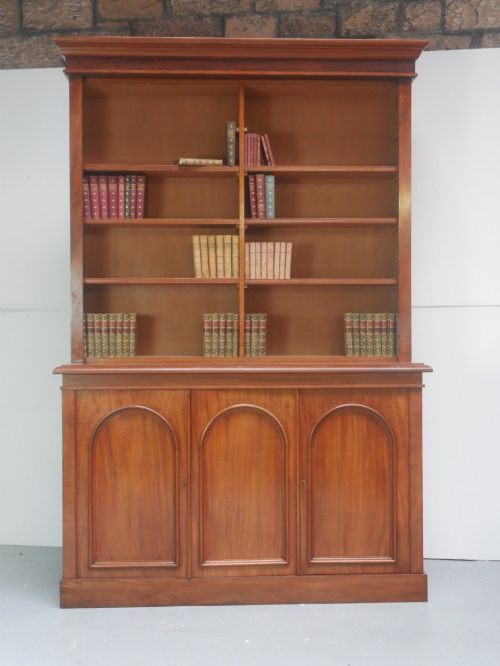
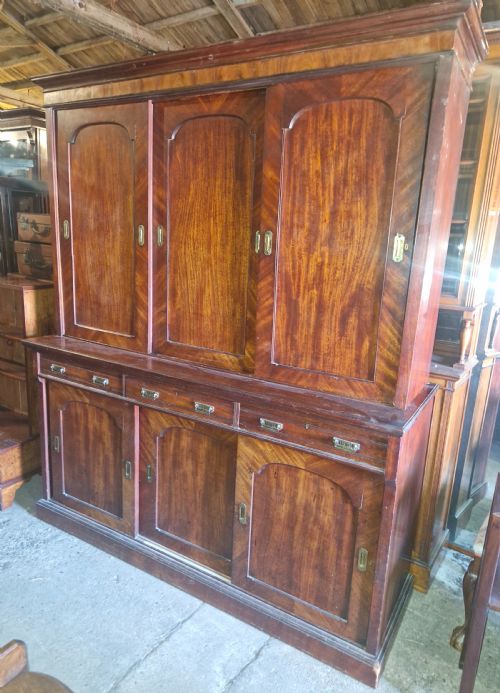
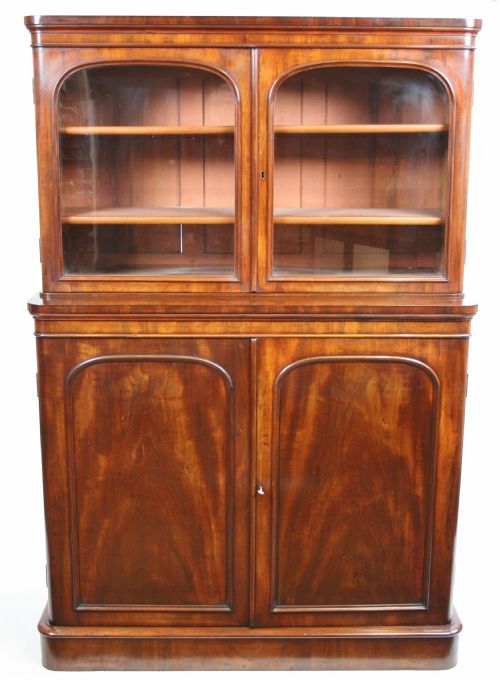
A victorian cupboard base bookcase combines upper shelving for display with a lower enclosed storage compartment, fulfilling multiple household needs within one substantial wooden item. The examples seen on this page span the nineteenth century, including specific dates such as eighteen sixty and eighteen eighty, alongside broader Victorian and Georgian periods.
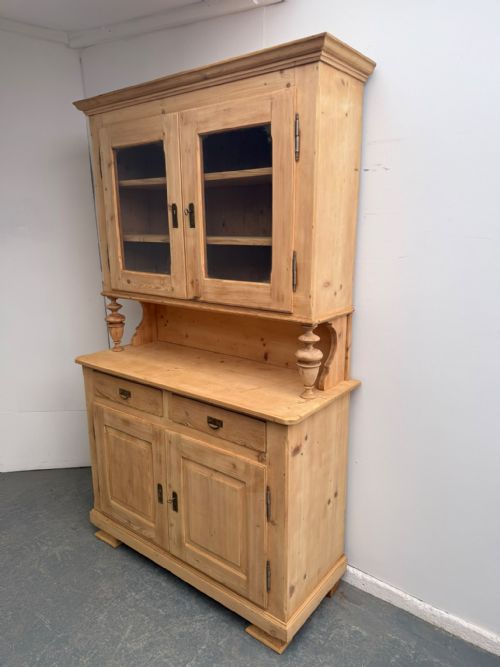
Forms vary from narrow two-door formats to wide three-door configurations, with some incorporating drawers or glazed doors to the upper display area. Timber choices range from rich mahogany and figured walnut to pine and oak, reflecting both formal drawing-room tastes and more rustic country house settings.
How they were made
Cabinet makers utilised solid timbers and selected veneers such as burr walnut and mahogany over stable secondary woods. Construction relied on traditional joinery methods to house heavy glass doors above and panelled or glazed doors below.
Decoration involved subtle additions including brass fittings, ormolu mounts, marquetry inlay, and carved details that distinguished formal pieces from simpler pine and oak kitchen dressers or side cabinets.
What varies in quality
The distinction between standard utility items and finer examples lies in the selection of figured timber veneers and the crispness of any carved or applied ornament. Superior construction is evident in balanced proportions, such as narrow or slim profiles with well-fitted doors and drawers.
Hardware and interior detailing also separate categories, with higher-grade pieces featuring quality brass locks, hinges, and Ormolu mounts, while simpler country variants rely on plain pine or straightforward oak surfaces.
Heal And Son London
The Victorian Cupboard Base Bookcase Glossary
- Cupboard base
- The lower enclosed storage section of a dual-purpose furniture piece, typically fitted with wooden or glazed doors.
- Figured walnut
- Timber exhibiting highly decorative natural grain patterns, often utilised on formal nineteenth-century cabinet doors and drawer fronts.
- Ormolu
- Gilt-bronze decorative mounts applied to nineteenth-century furniture to enhance the visual richness of the piece.
- Chiffonier
- A compact sideboard or low cabinet featuring a cupboard beneath drawers or open shelves, common in nineteenth-century interiors.
- Marquetry
- The art of applying thin pieces of wood veneer to form decorative patterns and pictures on a furniture surface.
Victorian Cupboard Base Bookcase: Frequently Asked Questions
What is a victorian cupboard base bookcase?
It is a piece of furniture featuring an upper section for book storage or display sitting atop a lower enclosed cupboard. This dual structure allowed households to display prized volumes while keeping other items tucked away out of sight.
The form appears in various timbers throughout the nineteenth century, ranging from formal mahogany and walnut library pieces to simpler pine and oak country examples.
Where should I place a large bookcase?
These tall combination pieces require sturdy wall space and adequate ceiling height to sit comfortably within a room. Libraries, studies, and large living spaces suit their substantial proportions best.
Ensure the floor is level so the heavy doors swing true and the upper and lower sections align properly during placement.
How do I tell early Victorian from late Victorian pieces?
Early examples often display cleaner architectural lines and simpler mahogany surfaces, sometimes showing Georgian design influences. Later nineteenth-century pieces frequently incorporate richer figured veneers, marquetry, or revival styles.
Examining the construction methods and timber choices helps clarify whether a piece dates closer to eighteen fifty or the late nineteenth century.
Can I store things other than books inside?
The lower cupboard base provides deep and secure storage suitable for board games, table linen, or household paperwork. The upper shelves accommodate ceramics and decorative objects alongside standard book collections.
Adjustable or fixed wooden shelving adapts the display space to suit different heights of volumes and ornaments.