
Traditional Wooden Library Bookcase
A traditional wooden library bookcase holds volumes securely while anchoring a room with period timber and proportion.
Traditional Wooden Library Bookcase
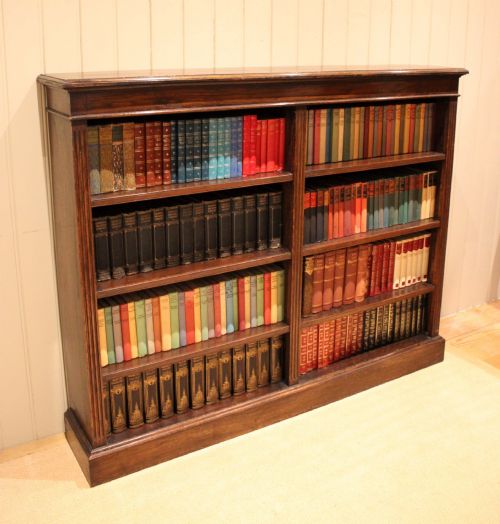
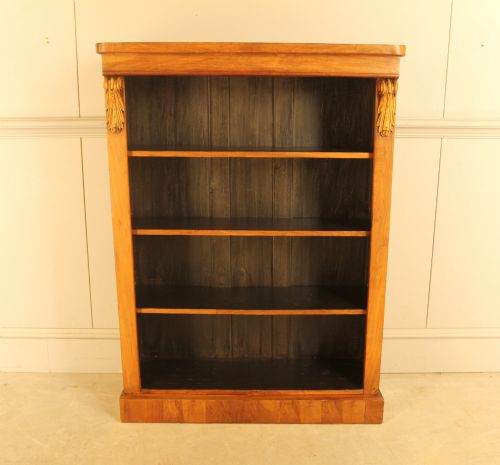
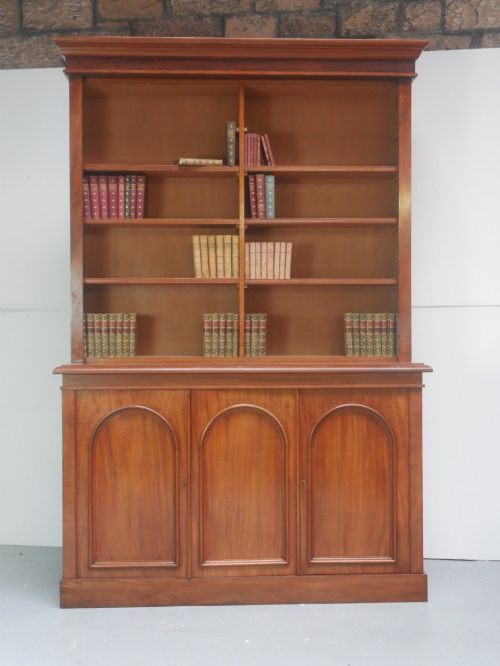
A traditional wooden library bookcase serves as a functional storage piece designed to house collections of books in domestic or institutional settings. When searching for a traditional wooden library bookcase, buyers encounter open formats alongside breakfront configurations and modular stacking designs. These pieces originate from various periods including the Victorian and Edwardian eras, as well as the nineteenth and early twentieth centuries.
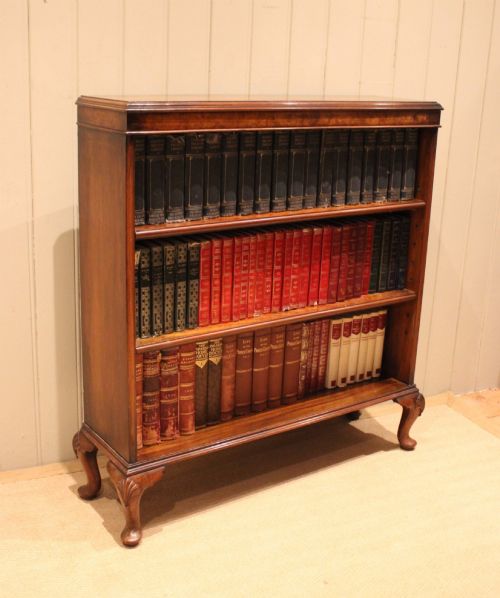
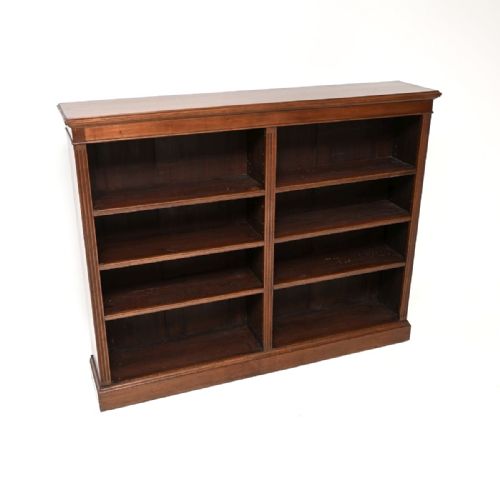
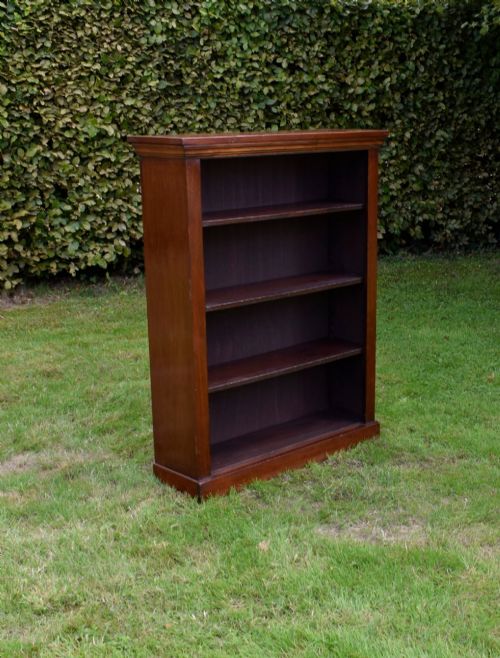
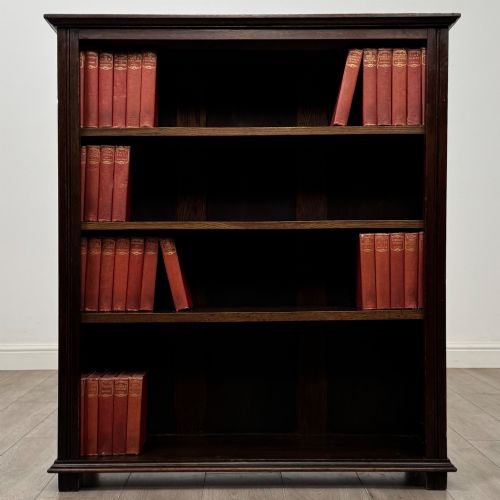
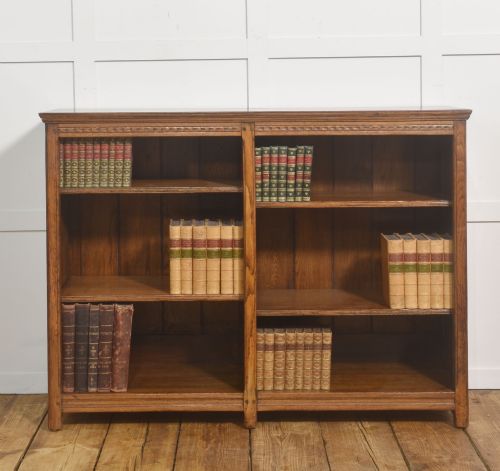
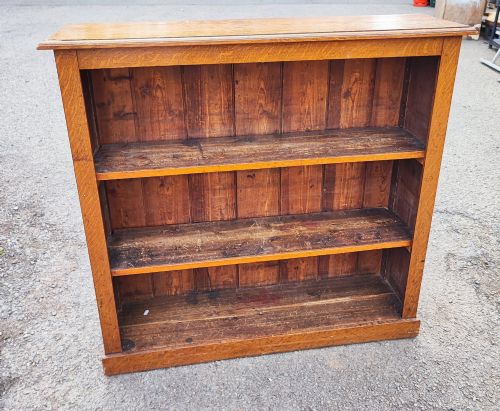
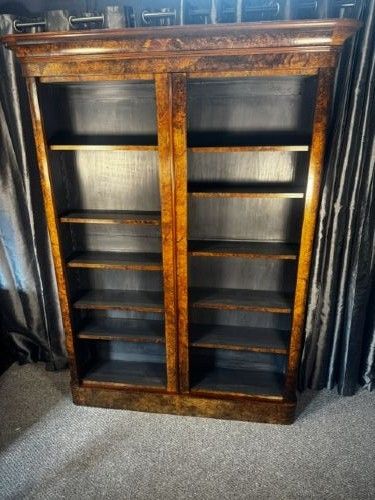
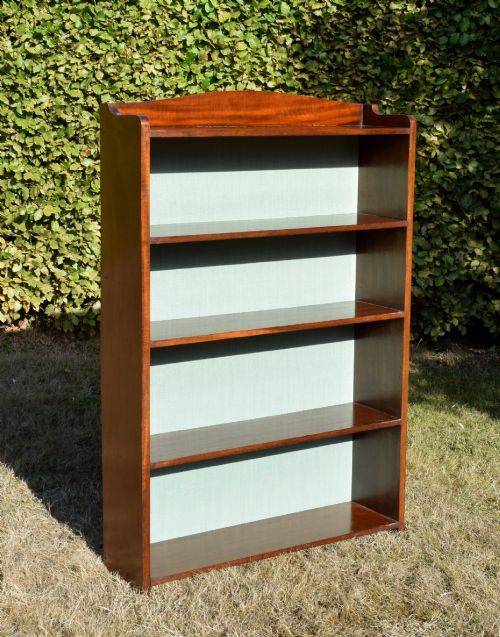
The specimens on this page lean heavily towards open formats constructed in mahogany, oak, and walnut. Large library editions sit alongside smaller tall units and modular barrister styles. Oak and mahogany dominate the offerings, frequently incorporating adjustable shelving systems for practical utility.
Materials and construction methods
Cabinet makers built these pieces using solid timbers like mahogany, oak, walnut, and pine, often enhancing visual depth with burr walnut veneers. Brass hardware appears on specialised components such as stacking mechanisms and library steps. Glass panels feature in certain glazed formats, while leather accents sometimes complement companion library steps.
Joinery relies on traditional carpentry techniques appropriate to the period, supporting heavy book loads across multiple shelves. Adjustable shelf systems utilise wooden or metal tracks and rests to accommodate varying publication heights. Breakfront designs require precise carcass construction to project forward sections cleanly from the main body.
Listings span the Victorian and Edwardian periods, stretching from the mid nineteenth century into the 1930s.
Distinctions in quality and execution
Quality reveals itself through the selection of timber, such as figured mahogany or burr walnut, matched carefully across prominent surfaces. The crispness of carved details, including corbels or mouldings, separates standard production pieces from finer cabinet work. Structural rigidity under load distinguishes sturdy library furniture from lighter domestic shelving.
Integration of functional elements, like smoothly operating adjustable shelf mechanisms or precisely fitted breakfront sections, indicates higher craftsmanship. The condition of the original timber finish and the integrity of secondary woods within the carcass further define the upper tier of these pieces.
The Traditional Wooden Library Bookcase Glossary
- Breakfront
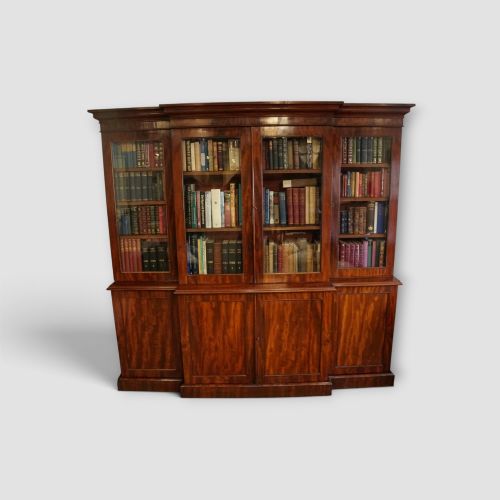
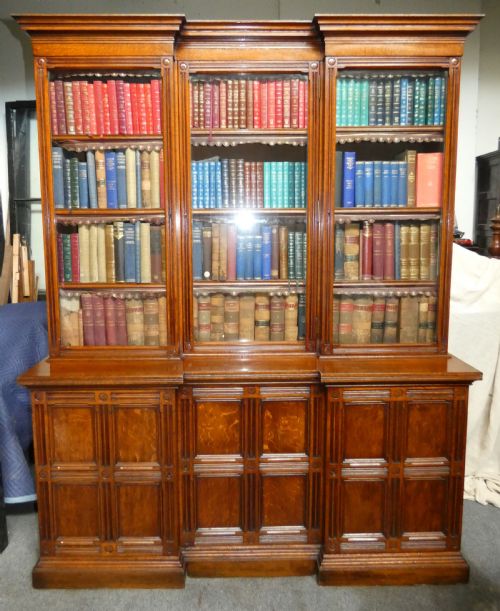
- A cabinet or bookcase featuring a central section that projects forward from the flanking wings. This configuration creates architectural depth and visual hierarchy.
- Waterfall bookcase
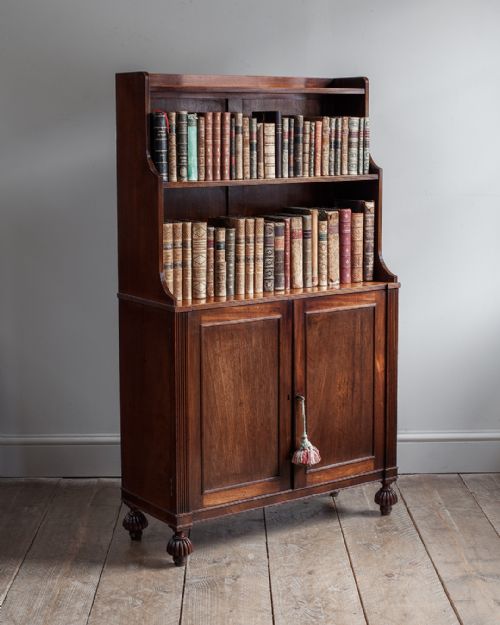
- A stepped bookcase where each successive shelf is narrower than the one below it, creating a cascading profile. These pieces typically utilise mahogany timber.
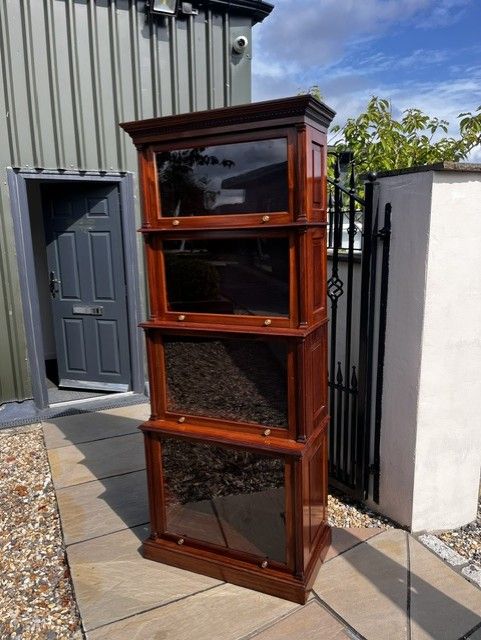
- Barristers bookcase
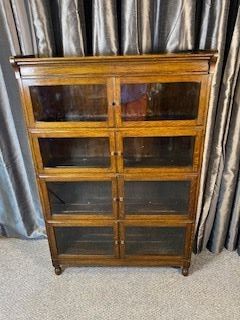
- A modular bookcase composed of stacked sections, each with a glass door that lifts and slides into the unit above. This design protects volumes while allowing custom vertical expansion.
- Corbel
- A structural bracket projecting from a vertical surface to support a shelf or upper moulding. These often feature carved wooden elaboration.
- Adjustable shelves
- Shelving resting on movable supports that allows users to alter vertical spacing between tiers. This system accommodates books of diverse heights.
Traditional Wooden Library Bookcase: Frequently Asked Questions
What woods were used for these bookcases?
Makers constructed these bookcases primarily using mahogany, oak, and walnut, alongside pine for secondary parts and burr walnut for decorative surfaces.
These timbers provided the structural strength necessary to support heavy rows of bound volumes over decades of use.
How do I adjust the shelves?
Many period bookcases feature adjustable shelves supported by wooden pegs, metal pins, or sliding ratchets set into the interior carcass walls.
Lifting the shelf allows you to reposition the supports into alternative slots to fit taller or shorter books.
Are these bookcases suitable for modern rooms?
The substantial proportions and warm timber tones of these pieces allow them to ground contemporary or traditional study spaces effectively.
Open formats give direct access to collections while displaying book bindings as decorative elements within the interior scheme.
What is a breakfront bookcase?
A breakfront bookcase has a central section that steps forward from the flanking left and right cabinets, creating an architectural facade.
This layout offers generous storage capacity while breaking up a long flat wall with rhythm and depth.