



Victorian Crystal Wine Carafe
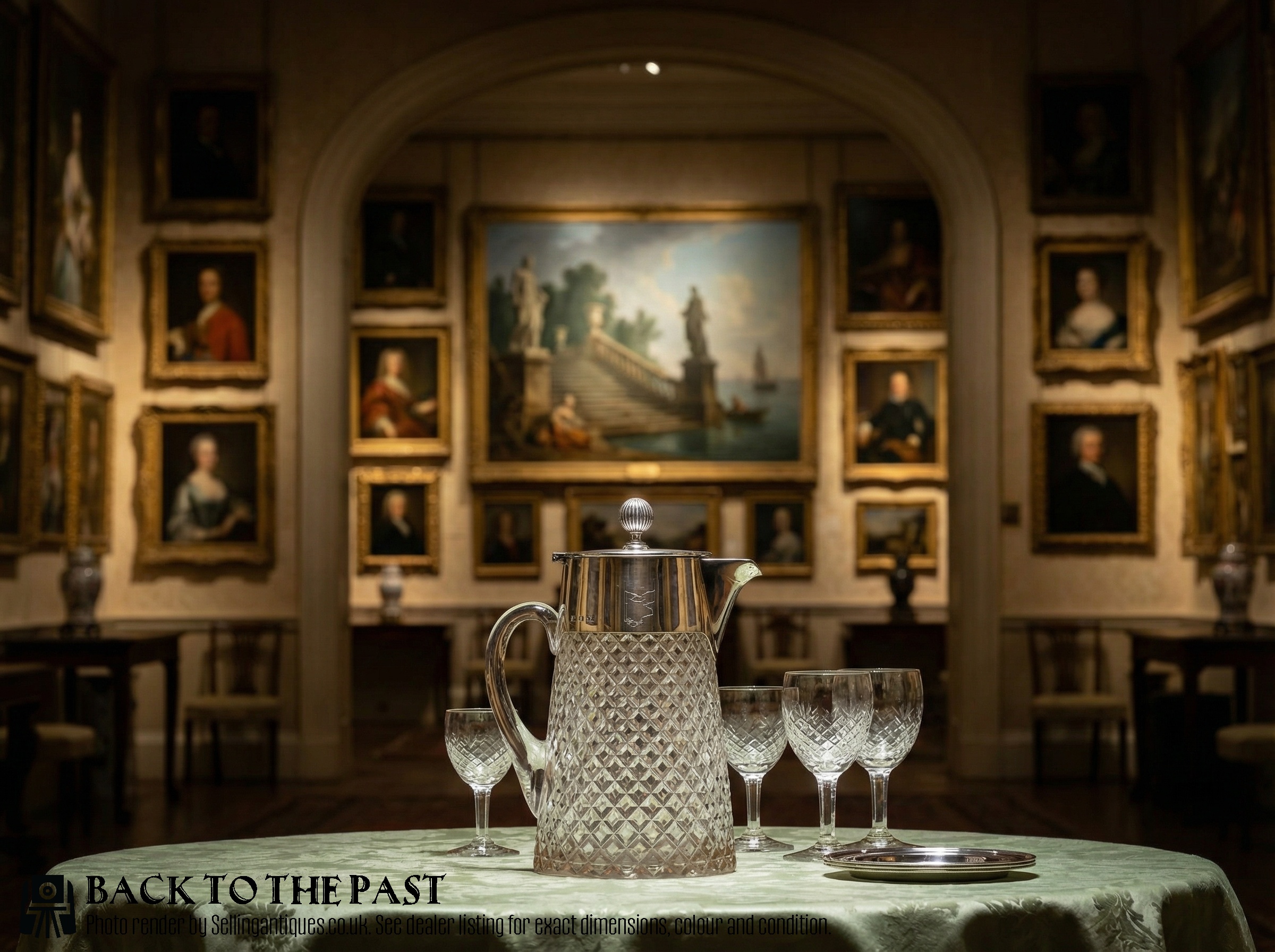
A victorian crystal wine carafe brings heavy table service and deep cutting to the dining room.
Victorian Crystal Wine Carafe
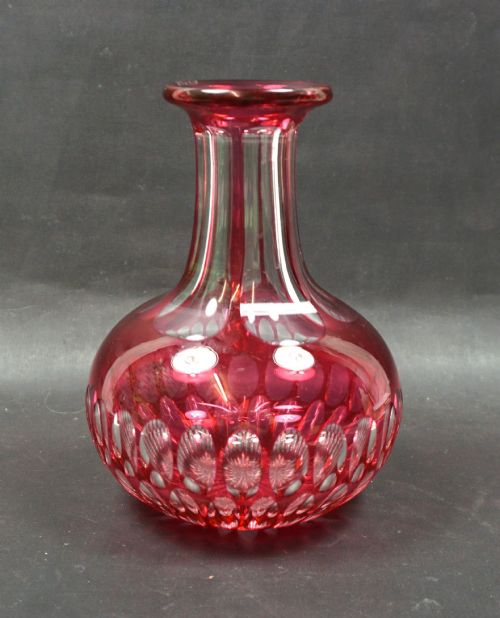
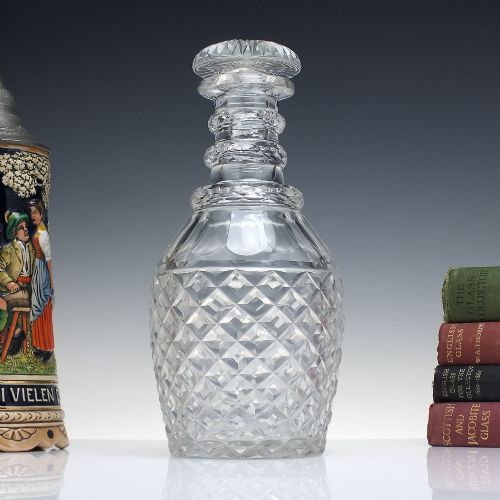
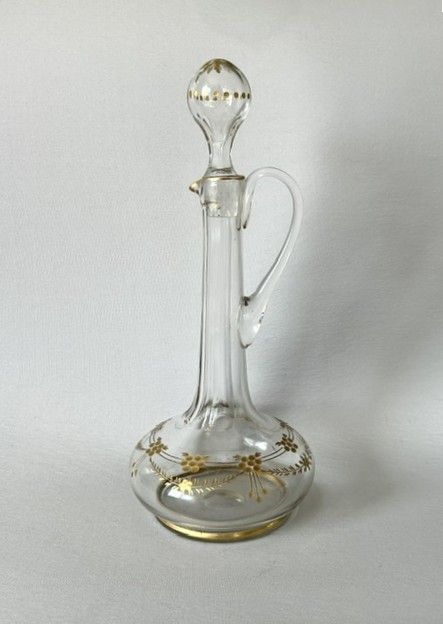
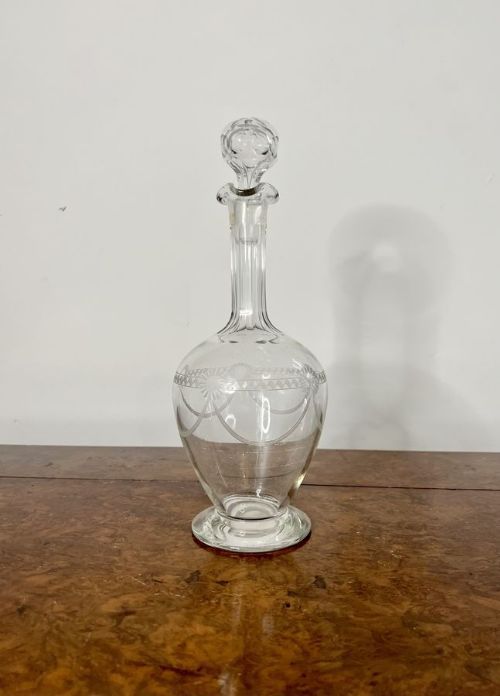
A victorian crystal wine carafe encompasses substantial glass vessels designed for holding and pouring wine at the table. These items appear primarily as decanters, claret jugs, and serving ewers originating from the nineteenth century. The selection contains English and Bohemian examples spanning from the eighteen-fifties through the Edwardian period.
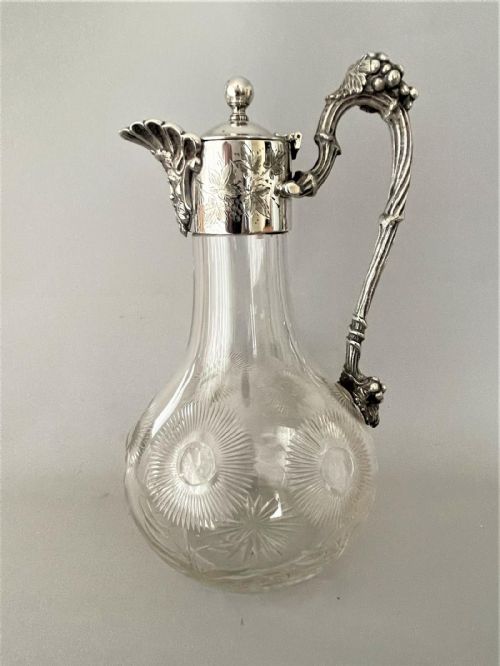
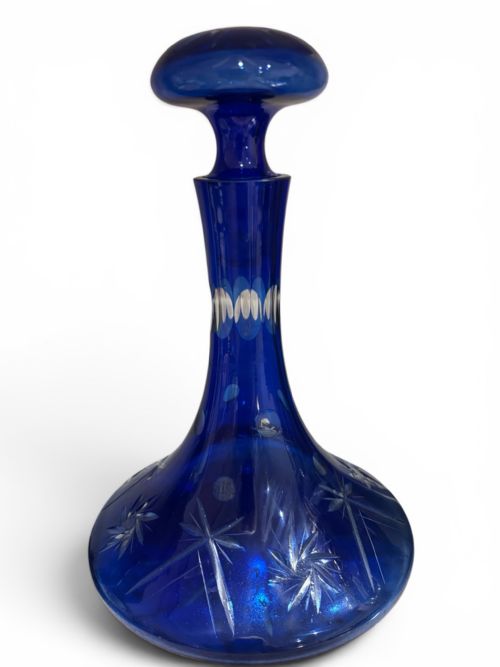
Buyers will frequently encounter shaft and globe decanters alongside silver-mounted claret jugs. Many pieces combine heavy lead crystal bodies with silver plate or solid silver mounts and hinged covers. Coloured glass variants, including cranberry and ruby overlay, sit alongside clear cut crystal forms.
How they were made
Maker operations utilised lead crystal and clear glass blown into moulds or free-blown before undergoing deep wheel cutting. Craftsmen applied overlay techniques using layers of coloured glass over clear bodies to create striking contrast during subsequent cutting. Handles took various forms, including serpent shapes and applied glass scrolls.
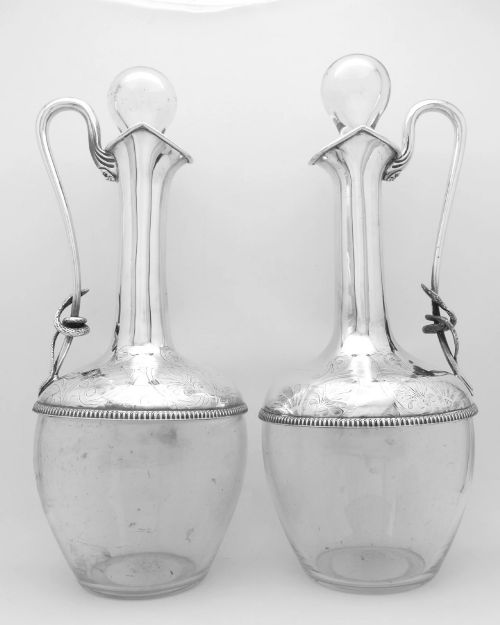
Metal components involved silver plating or solid silver work, often cast into bacchus masks, scrollwork, or hinged covers fitted securely to the glass necks. Engraving decorated many surfaces with floral motifs, fruiting vines, and royal crests using wheel-engraving methods.
Serpent handles writhe up the necks of nineteenth-century claret jugs, ready to strike at the unwary dinner guest.
What varies in quality
Depth of glass cutting and crispness of facet execution distinguish superior examples from standard production. The weight of the lead crystal and the brilliance of the metal mounts contribute significantly to the overall presence of the piece. Superior items display balanced proportions between the glass body and any added silver work.
Engraving detail dictates distinction, with hand-etched botanical motifs showing greater finesse than generic machine work. The integration between metal collars and glass necks demonstrates the skill level of the original maker.
Asprey and Co. Ltd
The Victorian Crystal Wine Carafe Glossary
- Claret jug
- A pouring vessel specifically intended for serving red wine, usually fitted with a handle and a hinged metal lid. These pieces frequently feature silver plate or solid silver mounts.
- Lead crystal
- Glass containing metal oxides that increase weight, refractive index, and clarity. This material allows for deeper and sharper cutting.
- Overlay
- A technique involving a thin layer of coloured glass fused over a clear glass body. Subsequent cutting removes parts of the coloured layer to reveal the clear glass beneath.
- Shaft and globe
- A traditional decanter silhouette featuring a long narrow neck above a rounded globular base. This form provides stability on the dining table.
Victorian Crystal Wine Carafe: Frequently Asked Questions
How do I clean a victorian crystal wine carafe?
Fill the vessel with warm water and mild detergent, avoiding harsh abrasives that might scratch the surface or damage silver mounts. Use soft bottle brushes designed for antique glassware.
Dry the exterior thoroughly with a lint-free cloth and leave the vessel inverted on a mat until completely dry inside.
Were these vessels used only for claret?
While many specific jugs served claret or dessert wine, the broader category accommodated spirits, port, and general table wines. Different shapes suited different types of alcoholic beverages.
Narrow necks helped preserve the aromas of aged wines, while wider mouths suited spirits and fortified wines.
How can I tell a Victorian piece from an Edwardian one?
Victorian examples often display heavier cutting, robust silver-plated mounts, and ornate Victorian Rococo Revival or classical motifs. Edwardian pieces sometimes shift towards lighter Arts and Crafts styling or simpler geometric cuts.
Examination of the hallmarks on silver mounts provides definitive date markers for pieces bearing metalwork.
Can I use these carafes for daily dining?
Solid construction and durable lead crystal allow these items to function well during modern meals. Care must be taken with antique silver plate and delicate handles during washing.
Hand washing remains essential to preserve both the glass clarity and the integrity of any metal mounts.