


Victorian Cross Stitch
These Victorian cross stitch pieces are framed textile works and needlework samplers that bring nineteenth-century hand embroidery into modern interiors.
Victorian Cross Stitch
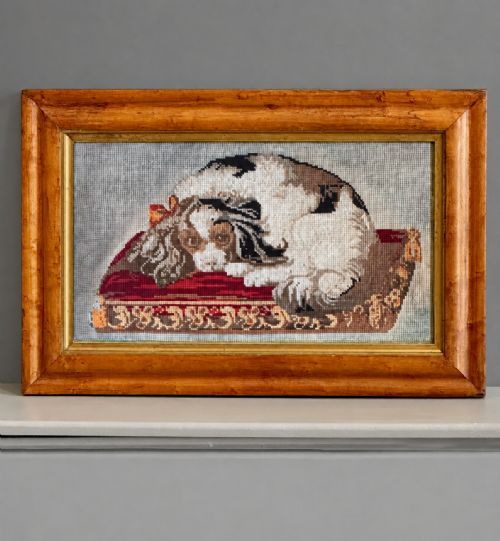
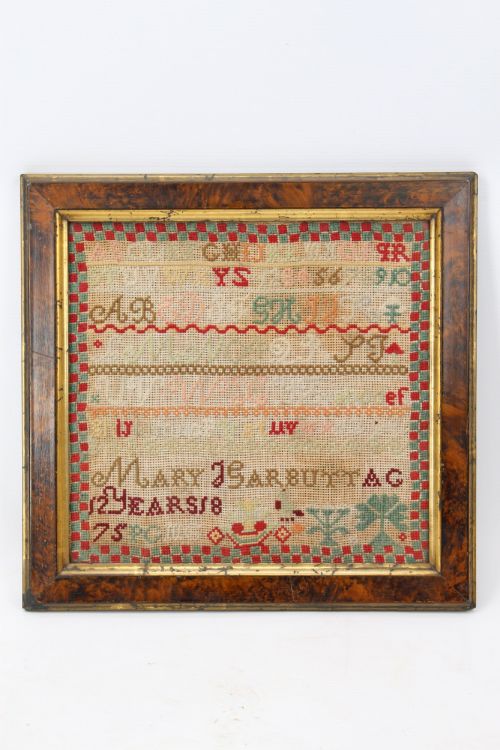
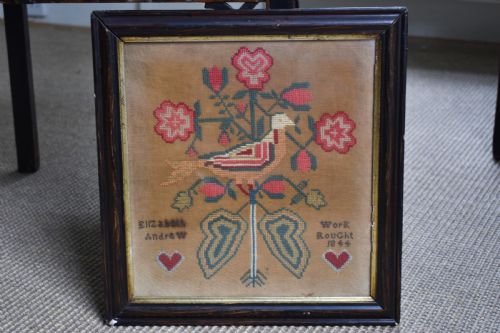
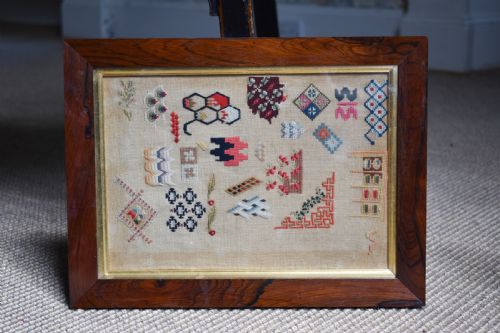
Victorian cross stitch encompasses framed textile art, needlework samplers, and embroidered panels created during the nineteenth century. These works frequently record the names and ages of young makers alongside alphabets, numerals, and pictorial motifs such as animals or figures.
The most common examples on this page are needlework samplers and framed wall art originating from the Victorian period, including dated pieces from the eighteen-forties, fifties, sixties, seventies, and eighties. They take the form of wool or silk thread stitched onto canvas, linen, or fabric grounds.
Makers often included specific dates and personal details within the composition, such as age and location, providing a direct record of domestic needlework education. Pieces range from miniature works to large framed textile wall art.
Materials and construction
These textiles rely on linen, canvas, and wool grounds worked with wool thread, silk thread, and standard thread. The embroidery stitches are executed by hand using traditional techniques seen in Berlin work and needlepoint.
Finished embroideries are typically housed in wooden surrounds, including original burr maple frames, often protected behind glass to preserve the delicate threads.
Victorian Cross Stitch Retail Price Guide 2026
Typical asking prices for victorian cross stitch among the pieces listed under this phrase on Sellingantiques today, from the lower quarter to the upper quarter. They describe what is for sale here now, not the wider market.
One listed sampler cheerfully owns up to a stitch error, proving that even Victorian children had off days.
Judging quality and execution
Quality rests upon the regularity of the stitching, the complexity of the design, and the preservation of the threads and ground material. Finer examples display meticulous control of tension and intricate pictorial details alongside clear lettering.
The retention of original framing, particularly burr maple wood and early glass, adds to the historical integrity of the piece. The inclusion of clear provenance, such as a legible maker name, date, and age, elevates the standing of a sampler.
The Victorian Cross Stitch Glossary
- Needlework sampler
- A piece of textile art created to demonstrate needle skill, typically featuring alphabets, numbers, and motifs. These works were often produced by young girls as practice or proof of education.
- Berlin work
- A style of point de stitch embroidery popular in the nineteenth century that used coloured charted designs. It is frequently seen in wool work panels depicting animals or scenes.
- Burr maple
- A decorative wood veneer with a swirled pattern, commonly used for nineteenth-century picture frames. It provides a warm, mottled border that complements antique textiles.
- Needlepoint
- A type of canvas work embroidery where yarn or thread is stitched through a stiff open-weave mesh. This technique forms the dense pictorial surface of many framed wall art pieces.
Victorian Cross Stitch: Frequently Asked Questions
What is a Victorian sampler?
A Victorian sampler is a piece of embroidered textile art made to practice or display needlework skills. They typically feature alphabets, numbers, and decorative motifs stitched by hand.
Many samplers also record the maker name, age, and date, creating a personal historical record of nineteenth-century domestic education.
How should I hang these textiles?
These framed textile works should be hung away from direct sunlight to prevent the silk and wool threads from fading. Maintaining stable indoor humidity protects both the fabric ground and the wooden frame.
Most pieces arrive behind glass, which helps shield the delicate embroidery from dust and atmospheric moisture.
How do I identify the date?
Many Victorian needlework pieces include embroidered dates alongside the maker name and age. Examining the style of the lettering, framing materials, and fabric ground also helps narrow down the period.
Pieces seen here range across the nineteenth century, with specific dates recorded from the eighteen-forties through to the eighteen-eighties.
What materials were used?
These works utilise linen, canvas, and fabric grounds stitched with wool thread, silk thread, and standard thread. Completed panels are frequently housed in wooden frames, including burr maple.
Glass is commonly incorporated to protect the stitched surface from environmental wear over the decades.