





Victorian Crimped Glass Vase
These Victorian crimped glass vase examples bring rich colour and tactile forms to a room, catching the light across every ruffled rim.
Victorian Crimped Glass Vase
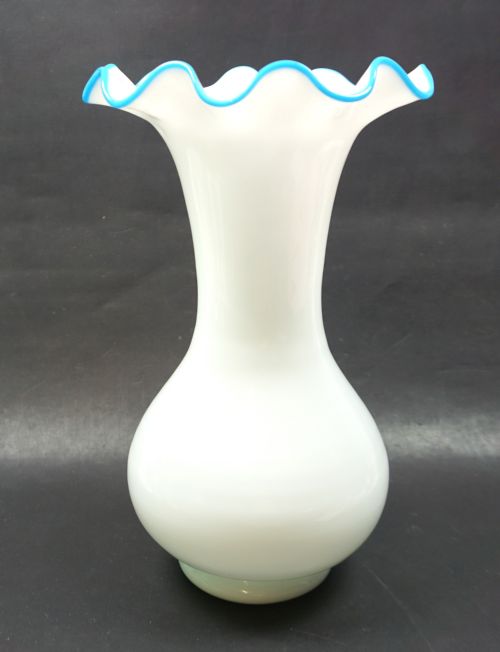
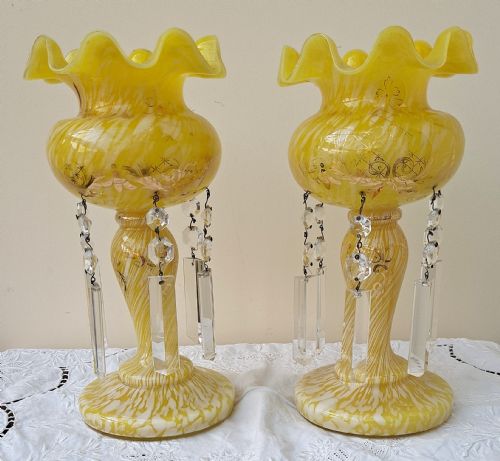
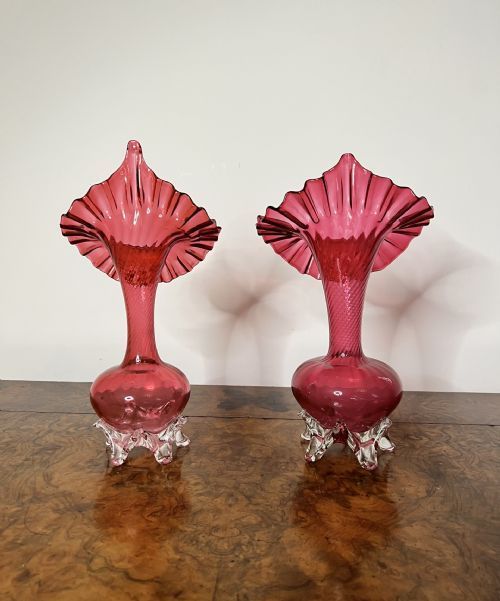
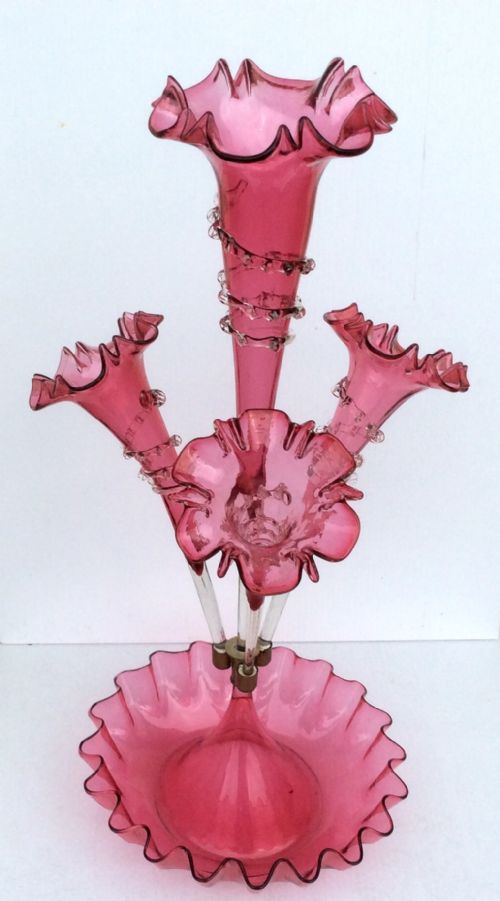
When you search for a Victorian crimped glass vase, you encounter pieces defined by ruffled, folded or flared rims formed while the material remained molten. The examples seen here range from single posy vessels to grand table centrepieces and pairs of lustres.
Most items on this page hail from the nineteenth century, spanning decades such as eighteen eighty and eighteen sixty. Makers applied these shaped rims to cranberry glass, satin glass and clear crystal across English and French workshops.
Materials and methods
Glassmakers utilised techniques involving cased glass, enamel decoration and applied trails of coloured glass to build depth in the body. Molten metal was blown into moulds or manipulated by hand to create the distinctive pinched and crimped edges.
The palette relies heavily on cranberry glass, white glass, and pink satin glass, occasionally enhanced with uranium green bases or hand-painted enamel details as recorded in nineteenth-century production.
Victorian Crimped Glass Vase Retail Price Guide 2026
Typical asking prices for victorian crimped glass vase among the pieces listed under this phrase on Sellingantiques today, from the lower quarter to the upper quarter. They describe what is for sale here now, not the wider market.
Judging quality in these pieces
Quality rests in the crispness of the hand-formed crimping along the rim and the evenness of the colour saturation through the body. Pieces with complex multi-layered cased glass or delicate hand-painted enamel show greater workshop skill.
Pairs and larger table centrepieces demonstrate higher ambition than single small posy vessels, particularly when incorporating matching lustres or complex epergne structures.
Baccarat·Thomas Webb and Sons
The Victorian Crimped Glass Vase Glossary
- Cranberry glass
- A rich red-pink glass coloured with gold chloride during production. It forms the primary material for many nineteenth-century table vessels.
- Cased glass
- A method where a layer of one glass colour is blown inside or outside another. This technique creates contrasting interior and exterior tones.
- Lustre
- A decorative vase fitted with hanging crystal prisms around the rim. They were designed to catch and refract candle or gas light.
- Epergne
- A large multi-armed centrepiece featuring a central trumpet vase surrounded by smaller hanging baskets. They served as dramatic table decorations for dining rooms.
- Satin glass
- Glass treated with hydrofluoric acid to produce a matte, velvety texture. It diffuses light softly across the surface.
Victorian Crimped Glass Vase: Frequently Asked Questions
Where were these pieces displayed?
Victorian households placed larger table centrepieces and epergnes in the centre of dining tables during formal meals. Smaller posy vases occupied mantelpieces, sideboards and occasional tables.
Pairs of lustres typically stood on either side of a clock or candelabra on the drawing room mantel.
How do I spot satin glass?
Satin glass presents a distinctive matte appearance rather than a high gloss shine. The surface feels softly textured like kid leather due to acid-treating.
This finish occurs frequently on nineteenth-century art glass pieces in shades of pink, blue, or yellow.
What is cranberry glass?
Cranberry glass gets its distinct transparent pink-red shade from the addition of gold during the melting process. It became immensely popular throughout the Victorian era.
You will find this tone used extensively in matched pairs, epergnes, and decorative table wares.