
Victorian Country Settee
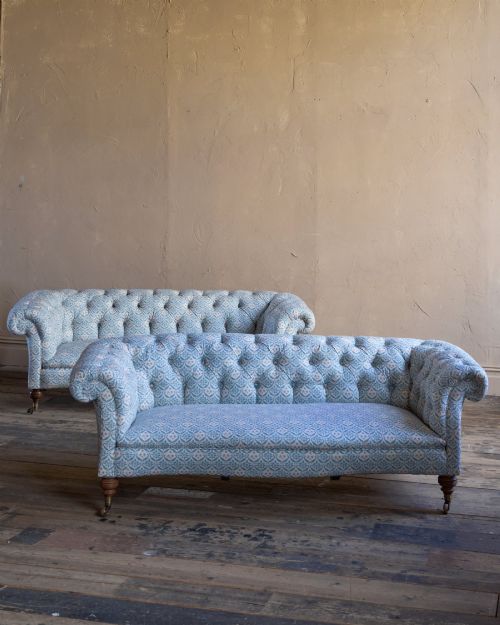
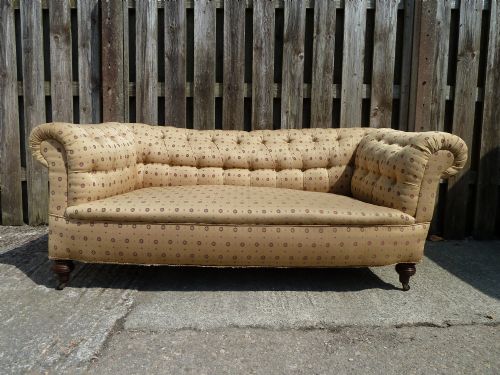
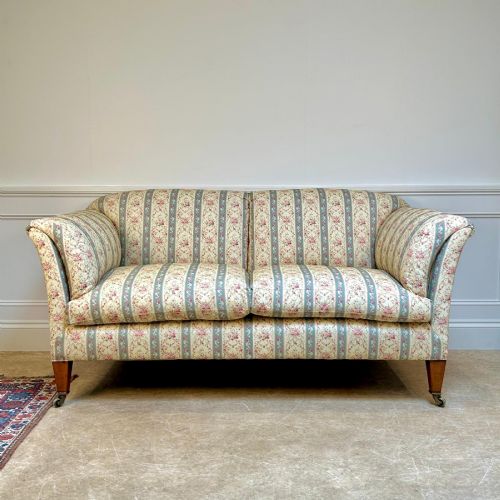
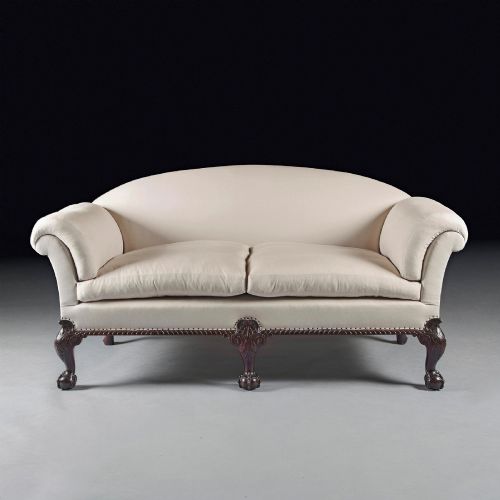
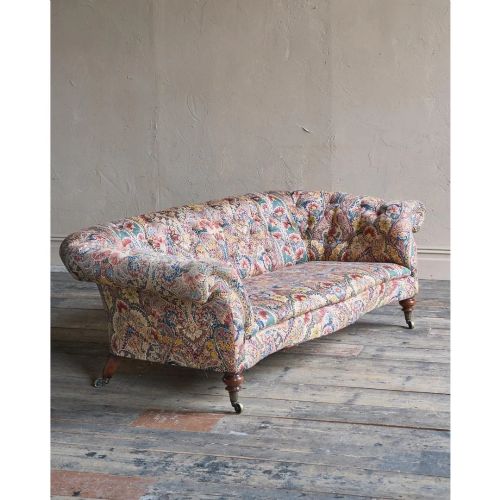
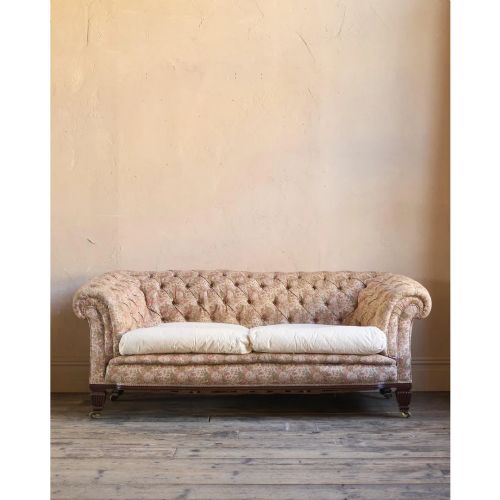
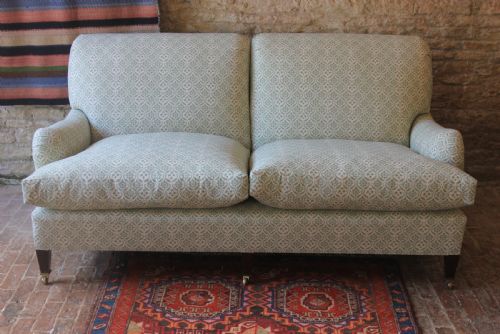
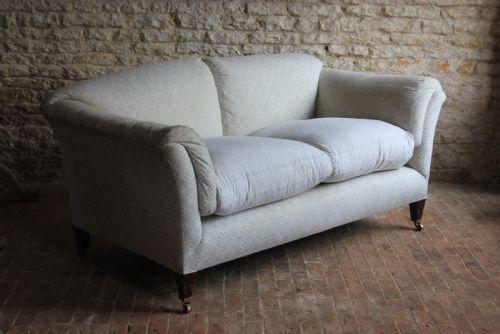
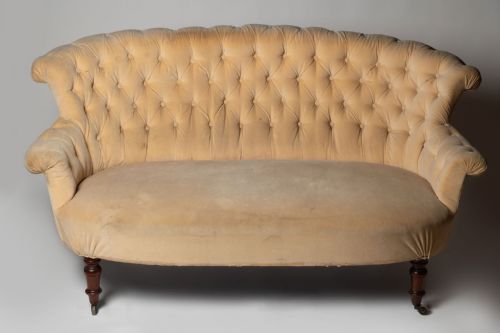
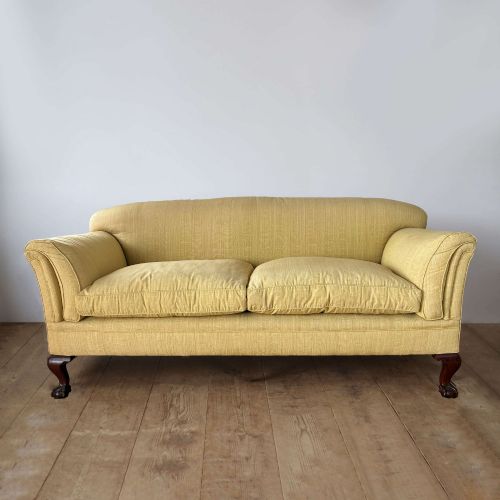
A victorian country settee brings relaxed English comfort into a room through generous proportions and traditional upholstery.
Victorian Country Settee
A victorian country settee combines nineteenth-century carpentry with the deep, sprung comfort expected in traditional English interiors. Buyers seek these pieces for their generous seating capacity and relaxed silhouette, which suits both formal drawing rooms and informal libraries. Most examples appearing here date from the nineteenth century, spanning Victorian and Edwardian periods.
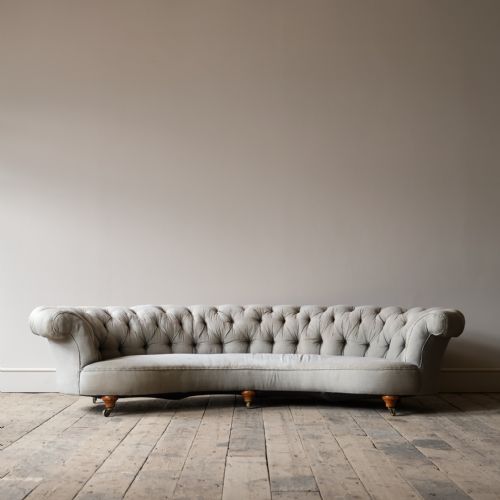
The form often overlaps with large country house sofas, Chesterfields, and smaller two-seater love seats. Makers constructed these items to endure daily use, employing sturdy timber frames beneath layers of padding and fabric. The design prioritises deep seating and supportive arms over rigid formality.
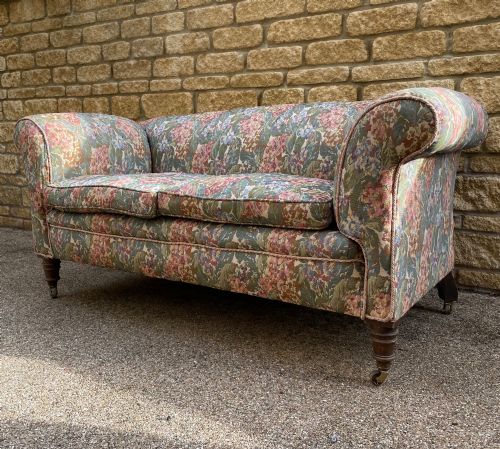
Regional variations and specific workshop commissions introduce distinct stylistic nuances, from simple turned wooden legs to elaborate carved walnut frames. Whether upholstered in floral fabric, leather, or plain calico, each settee reflects the domestic tastes of its original period.
Materials and Construction
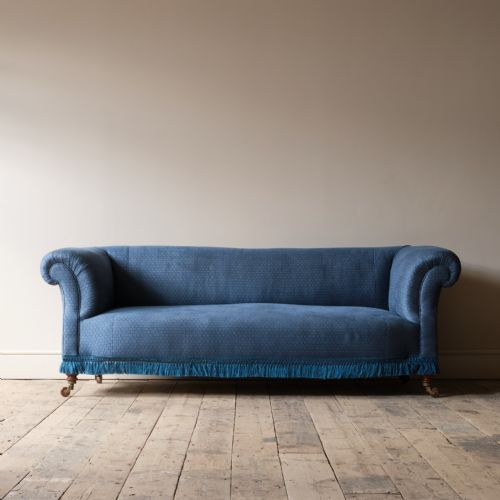
Craftsmen built the structural frames using hardwoods such as mahogany, walnut, and general timber to ensure long-term stability under heavy use. Exposed wooden elements often received careful carving or polishing, particularly on legs and scroll arms. Brass castors frequently aided mobility for these substantial pieces of furniture.
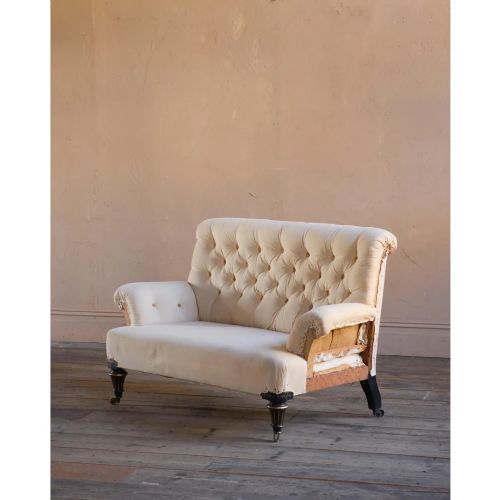
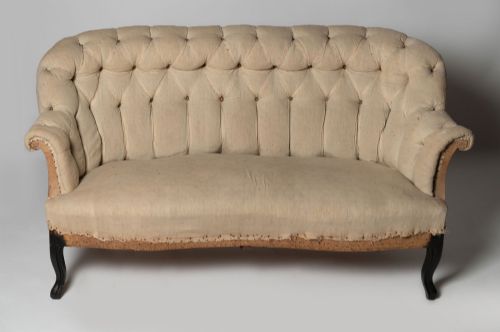
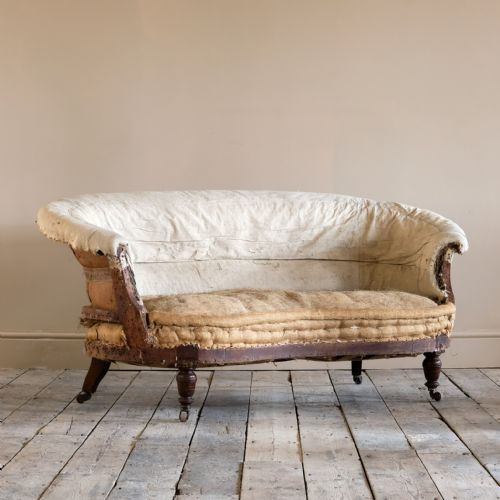
Traditional upholstery techniques involved complex internal webbing, horsehair stuffing, and heavy-gauge springs to achieve durable comfort. Outer coverings ranged from durable leather and velvet to printed cotton fabrics and ticking. Workshops often lined the interiors with calico before applying the final decorative textile.
The listings show frames constructed from mahogany, walnut, and hardwood, paired with upholstery in velvet, leather, and calico.
Assessing Quality and Execution
Quality rests significantly on the integrity of the internal wooden frame and the original joinery methods employed by the workshop. Superior examples retain their original sprung foundations and firm structural support without excessive sagging or movement in the joints. The weight and selection of the primary timber also indicate the maker's initial investment in the piece.
The refinement of the carving, the balance of the proportions, and the presence of documented maker stamps elevate certain settees above standard commercial production. Pieces originating from notable London and regional firms demonstrate superior hand-finishing in both the exposed woodwork and the hidden upholstery layers.
Howard and Sons·Hampton and Sons·Jackson and Graham·Morison and Co·William Birch·Gillows
The Victorian Country Settee Glossary
- Chesterfield
- A large upholstered sofa characterised by rolled arms of the same height as the back, often featuring deep buttoning. This form provides formal structure combined with deep lounging depth.
- Calico
- A plain-woven cotton fabric traditionally used as an inner lining layer to secure stuffing materials before the application of final decorative upholstery. It reveals the underlying craftsmanship of the piece.
- Scroll arm
- An armrest shaped in a continuous curving scroll outward from the seat. This profile defines many nineteenth-century seating designs.
- Ticking
- A tightly woven, durable cotton material traditionally utilised to contain loose stuffing and feathers within cushions and upholstery layers. Its striped pattern is characteristic of utilitarian period interiors.
- Giltwood
- Timber treated with a thin layer of gold leaf or gilt paint to achieve a metallic decorative finish. This treatment appears on select formal frames.
Victorian Country Settee: Frequently Asked Questions
What defines a country house settee?
These settees are characterised by deep, comfortable proportions designed for relaxed domestic living rather than formal entertaining. They typically feature heavy frames, supportive sprung seats, and traditional upholstery.
Craftsmen often selected durable coverings like leather, velvet, or heavy cotton to withstand generations of daily use in large English residences.
How do I care for antique upholstery?
Maintenance depends entirely on the specific fabric covering the settee, whether it is delicate velvet, printed cotton, or robust leather. Regular gentle vacuuming with a soft brush attachment prevents dust accumulation within the fibres.
Avoid placing antique textiles in direct sunlight to prevent fading, and consult a specialist for professional cleaning when necessary.
Are these settees suitable for daily use?
Nineteenth-century settees were constructed using robust hardwoods and traditional multi-layered springing systems built for enduring comfort. Many examples remain thoroughly practical for modern seating once any necessary structural or internal restoration is complete.
Checking the stability of the frame and the resilience of the springs ensures the piece will support everyday household activities.
How can I identify the maker?
Maker attribution often relies on stamped wooden frames, paper labels pasted beneath the upholstery, or distinct construction methods associated with specific workshops. Signatures frequently appear on the inside of the beech or walnut frame rails.
Noted cabinet makers and upholstery firms frequently marked their output to denote quality and provenance.