



Classic Victorian Sofa
These classic victorian sofa examples bring historic seating and deep buttoned comfort into a room, offering enduring craft for everyday use.
Classic Victorian Sofa
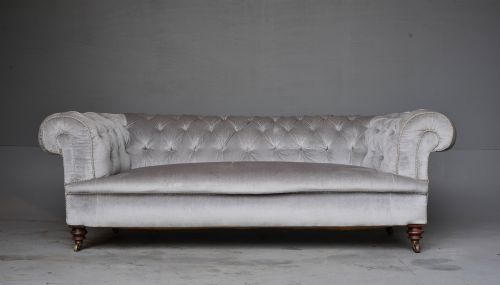
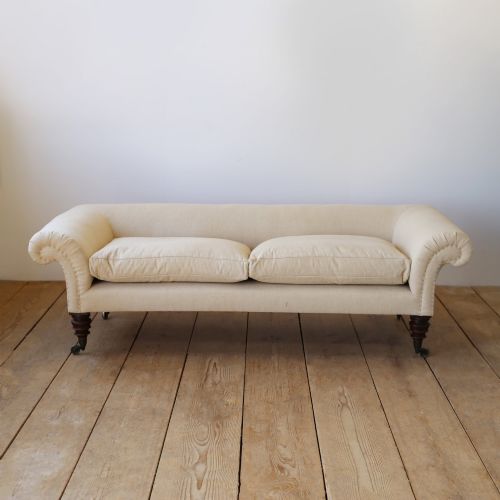
A classic victorian sofa encompasses sturdy nineteenth century seating forms, featuring chesterfields and country house settees designed for deep comfort. Buyers encountering these pieces on the page meet sturdy timber frames upholstered in leather, velvet, or fabric.
The selection ranges from compact walnut frames to expansive leather chesterfields bearing buttoned upholstery. These seats span the Victorian era, nineteenth century, and Edwardian periods, including occasional French provincial and English country styles.
How they were made
Frames rely on solid timber foundations, predominantly utilising mahogany, walnut, and general wood structures combined with brass castors. These supportive wooden skeletons provide the structural integrity required for heavy sprung upholstery.
Upholstery techniques involve deep buttoning across leather, velvet, and fabric coverings. Makers applied hand dyed leathers and traditional padding to achieve the characteristic scroll arms and deep seats seen on chesterfields.
Several examples arrive bearing old workshop addresses on Berners Street.
What varies in quality
Quality rests in the integrity of the timber frame and the depth of the original upholstery materials. Pieces retaining their original leather or substantial walnut frames command attention for their authentic preservation.
The precision of the deep buttoning and the execution of the scroll arm joinery set finer examples apart from simpler country house forms. Structural proportion and the handling of fabric or leather finishes determine the distinction across the range.
Howard and Sons
The Classic Victorian Sofa Glossary
- Chesterfield
- A deep buttoned sofa with low back and arms of the same height. This form defines many nineteenth century seating examples.
- Buttoned
- An upholstery technique where buttons are pulled deep into the padding to create a geometric pattern. It secures the stuffing while adding texture.
- Walnut
- A hard timber utilised for cabinetwork and furniture frames during the period. Its rich grain provides both strength and decorative appeal.
- Castor
- A small wheel fitted to the base of furniture legs to aid movement. Brass versions often support heavy nineteenth century seating.
Classic Victorian Sofa: Frequently Asked Questions
What defines a classic victorian sofa?
These pieces are nineteenth century seating forms defined by deep buttoning, scrolled arms, and robust timber frames. They combine heavy upholstery with substantial wood construction.
They appear primarily as chesterfields and country house settees upholstered in leather, velvet, or fabric. Walnut and mahogany woods provide the structural support beneath the padded surfaces.
How were these sofas used?
Historically, these settees served as comfortable primary seating in formal parlours, libraries, and country house drawing rooms. Their deep proportions invited relaxed sitting.
Today, they function as central living room seating that anchors a traditional or transitional interior scheme. Their durable leather and fabric surfaces suit everyday domestic use.
How do I live with one?
Integrating these pieces into a modern room requires balancing their substantial bulk with simpler surrounding furniture. Leather and timber finishes pair well with contemporary textiles and lighting.
Routine maintenance involves conditioning leather surfaces and caring for wooden frames. Placing them away from direct heat sources preserves the nineteenth century materials.
How do I tell periods apart?
Distinguishing between periods involves examining the timber species, upholstery style, and structural proportions. Victorian pieces often feature heavy buttoned leather chesterfield forms. Smaller walnut frames and alternative proportions indicate Edwardian influence or turn of the century production, alongside occasional French provincial styling.