
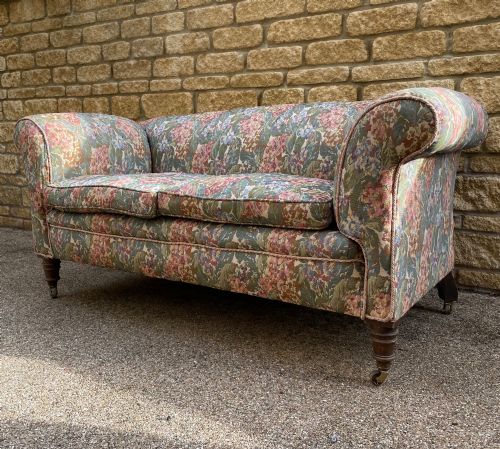
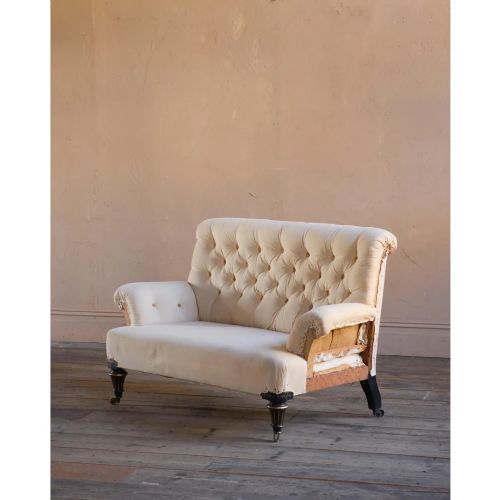
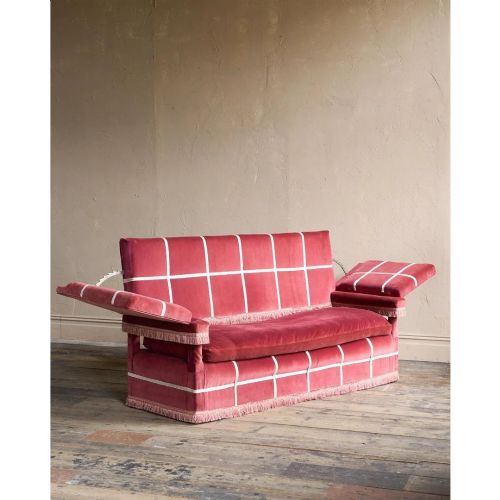
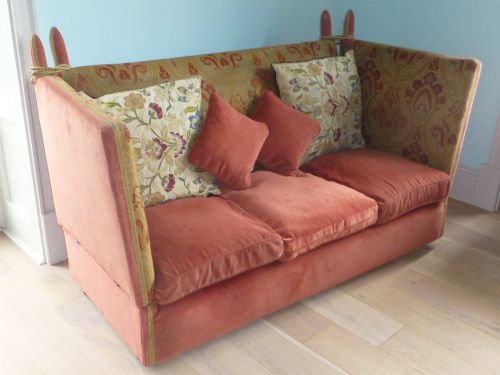


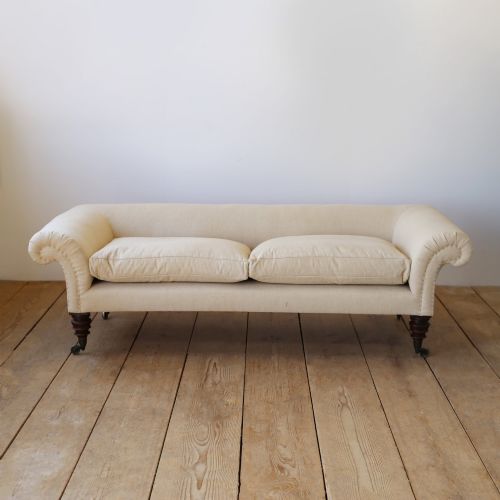


Upholstered Drop Arm Settee
An upholstered drop arm settee offers adjustable comfort through moveable ends, combining period timber frames with tactile fabric.
Upholstered Drop Arm Settee
An upholstered drop arm settee provides flexible seating through adjustable ends that lower or raise as required. When buyers search for an upholstered drop arm settee, they encounter forms spanning the Victorian era through the 1930s, including Knole sofas and English country house designs.
The selection on this page centres primarily on Victorian and Edwardian examples, alongside pieces from the 1910s, 1920s and 1930s. These vary from two-seater formats to larger three-seater configurations.
Makers such as Jackson and Graham appear in the record, alongside traditional country house styles and Howard style interpretations. Fabrics range from velvet and damask to general upholstery fabric.
How they were made
Construction relies upon timber and mahogany frameworks that support the internal mechanics for the drop ends. Brass components frequently secure the adjustable arm mechanisms within the wooden structure.
Textiles like velvet, damask and floral upholstery fabric cover the padding, secured over the wooden frame. Metal springs and traditional stuffing provide the internal support beneath the outer fabric layer.
Some Victorian settees hide their brass drop arm hinges beneath heavy velvet folds, keeping the mechanism entirely secret until deployed.
What varies in quality
The integrity of the timber frame and the smooth operation of the drop arm mechanism distinguish finer pieces from standard production. Cabinetmaking skill in the concealed wooden joints dictates the long-term stability of the settee.
The choice of covering material, whether rich damask or thick velvet, alters the character and visual weight of the seating. Original maker attribution, such as the work of Jackson and Graham, elevates the standing of a specific sofa.
Jackson and Graham
The Upholstered Drop Arm Settee Glossary
- Drop arm
- A sofa end designed to lower on a hinged or mechanical mechanism. This allows the piece to function as a traditional sofa or an impromptu daybed.
- Knole sofa
- A historic style featuring high adjustable ends tied with braids and tassels. It forms a direct ancestor to many drop arm settees.
- Chesterfield
- A deep-buttoned upholstered sofa style characterised by arms and back of the same height. Several examples appear alongside drop arm variations.
- Damask
- A reversible figured fabric traditionally woven on a jacquard loom. It provides a patterned textile finish often seen on period upholstery.
- Howard style
- A nineteenth century upholstered furniture aesthetic focused on deep comfort and sprung seats. Pieces in this tradition prioritise relaxed domestic seating.
Upholstered Drop Arm Settee: Frequently Asked Questions
What is a drop arm settee?
A drop arm settee is an upholstered seat featuring at least one movable end that drops down flat. This mechanical feature allows the user to alter the sofa from an upright seating position into a semi-lounging arrangement.
Such designs evolved from early seventeenth century aristocratic seating into more accessible Victorian and Edwardian household forms. They bridge the gap between a standard sofa and a daybed.
How do I operate the drop arm?
The movable end typically relies on a metal or brass ratchet mechanism concealed within the upholstered frame. Lifting or releasing the arm permits it to drop down to a horizontal position.
Users should support the weight of the arm gently while adjusting the mechanism to protect the internal timber and fabric joints. Older systems require careful handling compared to modern sprung hinges.
Are these settees comfortable for daily use?
These pieces utilise traditional stuffing and sprung interiors designed for domestic sitting rooms. The ability to lower the arms adds a versatile dimension for reclining.
Many surviving examples retain deep seats suited to relaxed lounging, though older internal padding may feel firmer than contemporary foam furniture.
How do I identify a Victorian drop arm sofa?
Victorian examples often display turned wooden legs, exposed timber elements, and heavier frame proportions. They frequently utilise traditional covering materials like velvet or damask.
Comparison with Edwardian or later 1930s pieces reveals shifts in upholstery weight and overall silhouette trimness. Maker details or structural construction methods further help date an individual piece.