





Victorian Cottage Oil Painting
A victorian cottage oil painting brings domestic rural life into focus through pigment laid upon canvas, offering a glimpse into nineteenth-century domestic interiors and pastoral scenes.
Victorian Cottage Oil Painting
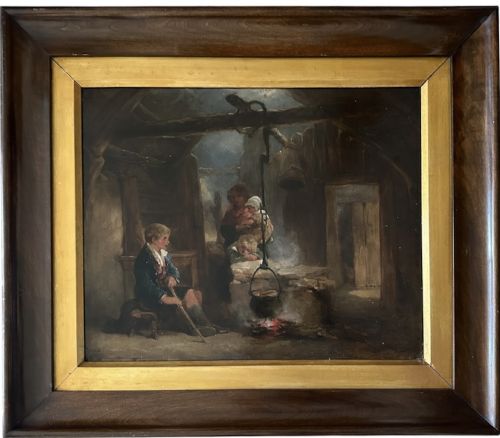
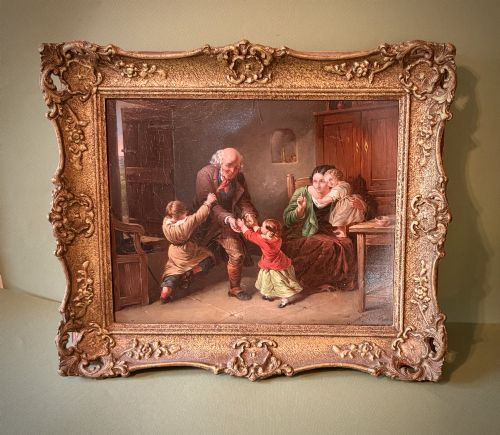
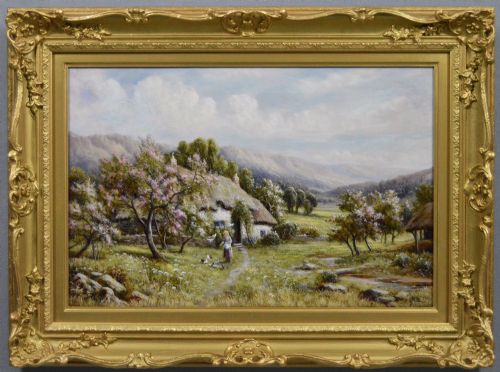
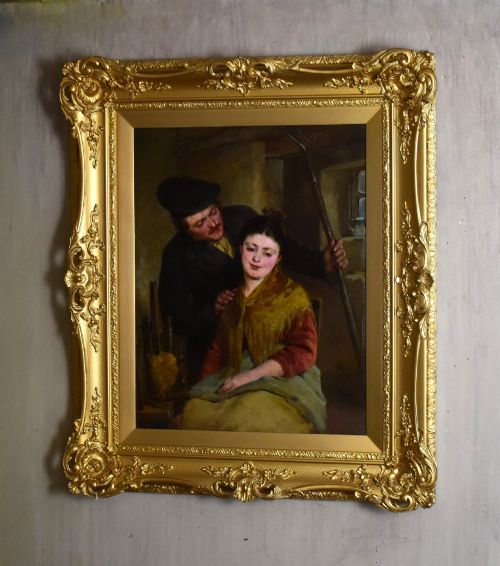
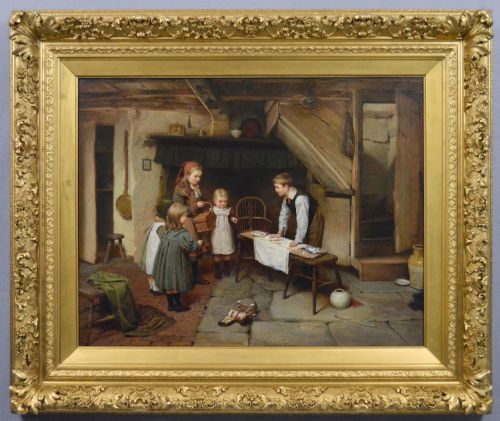
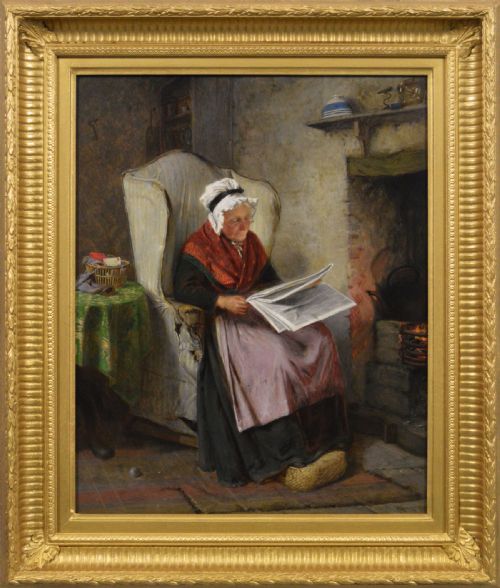
A victorian cottage oil painting depicts rural dwellings, farmsteads, and interior domestic scenes from the nineteenth and early twentieth centuries. These artworks frequently record figures engaged in everyday tasks such as spinning, reading, or tending livestock near small country houses.
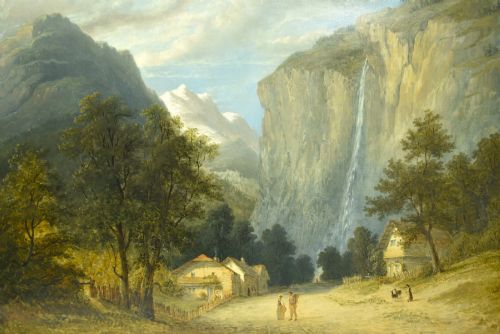
The selections available here range from quiet landscape views of remote crofts to detailed genre scenes featuring mothers, children, and elderly residents by hearths. Most pieces originate from the Victorian era and the decades immediately following, utilising traditional brushwork on canvas or panel.
Buyers encounter works produced by both named artists and unsigned hands, spanning British Impressionism, Romanticism, and 19th Century Realism. Subjects extend from English countryside settings to Scottish highlands and Welsh dwellings.
How They Were Made
These works rely on oil paint applied to prepared canvas or wooden panels, allowing artists to build layered compositions with rich textures. Painters employed brushes of varying widths to render both the soft fabric of garments and the solid masonry of rural walls.
Many surviving examples retain their original framing constructed from wood, gesso, and gold leaf or giltwood. Gilding techniques applied to the frames utilised thin sheets of gold leaf over moulded gesso to create reflective borders that set off the dark tones of the canvas.
Materials recorded across the inventory include oil paint, canvas, wood, gilt wood, gesso, and gold leaf.
What Varies in Quality
The strength of a composition rests on the artist's command of light, particularly in how sunlight enters a cottage interior or illuminates a thatched roof. Superior works capture subtle shifts in shadow and atmosphere, whereas weaker pieces rely on formulaic arrangements of figures and landscape elements.
Detail in facial expressions, textile patterns, and surrounding foliage distinguishes fine genre painting from ordinary production. The preservation of the original pigment layer and the structural integrity of the wood and canvas support further define the standing of each piece.
William Howard Hardy·Robert John Hammond·Howard Helmick·Harry Brooker·John Horace Hooper·Alexander Rosell·Haynes King·James Kyd·Frederick James Knowles·George Smith·Charles Vickers·William Henry Knight·Robert Finley McIntyre·Ralph Hedley·John Falconar Slater·Abraham Hulk Junior·Harry Pennell·Ernest Walbourn·George Cole·Pauline Delacroix Garnier·Alfred Provis·Robert Gallon·George Augustus Williams·Thomas Thomas·Robert Gemmell Hutchison
The Victorian Cottage Oil Painting Glossary
- Oil on Canvas
- A painting medium where pigments suspended in drying oils are applied to a stretched woven fabric support. This combination allowed nineteenth-century artists to blend tones smoothly and rework areas over extended periods.
- Genre Painting
- Artwork depicting scenes from everyday life, typically involving ordinary people in domestic or rural settings. These pieces document social history, interior furnishings, and customary dress of the period.
- Gesso
- A paint mixture consisting of a binder mixed with chalk, gypsum, or pigment used to prepare wood or canvas substrates. On frames, thick gesso layers provided a smooth base for subsequent gilding.
- Panel
- A rigid flat piece of wood used as a support for painting instead of flexible canvas. Wooden boards offered a stable surface for smaller detailed works.
- Giltwood
- Wood that has been coated with gold leaf or gold paint to simulate solid gold ornamentation. Elaborate giltwood frames were standard for framing significant nineteenth-century fine art.
Victorian Cottage Oil Painting: Frequently Asked Questions
What is a victorian cottage oil painting?
It is an artwork produced in the nineteenth century or early twentieth century depicting rural dwellings and domestic life. Artists recorded scenes of families, farmsteads, and countryside landscapes using oil paint on canvas or panel.
These pieces reflect the Victorian fascination with pastoral subjects and traditional trades. They serve as historical records of rural architecture and costume.
How were these paintings displayed originally?
They were hung in parlours and drawing rooms within homes of the period, usually enclosed in ornate giltwood frames. The frames were designed to complement the dark, rich tones characteristic of nineteenth-century interior decoration.
Wealthy patrons and middle-class collectors alike showcased these works to signal cultural refinement and an appreciation for rural scenery.
How do I care for an oil painting on canvas?
Keep the artwork away from direct sunlight and fluctuating humidity levels to protect the canvas and pigment. Gentle dusting with a soft, dry brush maintains the surface without disturbing the paint.
Avoid using liquid cleaners on the canvas or the giltwood frame. Professional conservation should be sought if the paint layer requires cleaning or stabilization.
How can I tell the period of the painting?
Examining the stretcher bars, canvas weave, and framing style provides primary clues to the date of creation. Nineteenth-century works often feature hand-carved gesso frames and specific pigment compositions characteristic of the era.
Signatures, artist dates recorded in titles, and exhibition labels on the reverse also help establish the chronological context of the piece.