

Framed Rural Scene Artwork
Framed rural scene artwork brings the quiet of the countryside indoors, capturing pastoral fields, farmyards, and country cottages through historical oil paintings and watercolours.
Framed Rural Scene Artwork
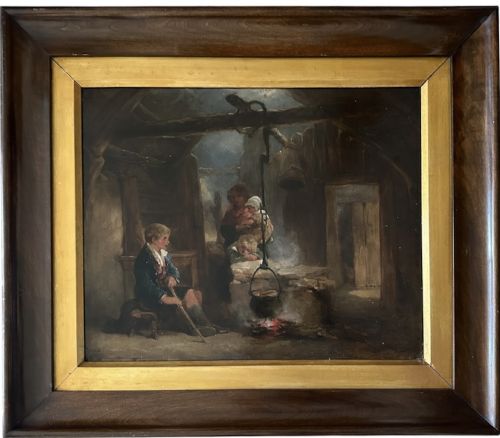
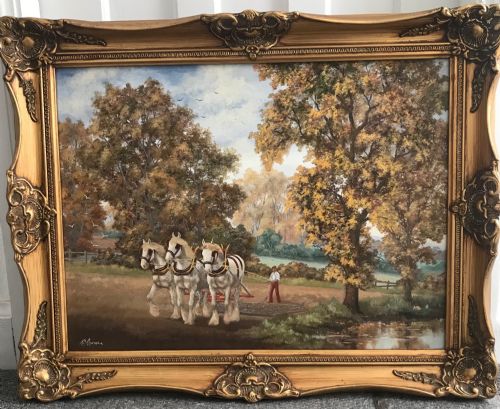
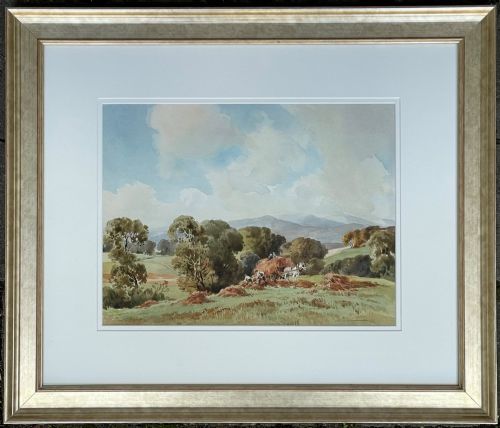
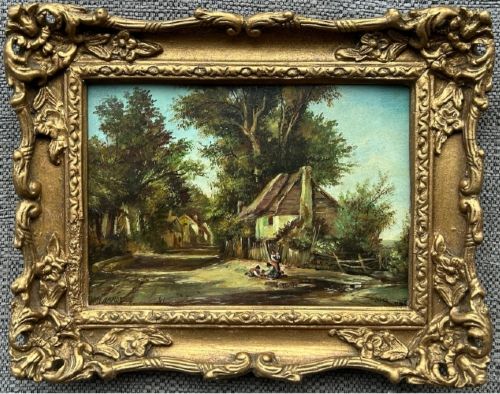
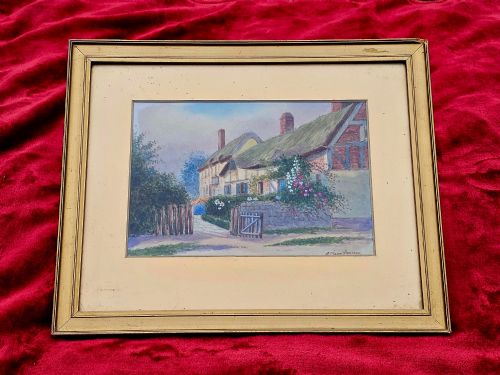
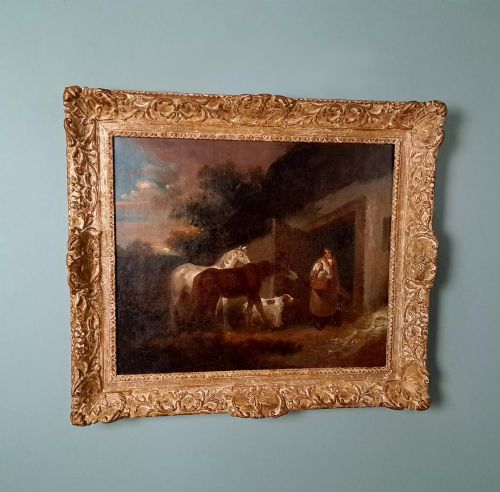
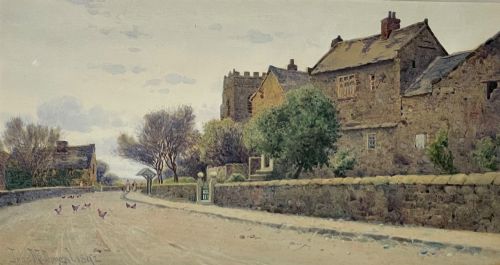
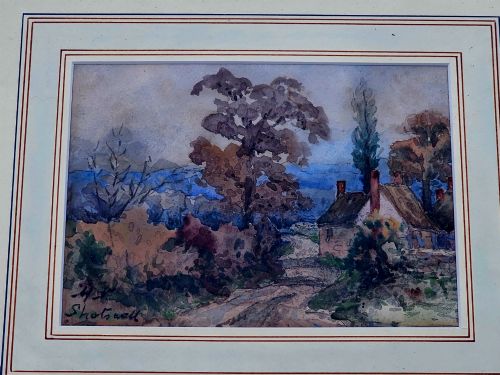
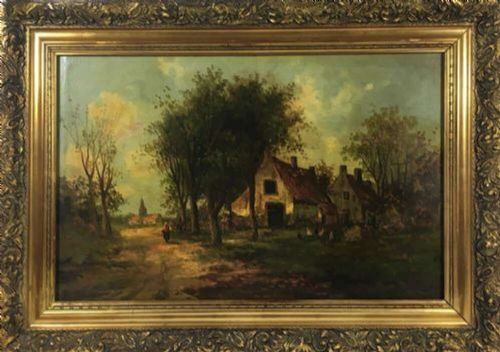
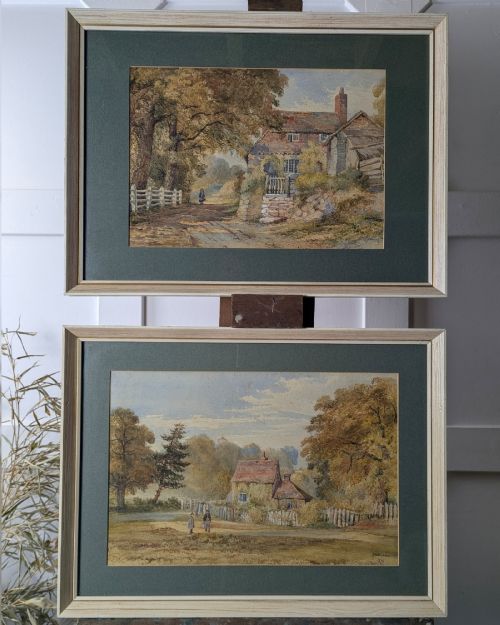
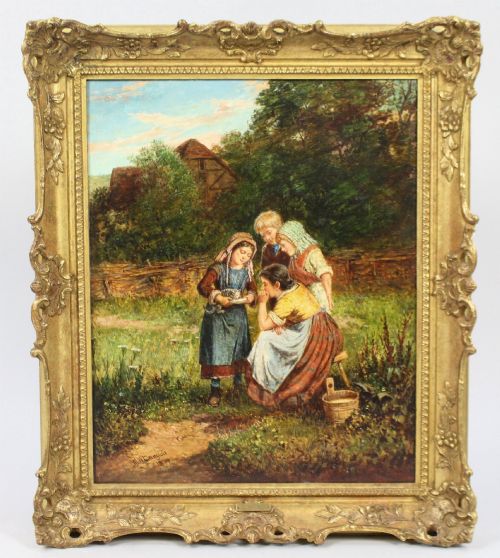
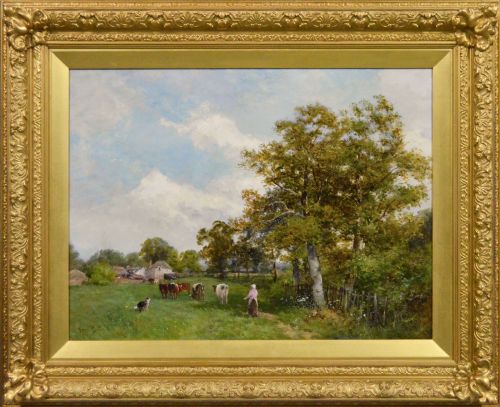
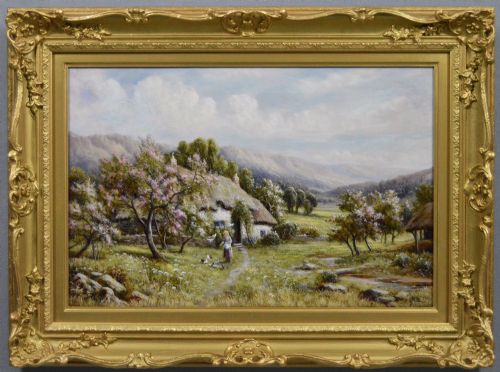
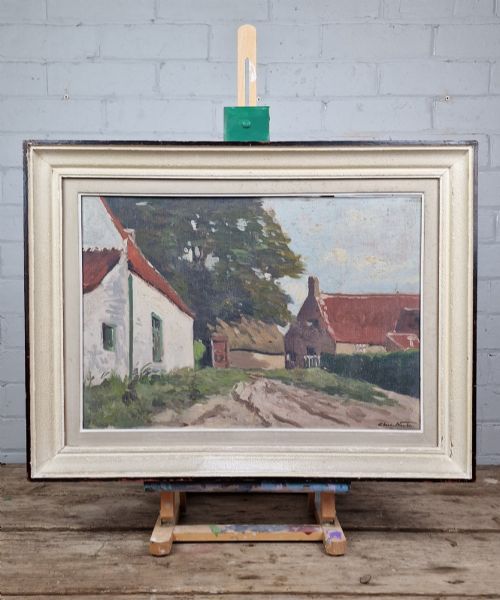
When you search for framed rural scene artwork, you encounter historical depictions of the countryside spanning the Victorian era into the twentieth century. These works concentrate on agricultural life, farm animals, harvesting, and village cottages set within natural landscapes.
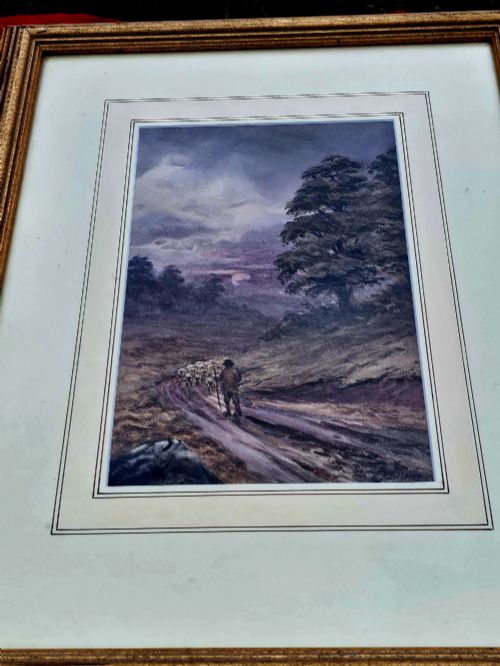
The pieces on this page are most commonly original oil paintings on canvas or wood panels, alongside delicate watercolours protected behind glass. Many retain their period gilt wood frames, completing the presentation of these pastoral and impressionist subjects.
How they were made
Artists painted these rural subjects using oil paint on stretched canvas, wooden panels, or card, building texture and depth with layered brushwork. Alternatively, watercolours were applied to paper with fluid washes, capturing soft atmospheric light over fields and rivers.
Presentation relied heavily on custom woodwork, utilising substantial gilt wood frames that protected the delicate surfaces of paper and canvas while enhancing the visual weight of the picture.
The listings show rural scenes rendered in oil, watercolour, and lithograph across the Victorian and Edwardian periods.
What varies in quality
Quality rests upon the artist's command of perspective, light, and anatomical accuracy in figures and farm animals. Finer pieces demonstrate a confident handling of brushwork or watercolour washes that brings movement to horses, cattle, and working figures.
The condition and period authenticity of the frame also dictate the overall standard. Original gilt wood frames that complement the painting without replacement hardware elevate the piece significantly.
Percy Lancaster·William Howard Hardy·William Joseph Shayer Senior·John McDougal·Mark William Langlois·David Bates·Robert John Hammond·Charles Houben·Robert W Macbeth·John Horace Hooper·George Augustus Holmes·George Oyston·Frederick James Kerr·Edgar Hunt·John Bond·Umberto Volpato·William Greaves·Miles Birkett Foster·Herman S Melville·Frederick Hines·Raimond Louis Lecourt·Thomas Sidney Cooper
The Framed Rural Scene Artwork Glossary
- Oil on Canvas
- Pigment mixed with drying oil applied to a woven fabric stretched across a wooden frame. This medium allowed artists to work with rich textures and deep colour blending.
- Watercolour
- A painting method where fine pigment is suspended in a water-based solution and applied to paper. It relies on the white of the paper to show through translucent washes.
- Gilt Wood
- Wood covered with a thin layer of gold leaf or gold paint. Frames treated this way were standard for finishing fine art pieces in the nineteenth and early twentieth centuries.
- Barbizon School
- A mid-nineteenth-century French art movement focused on real-life landscape and rural scenes. Painters in this circle worked outdoors to capture natural light and unidealised farm environments.
- Impressionism
- A style of painting that uses small, thin brush strokes and open composition to emphasise accurate depiction of light. It prioritises the overall visual effect rather than meticulous detail.
Framed Rural Scene Artwork: Frequently Asked Questions
How do I hang a heavy oil painting?
Heavy oil paintings require picture hooks secured directly into wall studs or heavy-duty wall anchors rated for the weight of the frame. Using two spaced fixings prevents the artwork from tilting.
Ensure the hanging wire or brackets on the back of the gilt wood frame are sound and securely fastened to the wooden chassis before mounting.
Can I place watercolours in direct sunlight?
Watercolours on paper are sensitive to ultraviolet light and will fade over extended periods of exposure. Hanging them away from direct windows preserves the pigments.
Using museum-grade UV-filtering glass provides an additional layer of protection against fading for vulnerable paper artworks.
How do I identify the period of a frame?
Period frames often display traditional corner mitres, genuine gilt leaf application, and aged backing boards secured with old fixings. Examining the construction materials reveals whether a frame is original to the artwork.
Nineteenth-century frames frequently use heavy composition ornamentations on wood mouldings, whereas later twentieth-century examples show simpler profiles.
What is the difference between oil and watercolour?
Oil paint uses a slow-drying oil binder, allowing artists to rework the surface, blend tones smoothly, and build thick impasto textures on canvas or wood panels. Watercolour uses water-soluble binders on paper, creating luminous, transparent washes.
Oils are traditionally displayed without glass protection, while watercolours require glass to prevent moisture and dust damage to the paper.