







Victorian Correspondence Desk
A victorian correspondence desk is a purpose-built home for letter writing, offering fitted compartments for paper, pens and daily mail.
Victorian Correspondence Desk
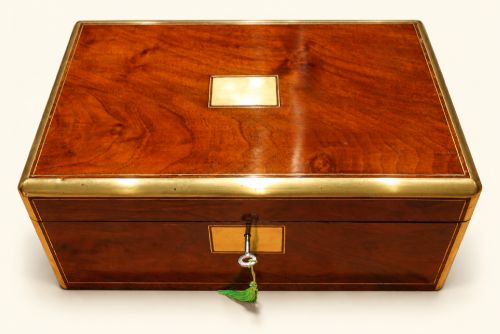
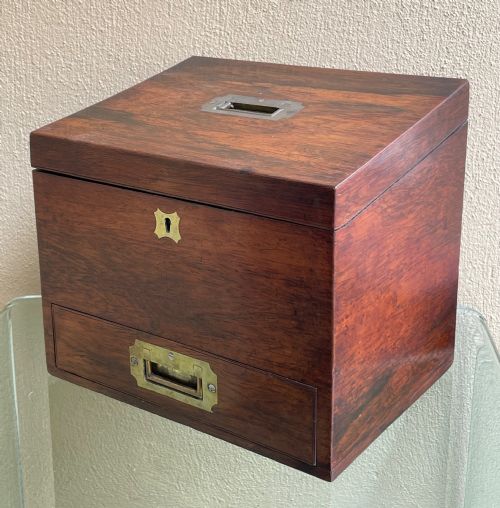
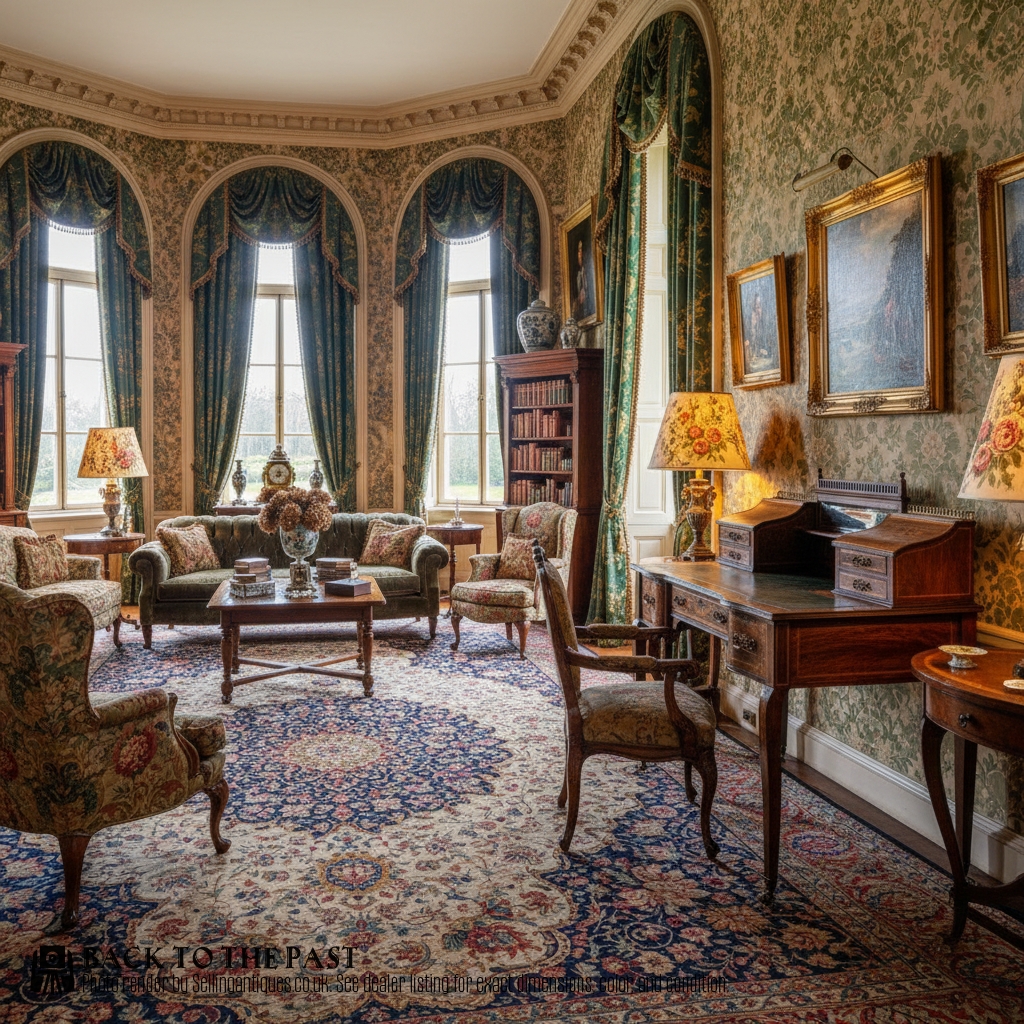
A victorian correspondence desk encompasses compact desktop stationery boxes alongside full-size writing tables designed for the Victorian study. The most common format met here is the desktop box, housing dividers for post and hinged slopes for writing.
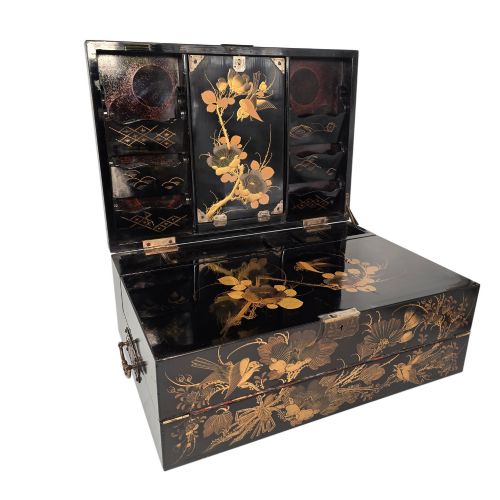
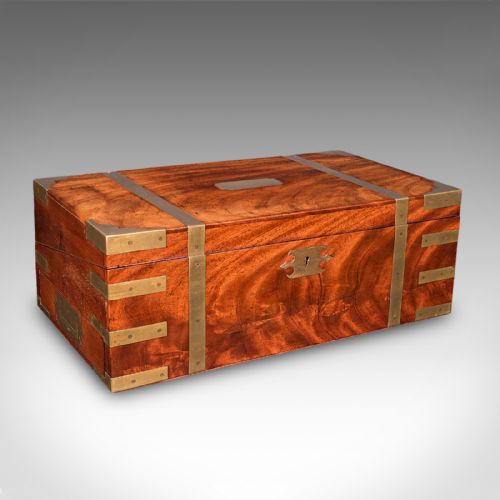
Makers produced portable campaign pieces alongside heavy country house items in oak and walnut. Regional variations span Scottish oak examples, Anglo-Indian brass-mounted models, and Tunbridge Ware decoration.
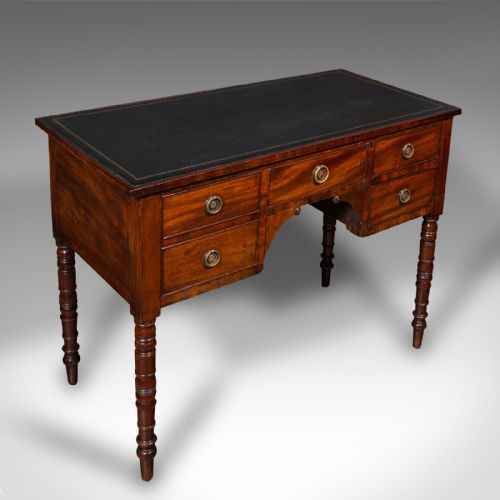
The assortment shifts between standing correspondence desks, gents writing tables, and stationery cabinets featuring fitted interior drawers. Each form reflects the heavy reliance on written correspondence during the nineteenth century.
Materials and Construction
Cabinet makers built these pieces using dense hardwoods like mahogany, rosewood, oak and burr walnut, frequently accented with coromandel and ebony. Structural durability relied on tight dovetail joints and solid timber carcases designed to withstand frequent use.
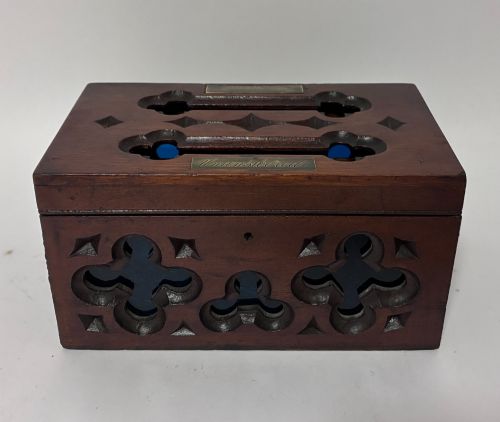
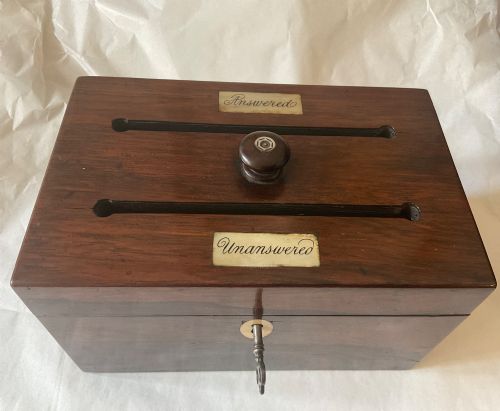
Decorative embellishments include brass binding, campaign flush handles, marquetry, and ormolu mounts. Interiors often incorporate fitted leather surfaces, bone details, and specialised slots for answered and unanswered letters.
Victorian Correspondence Desk Retail Price Guide 2026
Typical asking prices for victorian correspondence desk among the pieces listed under this phrase on Sellingantiques today, from the lower quarter to the upper quarter. They describe what is for sale here now, not the wider market.
Current listings feature materials such as brass, mahogany, rosewood, oak, leather, bone, burr walnut, and coromandel.
Craftsmanship and Proportion
Quality rests on the selection of figured veneers, such as burr walnut or coromandel, matched carefully across the box exterior. Superior examples display crisp brass corner mounts, integrated locking mechanisms with working keys, and meticulously partitioned interiors.
Lesser pieces feature plain timbers and simple butt joints, while top-tier items include secret drawers, specialised pen trays, and complex Tunbridge Ware mosaic patterns or Japanese lacquer work.
Edmund Nye·W and J Milne
The Victorian Correspondence Desk Glossary
- Writing slope
- A portable box with a hinged sloping lid that opens to reveal a velvet or leather-lined writing surface and compartments for stationery.
- Stationery box
- A desktop cabinet featuring tiered dividers and slots designed specifically for organising envelopes, paper, and correspondence.
- Campaign box
- A piece built for travel, featuring recessed brass handles, reinforced corners, and durable construction suited to colonial life.
- Tunbridge Ware
- Small wooden objects decorated with intricate mosaic patterns made from tiny wood tiles of various natural colours.
- Coromandel
- A dense, heavily grained hardwood imported from Asia, valued for its rich dark brown colour and striking black stripes.
Victorian Correspondence Desk: Frequently Asked Questions
What is a correspondence box?
A correspondence box is a specialised nineteenth-century desktop organizer designed to hold paper, envelopes, and ink for letter writing.
These pieces range from simple wooden containers to elaborate cabinets featuring labeled slots for answered and unanswered post.
How do I use a writing slope?
A writing slope opens outward to create an angled desk surface covered in leather or velvet for comfortable handwriting.
Inside, hidden wells store ink bottles, nibs, and stationery securely during travel or storage.
What woods were used?
Cabinet makers utilised dense hardwoods including mahogany, oak, rosewood, and walnut for structural stability.
Exotic timbers such as coromandel, ebony, and burr walnut veneers were applied to finer boxes for decorative effect.
Are campaign boxes different?
Campaign correspondence boxes feature heavy brass corner braces and flush recessed handles built to endure military transport.
These durable pieces were engineered for officers and travellers moving across the British Empire.