


Victorian Corner Accent Seating
Victorian corner accent seating offers ingenious space-saving geometry and striking period character for the modern interior.
Victorian Corner Accent Seating
The material palette spans durable hardwoods like oak, walnut, beech, and rosewood, frequently complemented by period upholstery fabrics, velvet, leather, and brass accents. Stylistic expressions range from austere English vernacular and Gothic Revival to ornate Aesthetic Movement and Renaissance Revival designs. Such variety ensures that these chairs adapt easily to contemporary residential schemes requiring historical depth and unusual silhouettes.
How they were made
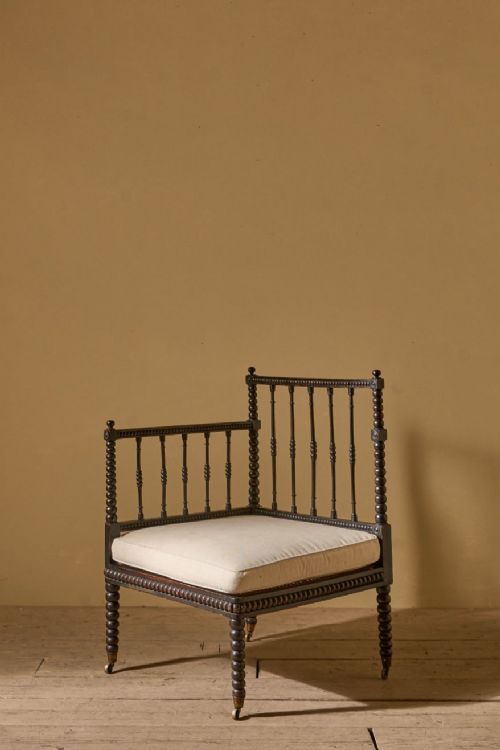
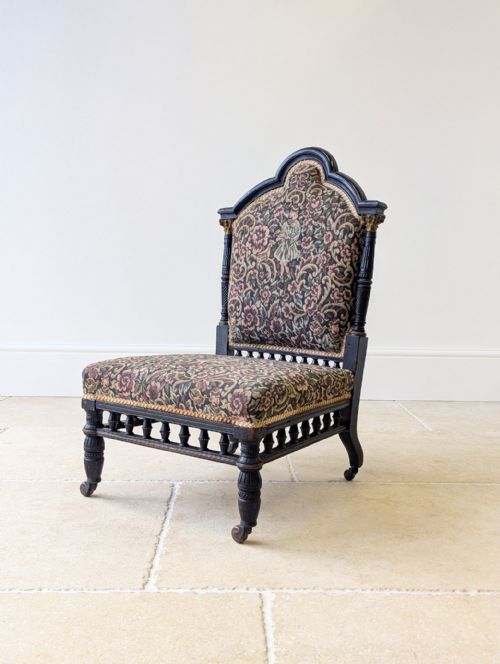
Cabinetmakers and turners utilised traditional joinery techniques, employing sturdy timbers like oak and walnut for structural stability in awkward corner configurations. Bobbin-turned spindles, elaborate hand-carving, and marquetry inlay defined the decorative vocabulary of these seating pieces. Frames were often ebonised to imitate more costly exotic hardwoods and to suit the fashionable tastes of the later nineteenth century.
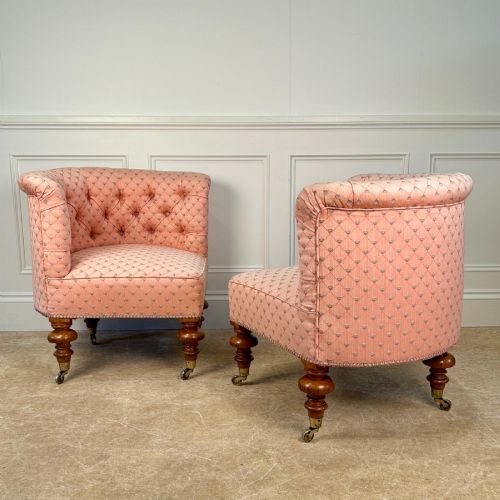
Upholstery methods involved durable padding materials secured with fabric, leather, or plush velvet coverings, sometimes finished with brass tack detailing. Chairs designed for the bedroom or salon balanced comfort with lightweight portability, allowing them to be shifted effortlessly around domestic interiors.
Listings feature oak, walnut, rosewood, and beech timbers alongside upholstery fabrics, velvet, leather, and brass components.
What varies in quality
The distinction between ordinary and exceptional examples lies primarily in the crispness of the hand-carving, the complexity of the turnery, and the selection of dense timbers like rosewood or walnut. Finer pieces demonstrate superior structural integrity in the angled joints, which bear significant stress during daily use. The originality of the decorative elements, such as marquetry inlay and ebonised finishes, elevates the standing of individual chairs.
Provenance and attribution to documented makers or workshops further separate standard vernacular items from elite examples. The choice of covering material, whether period velvet or supportive upholstery fabric, contributes to the overall aesthetic coherence and desirability of the seating.
Miles and Edwards
The Victorian Corner Accent Seating Glossary
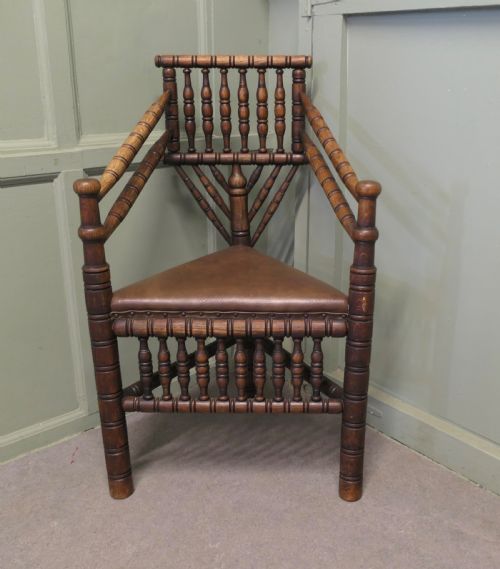
- Turners Chair
- A heavy, tripartite armchair constructed with heavily turned wooden spindles and a triangular seat, inspired by early medieval designs.
- Ebonised
- Wood treated with a dark stain or finish to simulate expensive ebony, widely utilised during the Victorian period for dramatic contrast.
- Aesthetic Movement
- A late nineteenth-century design style emphasising visual beauty, simplicity, and Japanese-inspired motifs over heavy historicism.
- Marquetry
- The art of applying decorative pieces of veneer to a structure to form intricate geometrical or figural patterns.
- Gothic Revival
- An architectural and decorative style drawing inspiration from medieval forms, featuring pointed arches and religious motifs.
Victorian Corner Accent Seating: Frequently Asked Questions
Where should I place a corner chair?
These chairs are specifically designed to fit into unused room angles, making them ideal for empty corners in bedrooms, landings, and drawing rooms.
They provide a functional seat without obstructing main walkways or overwhelming limited floor space.
Are these chairs comfortable for daily use?
Many examples are low-slung and feature upholstered seats or velvet pads intended for relaxed salon seating rather than long hours of work.
Their primary historical function combined decorative impact with a compact resting spot.
What woods were used for these chairs?
Cabinetmakers utilised domestic timbers such as oak, beech, and walnut alongside exotic rosewood and ebonised finishes.
Hardwood selection depended heavily on the intended style, ranging from rustic vernacular oak to refined rosewood parlour pieces.