
Carved Spindle Chairs
These carved spindle chairs bring together solid timbers and turned members, offering practical seating shaped by nineteenth and early twentieth century cabinet makers.
Carved Spindle Chairs
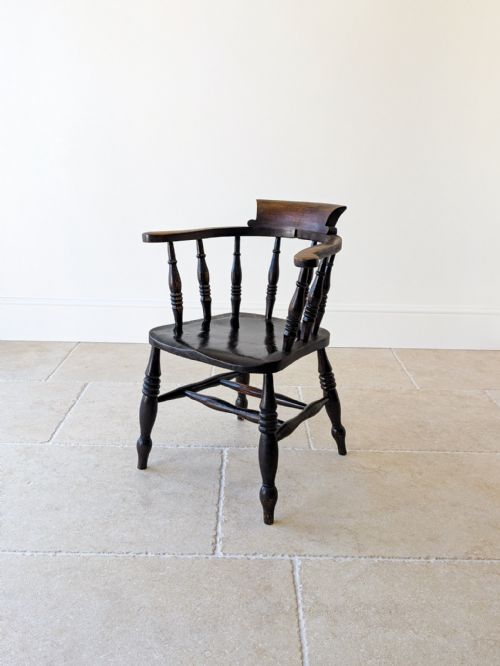
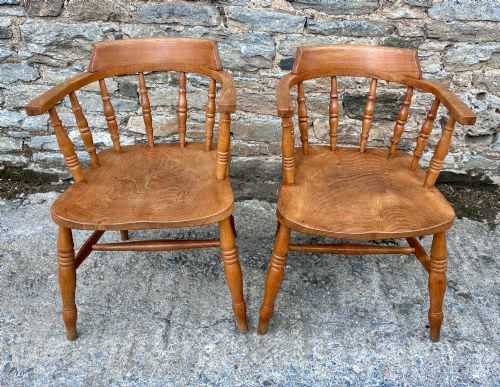
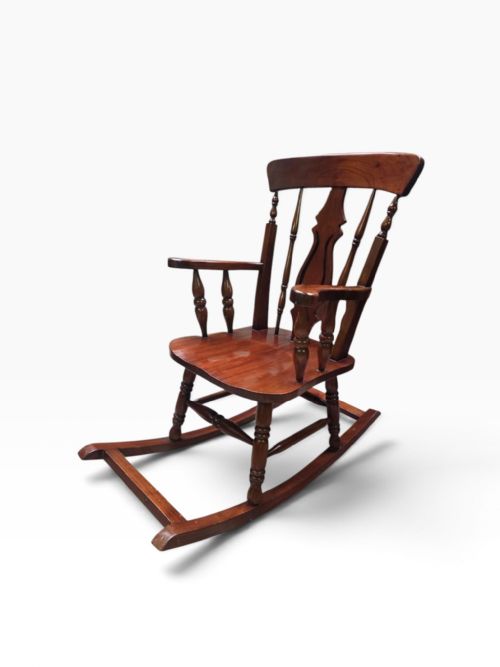
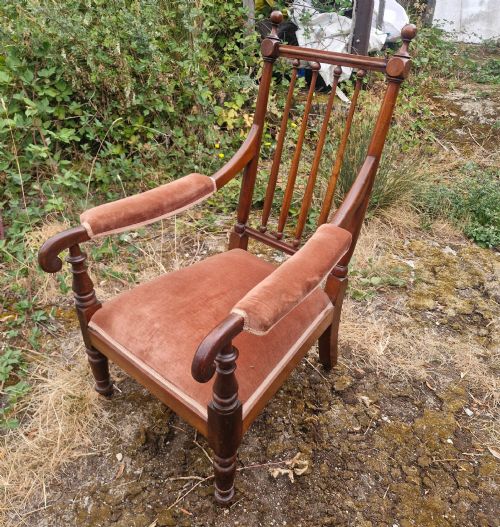
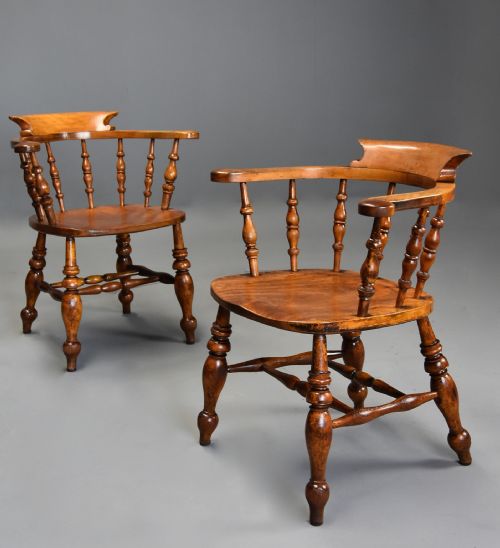
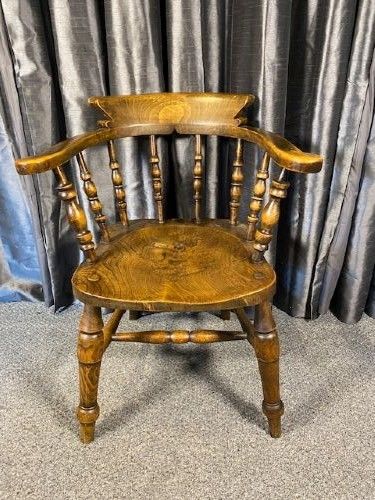
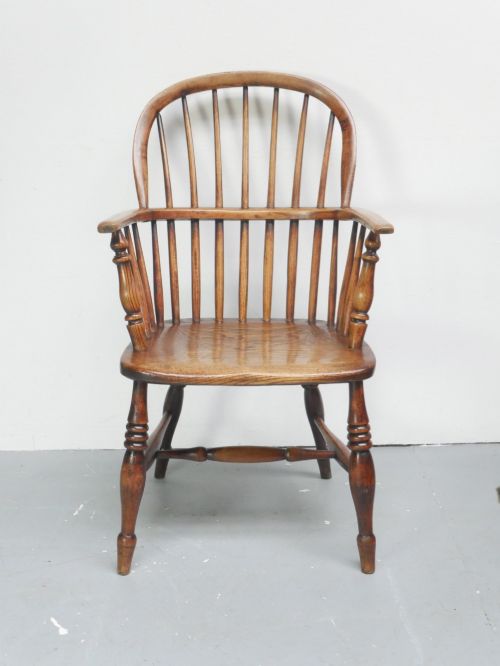
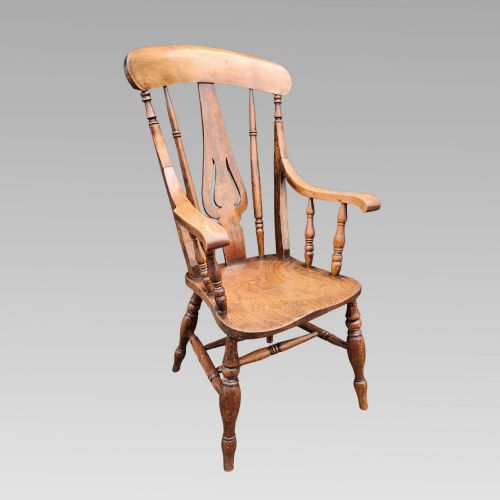
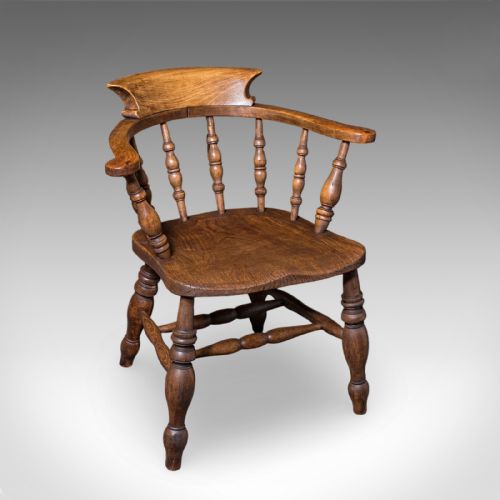
When you search for carved spindle chairs, you encounter a diverse range of seating forms spanning the Victorian and Edwardian periods. The selection on this page centres heavily on nineteenth century vernacular seating, including captain chairs, smokers bows, Windsor armchairs, and farmhouse kitchen chairs.
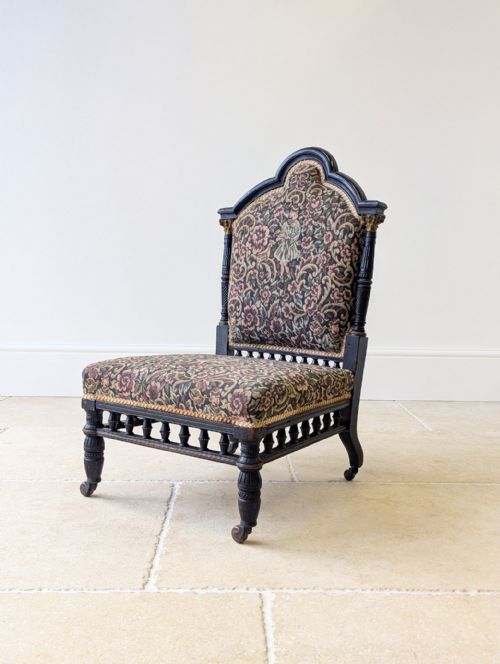
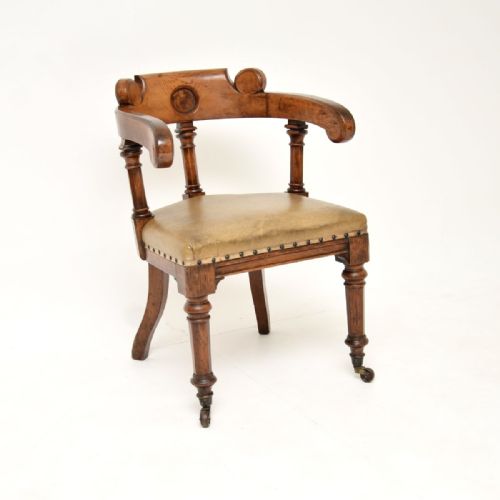
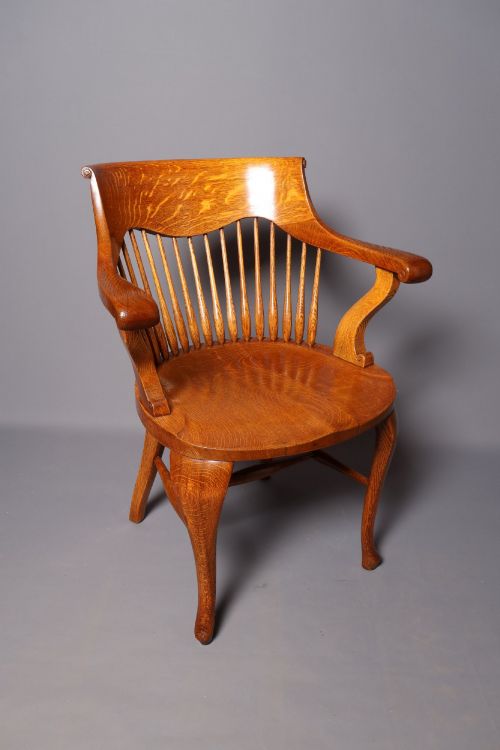
Beyond country seating, the listings feature library chairs, office and desk chairs, nursing chairs, and dining carvers in woods like elm, oak, mahogany, and beech. These pieces range from simple provincial seating to more formal Aesthetic Movement and Gothic Revival designs.
Most examples originate from British workshops and country houses, though regional variations such as Thames Valley Windsors and Scottish models appear alongside Swedish bobbin chairs.
Construction and materials
These chairs rely on a combination of native and imported timbers, pairing robust woods like elm, oak, and ash for seats and frames with beech, birch, fruitwood, and mahogany for turned spindles and legs.
Joinery methods combine traditional Windsor construction with pegged joints, steam-bent bows, and intricate lathe-turned spindles. Ebonised finishes and upholstery in leather, fabric, or brass detailing appear on formal library and office models.
Listings feature solid elm, oak, mahogany, and walnut across Victorian, Edwardian, and earlier periods.
Assessing quality and character
Quality in these pieces rests upon the selection of timber, particularly the grain and figuring found in solid elm seats and oak frames. Finer examples display crisp turning on spindles and arm supports rather than soft or heavy-handed carving.
Patina and structural integrity dictate the standing of a piece, where original surface finishes and tight joinery elevate a simple farmhouse chair into a desirable collector item.
Liberty of London
The Carved Spindle Chairs Glossary
- Spindle back
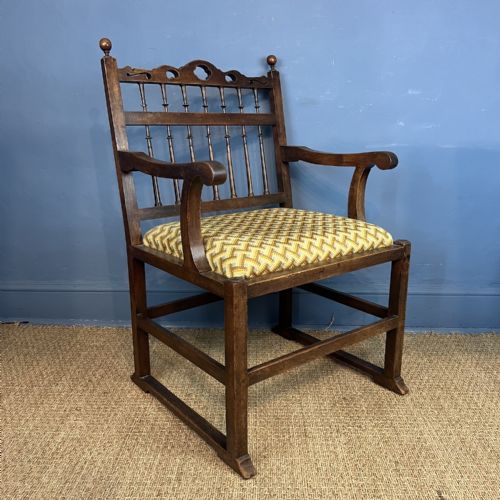
- A chair back constructed from vertical turned wooden rods. This style provides light yet sturdy support.
- Windsor chair
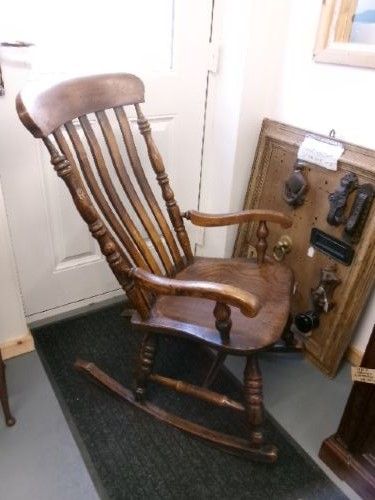
- A chair built with a solid wooden seat into which the legs and back spindles are wedged directly. Regional types show distinct comb or bow variations.
- Smoker bow
- A low-backed Windsor armchair with a continuous curved arm rail resting on short spindles. They are often found in provincial pubs and farmhouses.
- Turners chair
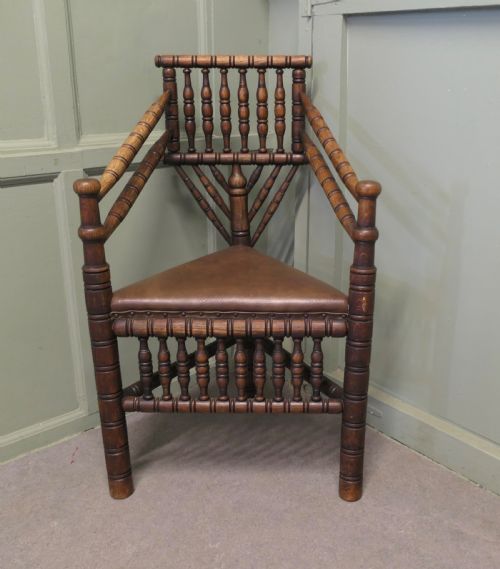
- A heavy chair constructed entirely from turned wooden members and triangular seats. They trace their ancestry back to sixteenth century designs.
- Aesthetic Movement
- A late nineteenth century design style that rejected heavy industrial ornamentation. It favoured simplified forms and ebonised finishes.
- Bobbin chair
- Seating constructed from wood turned with repeated rounded knobs resembling bobbins. These pieces gained popularity during the Victorian revival periods.
Carved Spindle Chairs: Frequently Asked Questions
What is a captain chair?
A captain chair is a sturdy wooden armchair featuring a low, rounded back rail supported by turned spindles above the seat. They originated in provincial settings and offices for practical daily use.
Over the nineteenth century, cabinet makers refined these forms into more formal library and desk seating while retaining the comfortable wrap-around arm rail.
How do I identify a Windsor chair?
A Windsor chair is defined by its construction method, where all components are socketed directly into a thick, solid wooden seat rather than a traditional frame. Look for saddle-shaped elm seats combined with turned beech or ash spindles.
Regional varieties often reveal their origin through the shape of the bow, the presence of a central splat, or the turning style of the undercarriage legs.
Are these chairs comfortable for daily use?
Most of these seating types were designed for physical tasks like writing, dining, or relaxing by the fire. Solid elm seats are surprisingly contoured to the body.
Upholstered variants, desk swivels, and low nursing chairs offer different ergonomic benefits, though pairing them with a suitable cushion helps for extended periods.
How do I date an antique spindle chair?
Dating relies on observing timber choices, tool marks, and construction wear. Early nineteenth century and Georgian examples often show hand-turned components and deep patination on native hardwoods.
Late Victorian and Edwardian pieces frequently incorporate factory-turned uniformity, softer secondary woods, or specific style revivals like the Aesthetic Movement.