


Victorian Copper Platter
These Victorian copper platter pieces offer heavy metalwork and domestic utility, providing distinct character for display.
Victorian Copper Platter
A victorian copper platter brings domestic utility and decorative wall display together through heavy metal forms.
Most examples found here take the shape of large chargers, serving trays, and wall plaques dating from the nineteenth century.
Makers shaped these items for both practical use and ornamental display across several stylistic revivals.
How they were made
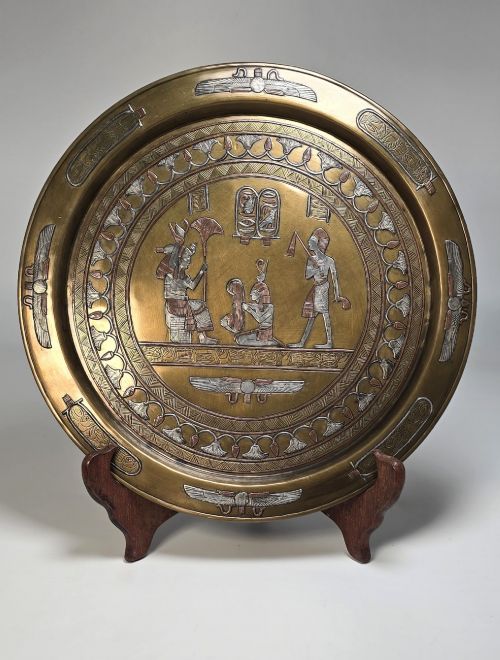
Artisans formed these objects primarily from copper and brass, often adding silver plate, enamel, or bronze elements.
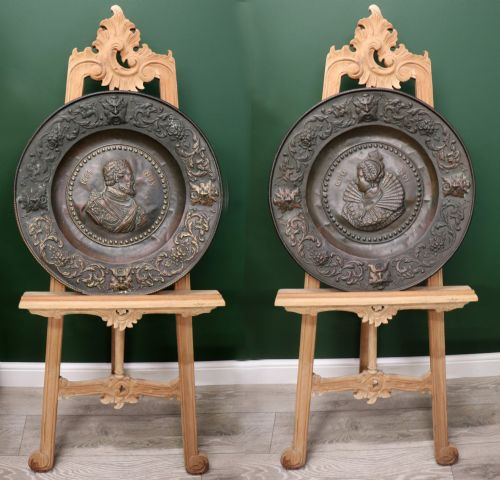
Decoration relied heavily on repoussé work, hand piercing, engraving, and hammered surfaces to create detailed motifs.
One platter bears the likeness of Diana the Huntress alongside a bowl and plaque.
What varies in quality
Depth and precision of the repoussé work separate standard vessels from finer decorative chargers.
Complexity of surface inlay and the crispness of hand-pierced detailing dictate the higher tier of these metal goods.
The Victorian Copper Platter Glossary
- Repoussé
- A metalworking technique where the artisan hammers the material from the reverse side to form a raised design on the front. This method creates deep, tactile surface relief.
- Charger
- A large decorative plate or platter used traditionally for service or hung upon a wall for display. These pieces often feature extensive ornamentation.
- Pie crust edge
- A decorative raised border shaped with frequent crimps or curves resembling traditional pastry crusts. It appears frequently on serving trays.
- Grand Tour
- A cultural journey undertaken by nineteenth-century travellers who collected souvenirs such as Cairo Ware and inlaid metalwork abroad.
Victorian Copper Platter: Frequently Asked Questions
How were these platters used?
These pieces served both practical functions as serving trays and decorative roles as wall chargers or plaques in nineteenth-century homes.
Larger items accommodated food service or presentation, while pierced and engraved variants hung upon walls for display.
What materials are common?
Copper forms the primary material, frequently accompanied by brass, bronze, and silver plate.
Some examples incorporate enamel or silver inlay to enhance the decorative surface patterns.
How do styles differ?
Styles range from Gothic Revival and Neoclassical designs to Arts and Crafts, Anglo-Indian, and Egyptian Revival work.
Each aesthetic employs distinct ornamentation, from portraits and mythological scenes to traditional hand-pierced motifs.
How are periods identified?
Periods are determined through manufacturing techniques, stylistic influences, and recorded dates such as the late nineteenth century and Victorian eras.
Physical characteristics like hammered textures and repoussé depth help contextualise the age of each item.