

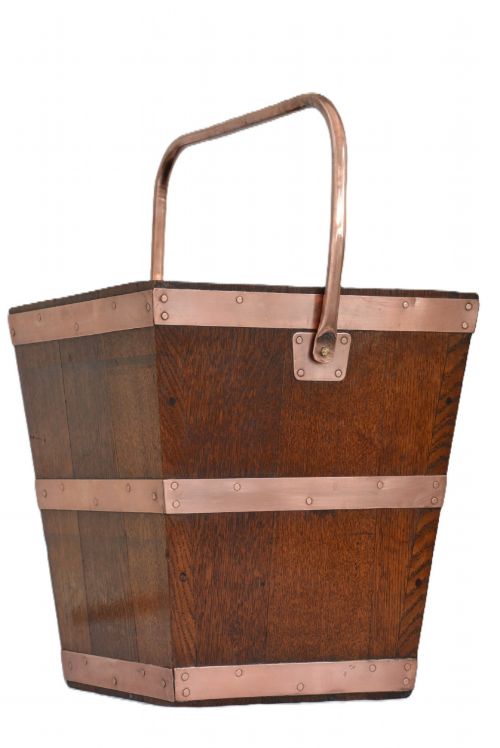


Victorian Copper Hearth Vessel
These robust victorian copper hearth vessel selections bring functional warmth and heavy metal texture directly beside the open hearth.
Victorian Copper Hearth Vessel
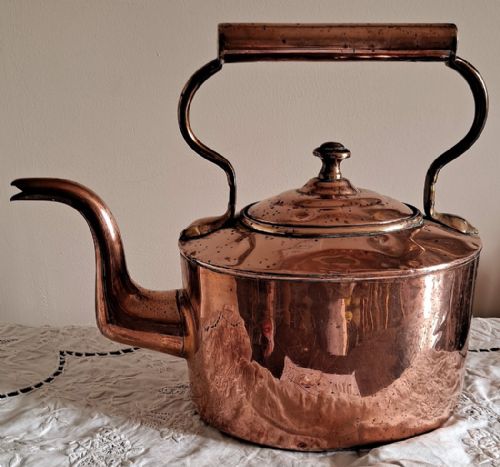
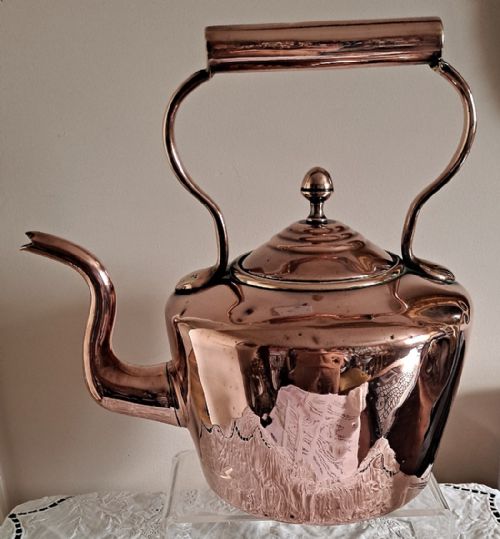
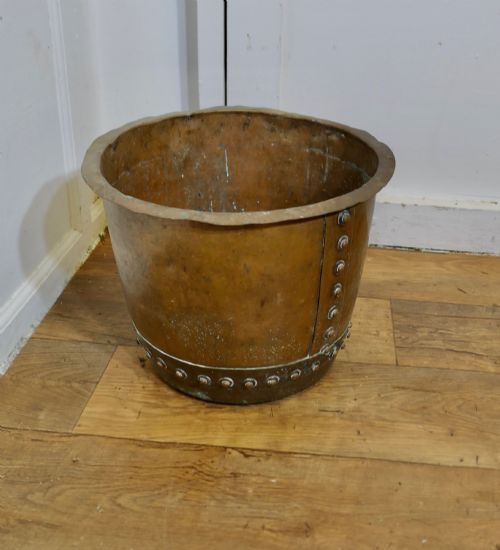
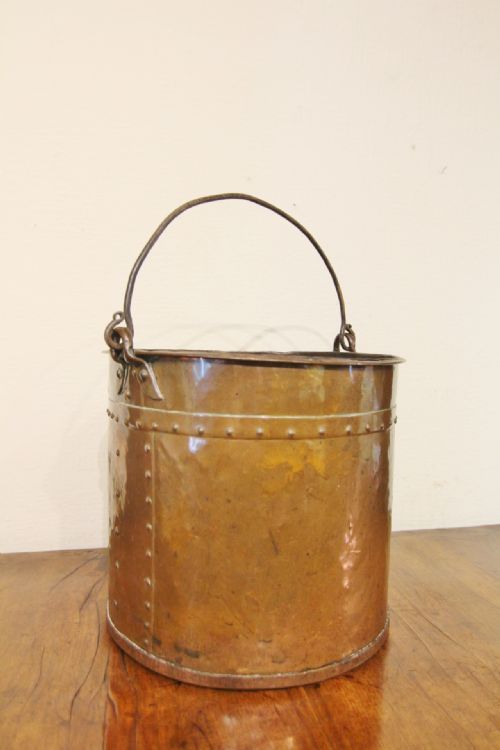
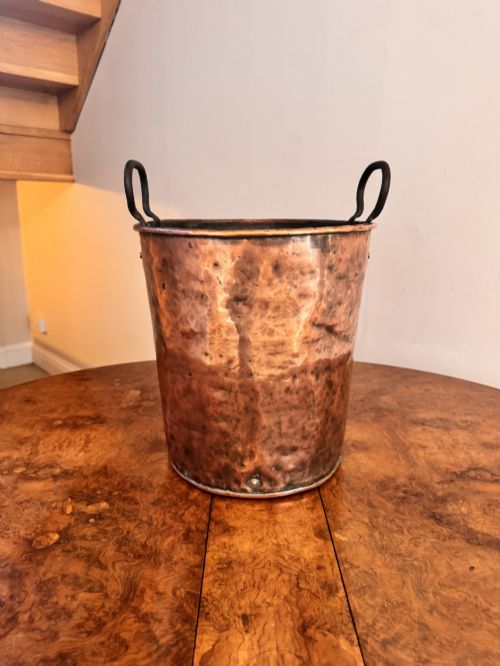
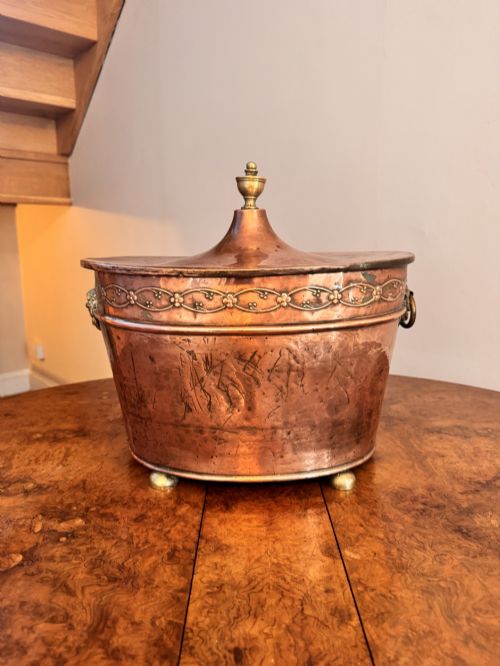
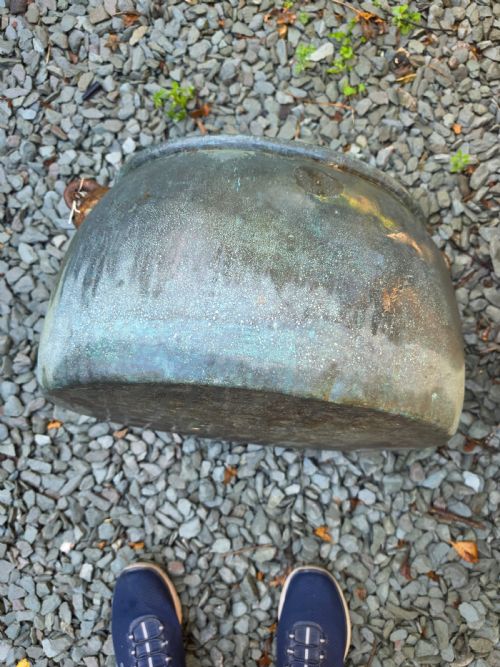
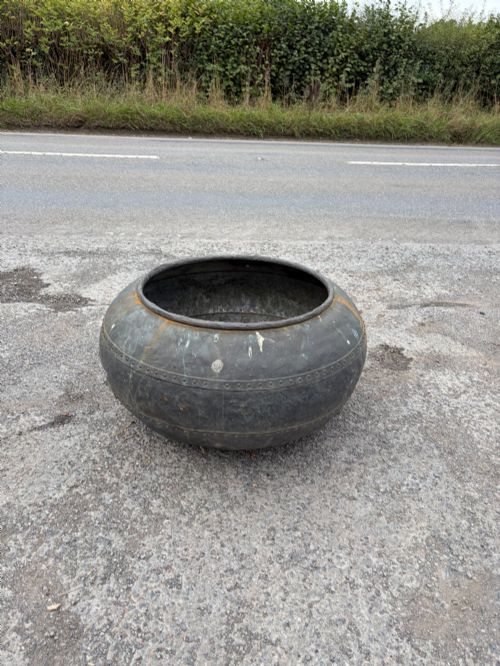
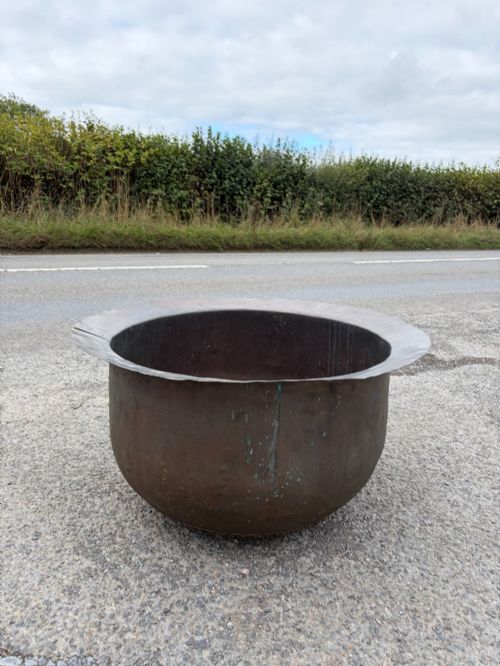
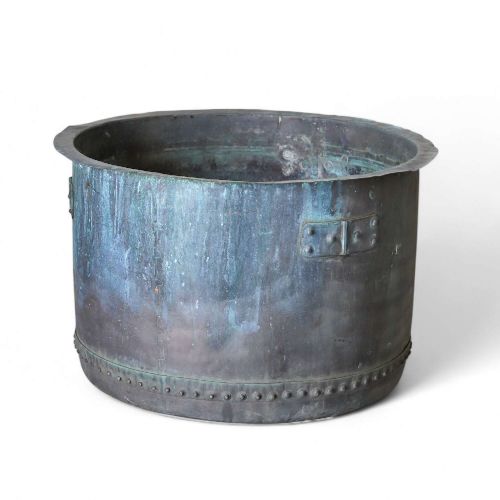
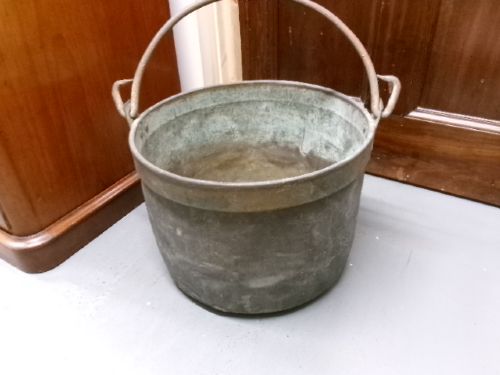
A victorian copper hearth vessel encompasses heavy utilitarian objects designed to hold coal, logs, or water beside nineteenth century fireplaces. The versions met most often on this page take the form of riveted coal buckets, large cauldrons, and lidded bins.
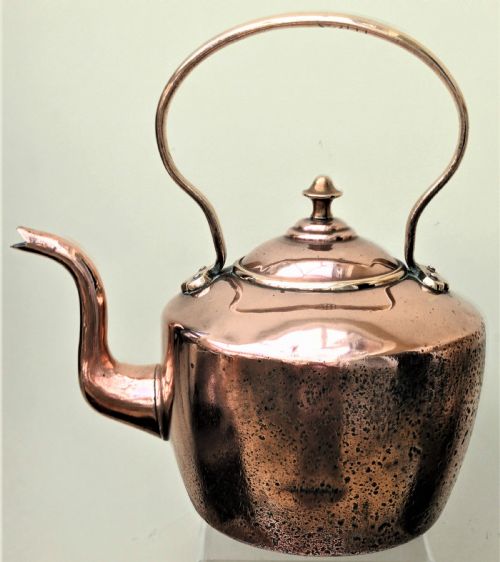
Makers shaped these utilitarian containers from durable copper, often mounting them with swing handles in wrought iron or brass. Their primary purpose centred on holding fuel or heating water in daily domestic routines.
The assortment spans diverse utilitarian forms, including grain measures, cooking pots, and ale mullers alongside standard coal scuttles. Each piece reflects the robust metalworking practices of the nineteenth century.
Construction and materials
Workshops formed these vessels by beating and rolling sheets of copper into deep cylindrical or rounded bodies. Craftsmen then joined the overlapping seams with hand-riveted pins to ensure structural strength for heavy loads of coal or water.
Makers attached handles of wrought iron or brass using sturdy brackets and heavy rivets, providing a secure grip for lifting. Details such as folded rims and hammered surfaces reveal the straightforward manual labour involved in their production.
Victorian Copper Hearth Vessel Retail Price Guide 2026
Typical asking prices for victorian copper hearth vessel among the pieces listed under this phrase on Sellingantiques today, from the lower quarter to the upper quarter. They describe what is for sale here now, not the wider market.
Some heavy grain measures ended their working days hauling coal rather than oats.
Judging quality in copper hearth wares
Quality rests upon the weight of the metal plate and the integrity of the riveted joints rather than smooth decorative finishes. Thicker copper gauge resists denting and holds its shape through decades of heavy domestic use.
The character of the surface metal, developed through natural oxidation and handling, separates honest patination from overly polished examples. Original iron handles and secure brass attachments also contribute to the integrity of the piece.
The Victorian Copper Hearth Vessel Glossary
- Cauldron
- A large rounded cooking or heating vessel fitted with a swing handle. These heavy pots stood directly near the hearth fire.
- Coal scuttle
- A container specifically shaped for carrying and storing domestic coal. They often feature an angled opening and a sturdy carrying handle.
- Muller
- A specialised vessel with a long handle used for warming liquids over an open fire. They were common in taverns and large nineteenth century kitchens.
- Patina
- The natural surface oxidation and darkening accumulated on copper over time. This aged layer forms through exposure to air and handling.
- Riveted
- Joined together using metal pins hammered flat at the ends. This technique secured thick copper sheets before modern welding techniques existed.
Victorian Copper Hearth Vessel: Frequently Asked Questions
What were these copper vessels used for originally?
These vessels served practical domestic roles such as hauling coal, containing logs, or heating water near nineteenth century fireplaces.
Households relied on their durable construction for heavy daily chores in kitchens and hearth rooms.
How do I clean a victorian copper vessel?
Most collectors prefer to leave the natural darkened patina undisturbed rather than polishing the metal to a bright shine.
Gentle washing with warm soapy water removes dust without stripping the historic surface character.
Are these copper containers safe for open fires?
While historical pieces withstood intense heat, modern use near active fires can compromise old riveted seams and original surfaces.
Displaying them beside the hearth as log holders or planters preserves their structural integrity.
How can I tell a nineteenth century piece apart?
Nineteenth century examples display hand-hammered surfaces, irregular hand-cut rivets, and heavy wrought iron or brass mountings.
Machine-made uniformity and modern fixings indicate later reproduction pieces rather than authentic period items.