

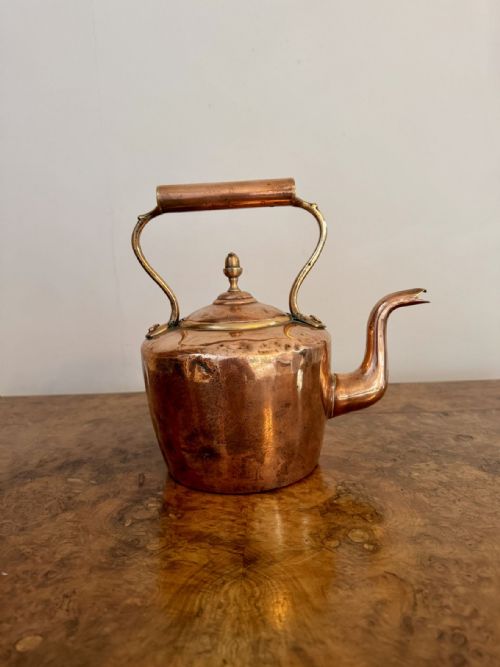
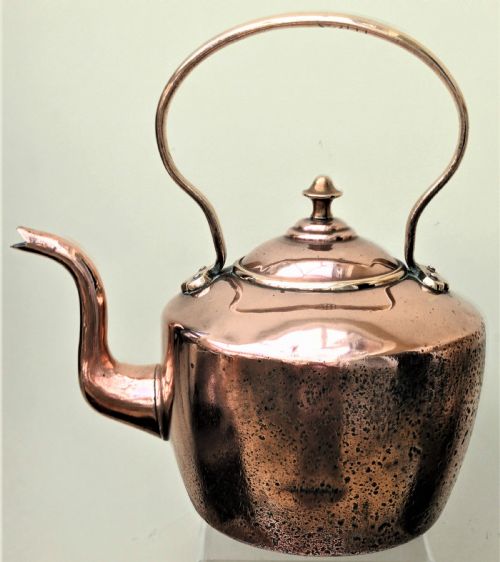


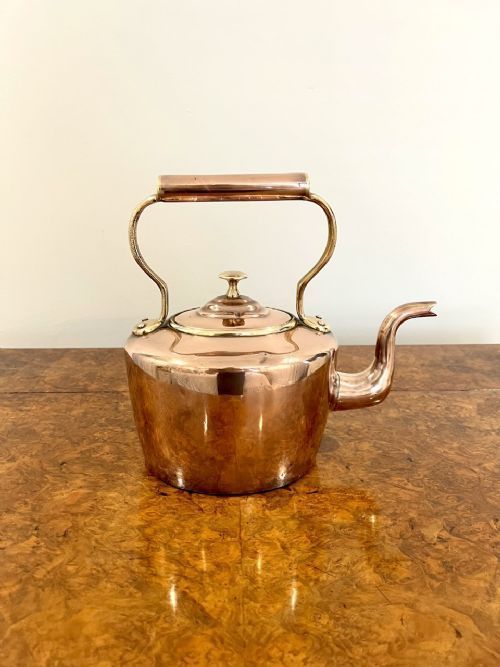


Polished Copper Tea Kettle
A polished copper tea kettle brings warmth to the hearth, offering sturdy metal vessels shaped for boiling water across Georgian and Victorian generations.
Polished Copper Tea Kettle
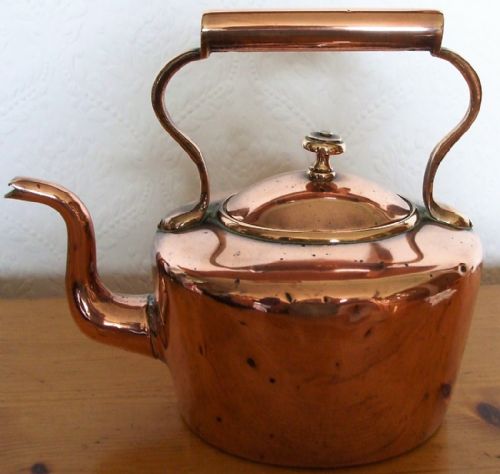
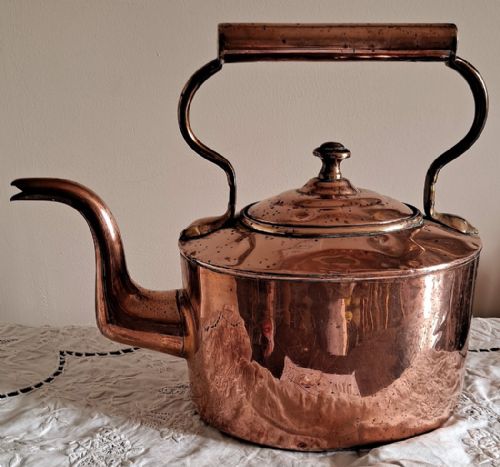
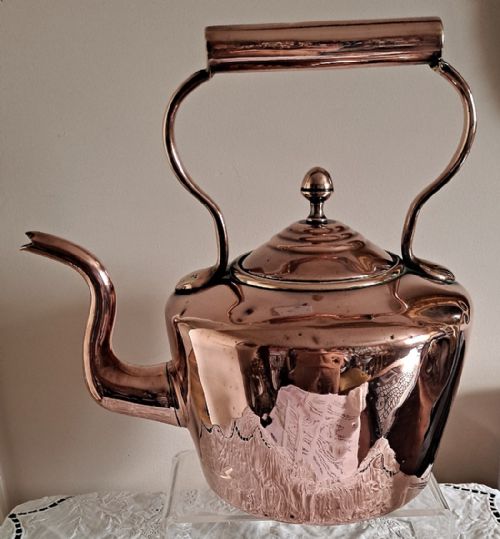
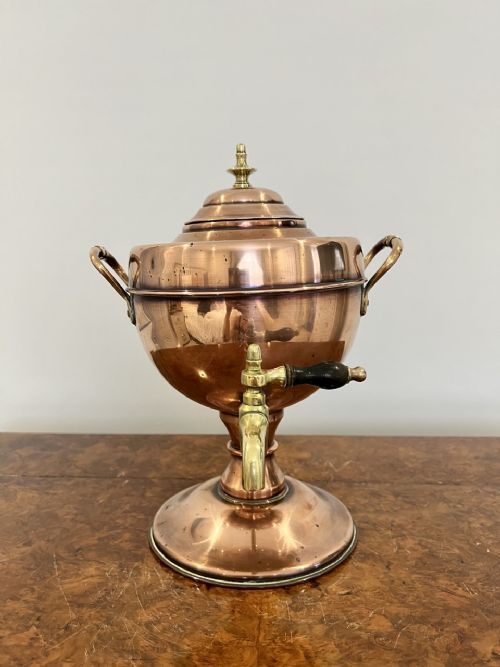
When you search for a polished copper tea kettle, you are looking at utilitarian vessels designed for heating water, which frequently appear as kettles, tea urns, and samovars spanning the Georgian and Victorian periods. These pieces combine practical metal containers with heat-conducting properties, often featuring brass elements and wooden handles.
The versions you are most likely to meet on this page date from the nineteenth century, including specific George III and Victorian examples. They range from small tabletop tea kettles to large oval copper kettles and substantial samovars.
What varies in quality
Quality in these vessels is found in the weight of the metal and the crispness of the forming, distinguishing sturdy, heavy-gauge pieces from lighter utility items. The integration of brass fittings and the preservation of original polished surfaces also mark the division between standard examples and finer specimens.
Polished Copper Tea Kettle Retail Price Guide 2026
Typical asking prices for polished copper tea kettle among the pieces listed under this phrase on Sellingantiques today, from the lower quarter to the upper quarter. They describe what is for sale here now, not the wider market.
Oval shapes and samovars join the standard round kettles, proving that tea time took itself very seriously indeed.
The Polished Copper Tea Kettle Glossary
- George III
- A British historical period spanning from 1760 to 1820, represented here by early copper kettles. Pieces from this era often display classic proportions.
- Victorian
- The period of Queen Victoria's reign from 1837 to 1901, encompassing many of the larger kettles and samovars listed on this page. These items reflect nineteenth-century manufacturing shifts.
- Samovar
- A heated metal container traditionally used to boil and heat water for tea, appearing alongside tea urns in the nineteenth-century listings. They offer larger capacity than standard kettles.
- Ebonised wood
- Timber treated to resemble ebony, frequently utilised for the insulated handles on period kettles. This dark finish provides a contrast to polished copper and brass.
Polished Copper Tea Kettle: Frequently Asked Questions
What is the difference between a kettle and a samovar?
A standard kettle is designed primarily for heating water on a hearth or stove before being lifted to pour into teapots.
A samovar or tea urn incorporates a larger vessel body, often with a spigot, intended to maintain hot water for continuous tea service.
How do I identify a George III copper kettle?
George III pieces date from around 1800 and earlier nineteenth-century decades, typically displaying specific Georgian forms and proportions.
They frequently feature hand-finished copper construction paired with brass accents, marking them apart from later Victorian production.
Were brass and wood used on these kettles?
Brass components such as handles, feet, and spouts commonly appear alongside the primary copper body on these listings.
Wood and ebonised wood were utilised for handle grips to provide insulation against the heat of the boiling water.
How should I display a copper tea kettle?
These vessels suit traditional fireplace hearths, kitchen dressers, or side tables where their polished metal surfaces catch the light.
Their substantial forms allow them to stand alone as decorative objects or group with other nineteenth-century metalware.