
Victorian Copper Copper
Victorian copper copper pieces bring warmth and robust utility into modern rooms through heavy metal kitchenware and fireside vessels.
Victorian Copper Copper
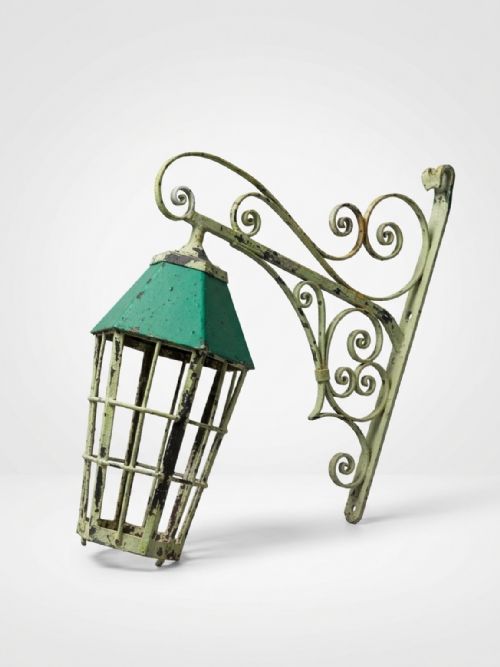
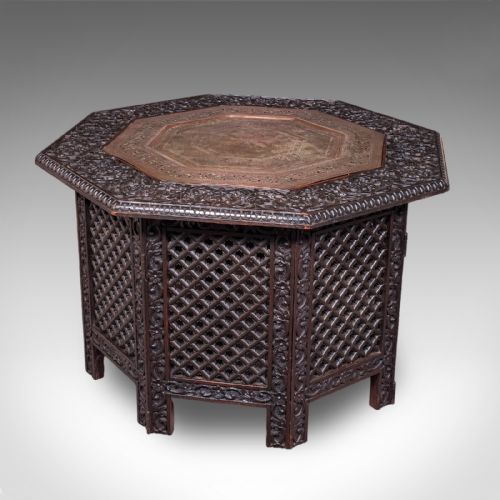
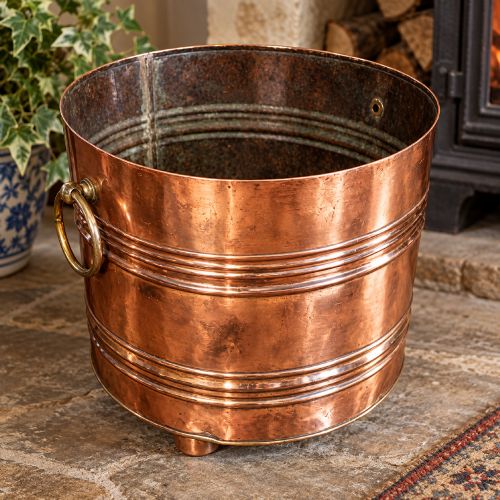
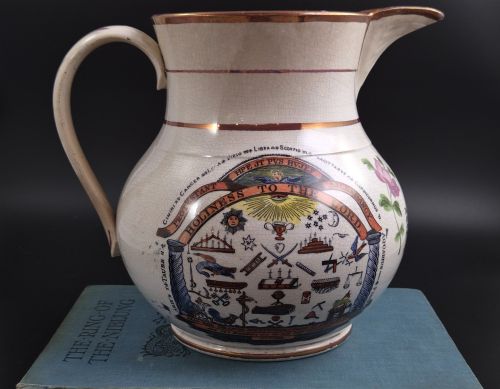
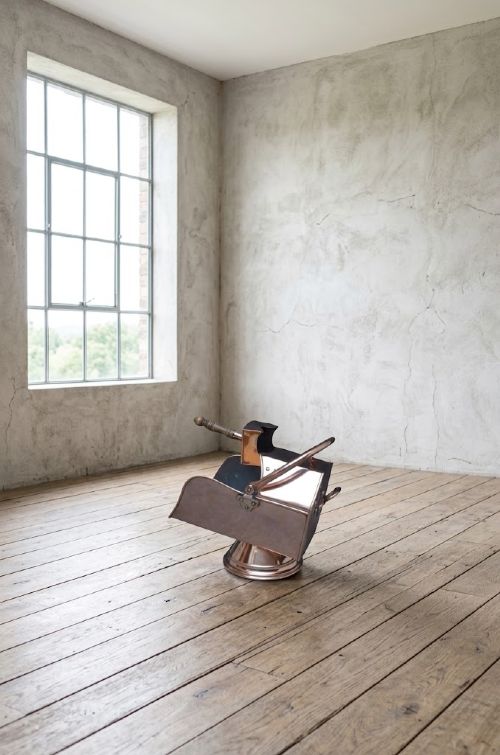
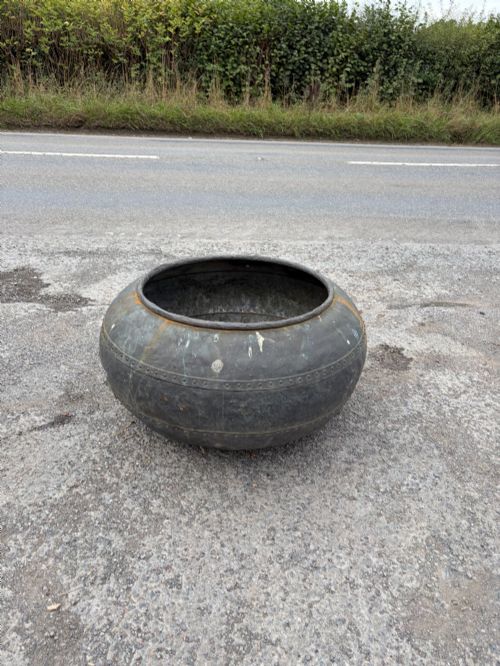
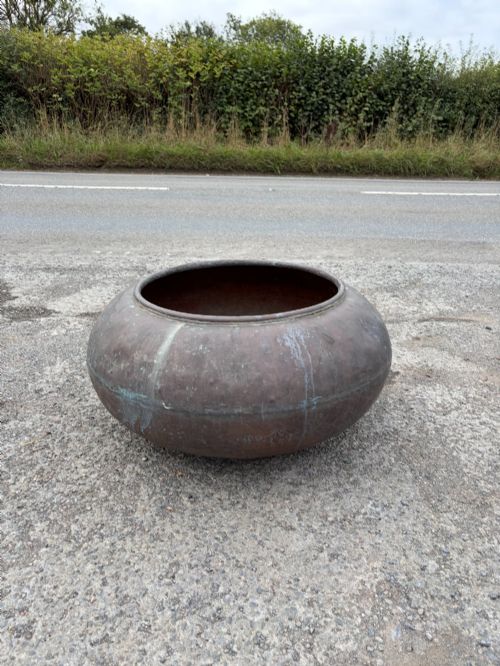
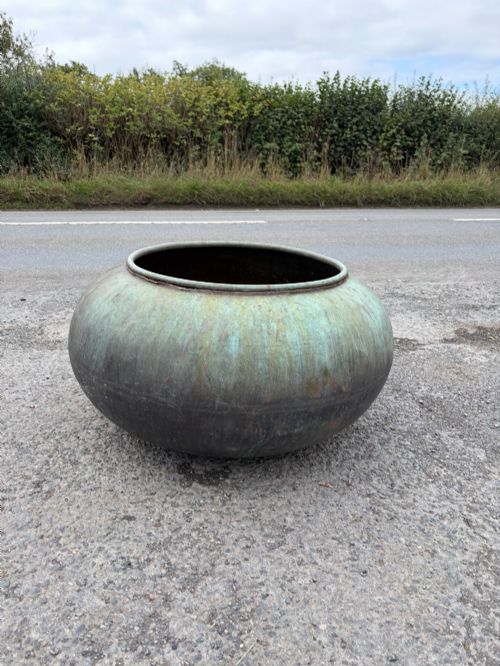
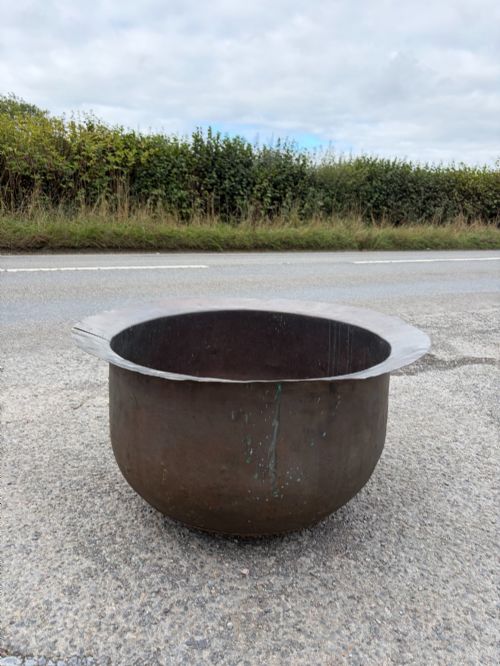
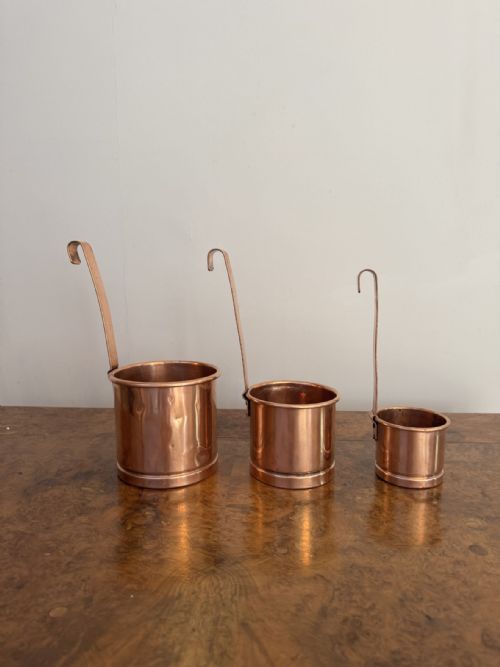
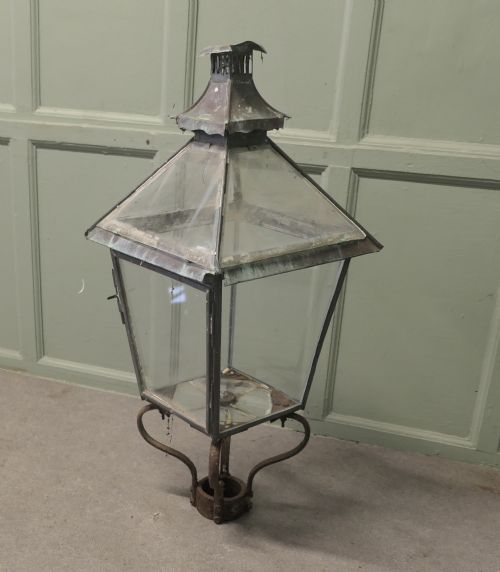
When searching for victorian copper copper, buyers encounter heavy metal items forged for domestic and utilitarian service during the nineteenth century. The selection spans large preserving pans, coal scuttles, and log bins alongside street lanterns and kitchenware.
Most pieces met on this page date from the nineteenth century, bearing the marks of practical household use in kitchens, sculleries, and hearths. Forms range from simple jam pans to elaborate jardinières fitted with brass handles and lions paw feet.
How they were made
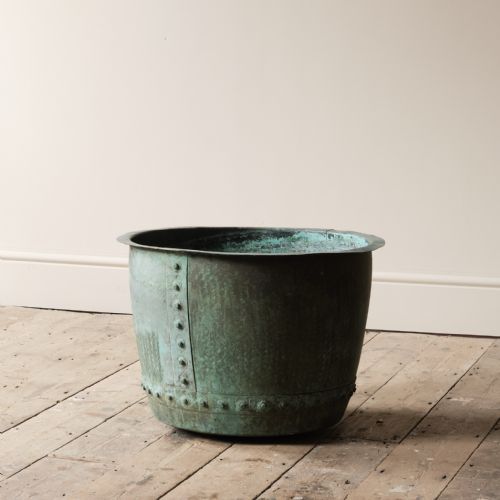
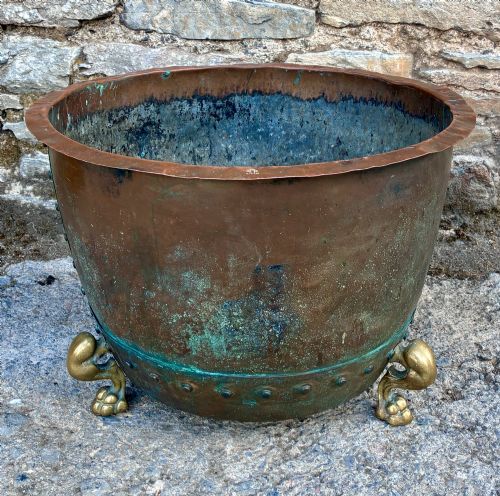
Makers shaped heavy gauge sheet metal using hand-finished techniques, joining seams with visible rivets or fishtail joints. Brass handles, feet, and bands were frequently attached to these vessels to provide structural reinforcement and contrast.
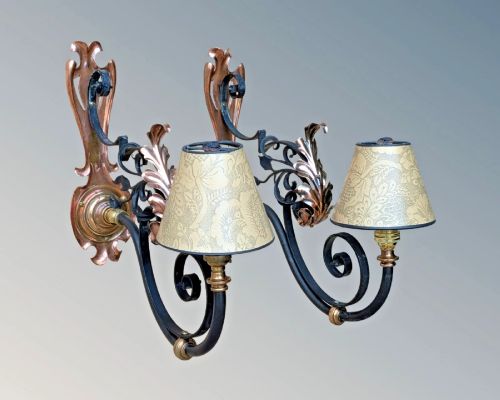
Many items combine copper with cast iron, wrought iron, or brass, especially in fireside accessories and wall brackets. Surface finishes display the natural warmth of the metal, sometimes enhanced through hand-beating or embossing.
The object forms recorded on this site include lanterns, kitchenware, log bins, coal scuttles, and fireplace accessories.
What varies in quality
The distinction between standard utility items and finer examples often lies in the weight of the metal and the complexity of the construction. Heavier gauge sheets and substantial brass mounts indicate sturdier construction designed for longevity.
Design details also separate utilitarian kitchenware from decorative showpieces. Elaborate embossing, riveted joints executed with precision, and integrated brass lion mask handles elevate the standing of a piece.
The Victorian Copper Copper Glossary
- Coal scuttle
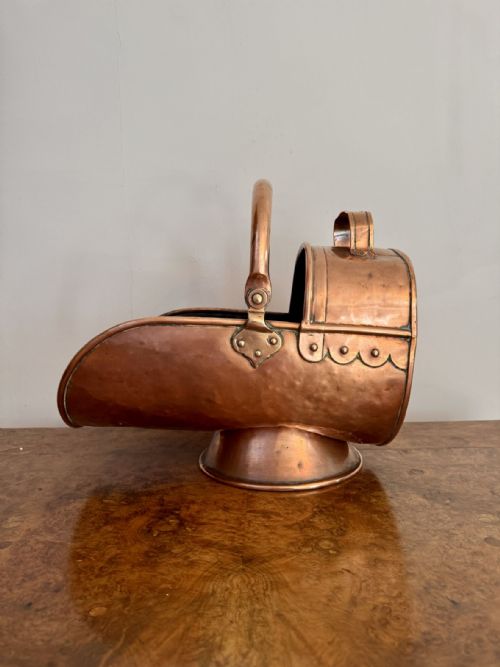
- A container designed for holding coal near a fireplace, frequently constructed from heavy sheet metal with a swinging handle. These utilitarian vessels often incorporated brass bands and feet for decoration.
- Jam pan
- A large, round pan utilised for boiling fruit and sugar over an open fire or stove. They feature sturdy handles and heavy gauge metal to withstand prolonged heat.
- Jardiniere
- An ornamental pot or stand intended for holding plants or flowers indoors. They appeared in various metals during the period, sometimes featuring lion mask ring handles.
- Riveted
- A method of joining sheet metal plates together by passing metal pins through overlapping edges and hammering them flat. This technique provides structural strength visible along the seams of large vessels.
- Arts and Crafts
- A design movement emphasising handcraftsmanship and simple forms over mass production. Pieces from this style often display honest construction and hammered surfaces.
Victorian Copper Copper: Frequently Asked Questions
How do I clean antique copper?
Traditional cleaning involves mild soap and warm water to preserve the historical surface patina. Many collectors prefer to leave the aged oxidation untouched rather than polishing the metal to a bright shine.
Avoid harsh chemical abrasives that can strip away the centuries of wear and alter the authentic appearance of the piece.
Were these items used in the kitchen?
Many heavy vessels served practical culinary roles for boiling preserves, heating water, or storing provisions in large country houses. Their thick metal construction allowed for even heat distribution over open hearths or stoves.
Other items were strictly decorative or domestic, such as coal scuttles and umbrella stands placed in hallways and reception rooms.
How can I date a piece?
Dating relies on examining the construction techniques, such as the style of riveting, handle attachments, and overall form. Items from the early nineteenth century often display heavier hand-beaten characteristics compared to later manufactured goods.
Matching the design motifs to recorded periods like Arts and Crafts or Gothic Revival also helps narrow down the timeframe.
Can these items be used outdoors?
Certain items like lanterns and planters withstand outdoor conditions well due to the weather-resistant properties of the metal. However, placing delicate indoor vessels outside may lead to accelerated corrosion from moisture.
Garden tables and cast iron stands naturally suit exterior settings if protected from standing water.