
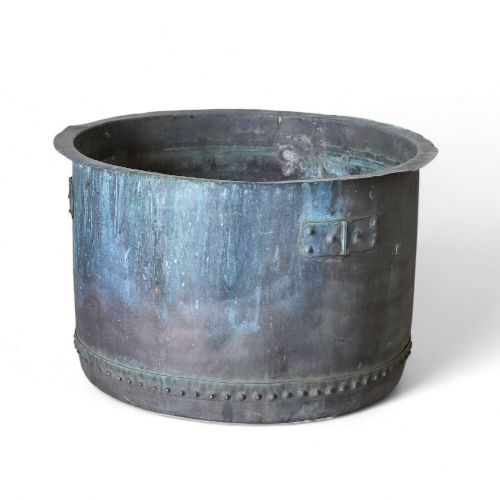

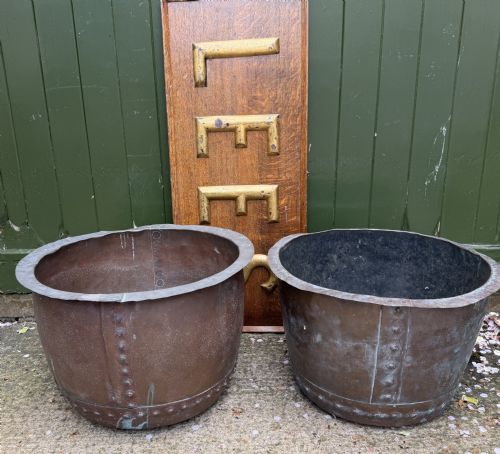


Riveted Copper Boiler
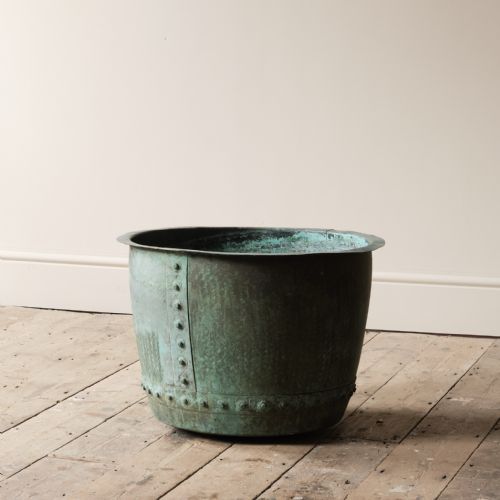
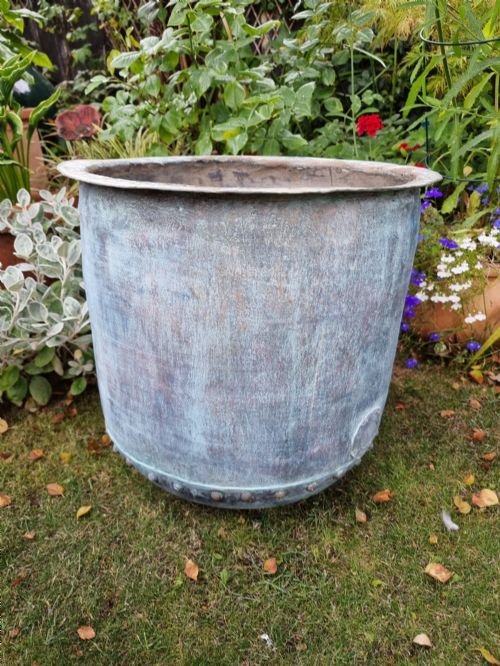
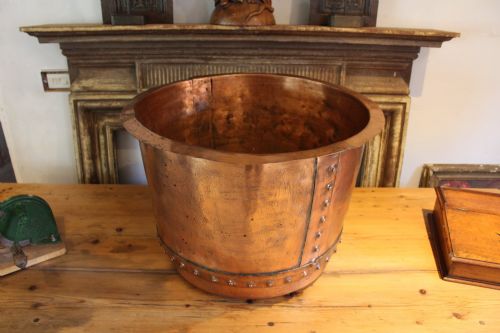
A riveted copper boiler brings industrial utility and warmth into modern interiors as a substantial log bin or planter.
Riveted Copper Boiler
A riveted copper boiler originates from the nineteenth century, built primarily for utilitarian duties in domestic settings or larger households. These vessels cross over into rustic farmhouse and Victorian styles, appearing frequently on this page as log bins, planters, and garden display pots.
Most examples hail from the Victorian era and the broader nineteenth century, reflecting robust utilitarian design. They serve domestic roles far removed from their original laundry functions, repurposed today for holding firewood or housing large plants.
How they were made
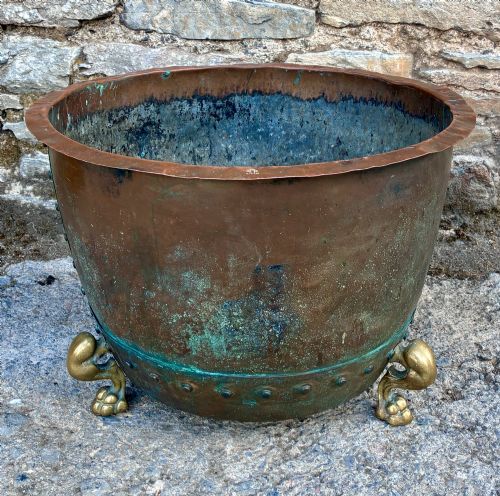
Construction relies heavily on heavy-gauge copper sheets joined together with visible metal rivets. Iron and brass components occasionally appear in handles, bases, or taps, adding structural strength to the vessel.
Surfaces develop rich patinas and natural verdigris over decades of exposure to moisture and atmosphere. Makers shaped these cooking vessels and cauldrons by hand, resulting in robust utility objects designed to withstand heavy daily use.
What varies in quality
Quality rests in the heaviness of the copper gauge and the integrity of the hand-formed riveting. Vessels retaining original iron bases or taps command greater interest from collectors of industrial and utilitarian antiques.
The depth of the natural patina and surface weathering dictate the visual appeal of each piece. Uniform construction and intact structural forms distinguish the more substantial specimens from simpler utility containers.
The Riveted Copper Boiler Glossary
- Patina
- The surface sheen and colour acquired by copper over long periods of oxidation and handling. This natural ageing process enhances the visual depth of nineteenth-century metalwork.
- Verdigris
- A green layer formed on copper through atmospheric corrosion and moisture exposure. This characteristic weathering sign frequently coats nineteenth-century garden and utilitarian pieces.
- Riveted
- Joined together using metal pins hammered flat to secure overlapping sheets of copper. This method provided the high structural strength necessary for heavy-duty vessels.
- Cauldron
- A large deep metal pot used traditionally for boiling liquids over a fire. Many nineteenth-century examples share this rounded form.
- Log bin
- A repurposed industrial or utility vessel utilised domestically for storing firewood. These containers suit hearthside placement due to their robust metal construction.
Riveted Copper Boiler: Frequently Asked Questions
How were copper boilers originally used?
These large vessels heated water for household laundering and general domestic chores during the nineteenth century. They sat over heat sources to manage heavy daily washing tasks.
Over time, changing domestic technology rendered them obsolete for laundry, prompting their transition into decorative and functional items for the home.
Can I use a copper boiler outdoors?
Many nineteenth-century examples function successfully as garden display pots or planters on patios and terraces. Their robust copper construction withstands outdoor elements well.
Weathering actually enhances the natural verdigris surface over time, though prolonged contact with damp earth should be monitored to protect the metal.
How do I clean a antique copper boiler?
Gentle dusting and occasional wiping with a soft cloth preserve the accumulated patina and historic surface character. Aggressive metal polishes strip away the aged tones valued by collectors.
Maintaining the natural verdigris and weathered finish keeps the piece visually aligned with its nineteenth-century utilitarian origins.
How do I date a riveted copper boiler?
Dating relies on observing construction traits such as hand-hammered seams, heavy iron bases, and the style of the metal riveting. Most pieces trace back to the nineteenth century and the Victorian period.
Comparing the thickness of the copper sheet and the presence of original brass or iron elements helps place the vessel within its historical manufacturing era.