




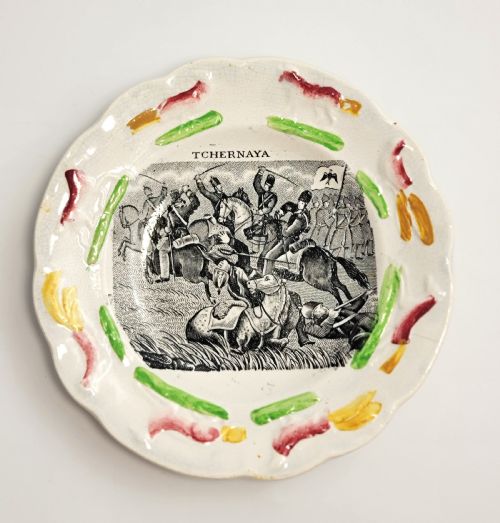


Victorian Commemorative Pottery
Victorian commemorative pottery marks national events, notable figures and local societies through earthenware jugs, figures and dishes.
Victorian Commemorative Pottery
Victorian commemorative pottery comprises ceramic items made to celebrate monarchs, military campaigns and popular figures. You will encounter jugs, plates and figurines produced to record specific events or public sentiments.
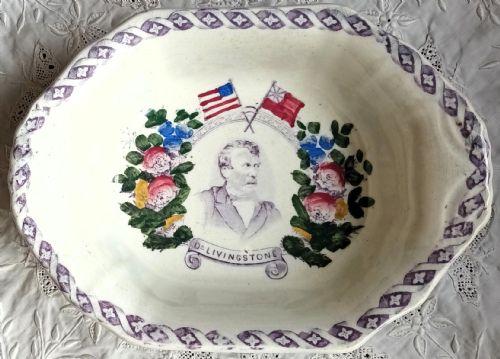
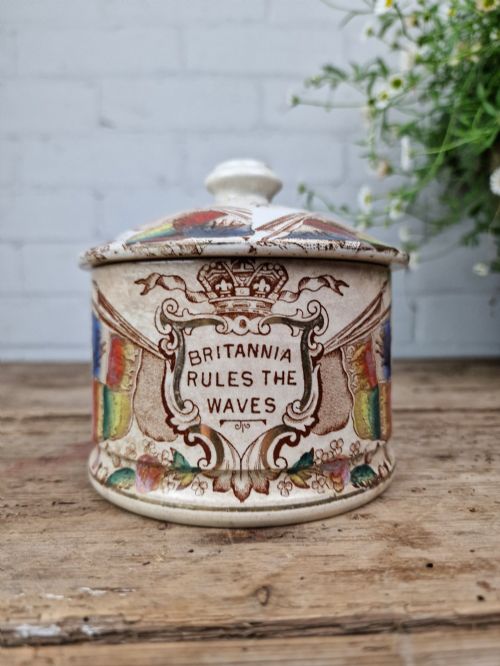
The objects span the nineteenth century, including pieces referencing the Crimean War, royal jubilees and prominent personalities like Queen Victoria and Dr. Livingstone. These earthenware and stoneware items function as tangible records of historical milestones.
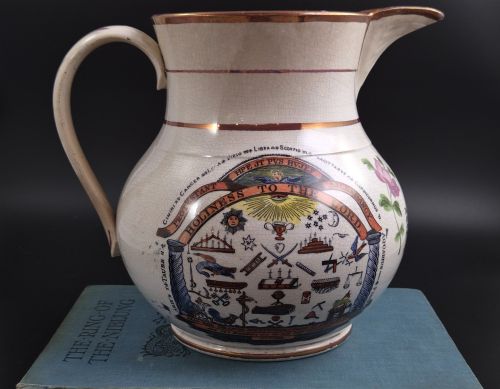
Jugs and portrait figures dominate the selection, often carrying names, dates or commemorative verses. Regional potteries in Staffordshire, Sunderland and Scotland produced these varied pieces for everyday households.
How They Were Made
Potters shaped earthenware and stoneware into jugs, dishes and figures using traditional moulding and throwing techniques. Stoneware provided durable bodies for large vessels, while finer earthenware accommodated detailed portraiture.
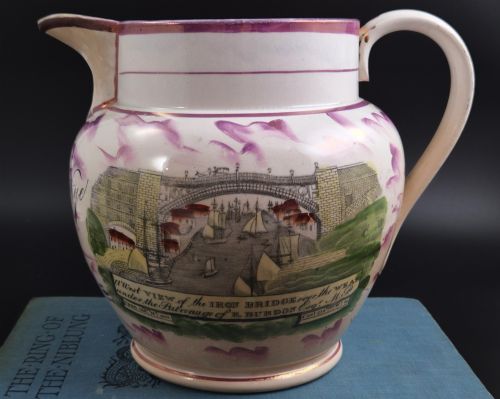
Surfaces received decoration through enamel paint, transfer printing and metallic lustre glazes, notably pink splash effects. These finishes added colour and visual texture to the moulded ceramic bodies.
Listings feature nineteenth-century earthenware and stoneware objects, spanning jugs, figures, dishes and wall plaques with lustre glazes.
What Varies in Quality
The presence of specific inscriptions, dates and named subjects elevates the significance of a piece. Finer examples maintain an even glaze and balanced proportions across the ceramic form.
Doulton Lambeth·Mountford
The Victorian Commemorative Pottery Glossary
- Earthenware
- A porous ceramic fired at lower temperatures, commonly used for nineteenth-century figures and jugs. It requires a glaze to become impermeable to liquids.
- Lustre Glaze
- A metallic finish applied to ceramics to create an iridescent sheen, frequently seen in pink splash variations on Sunderland vessels. This technique imparts a reflective metallic surface to the earthenware body.
- Stoneware
- A dense, impermeable ceramic fired at higher temperatures, suitable for heavy-duty vessels. It provides robust durability for large jugs and utility wares.
- Enamel
- Coloured glass paste fused to the ceramic surface through firing to create painted details. Polychrome enamel adds bright hues to figures and commemorative plates.
- Transfer Printing
- A method of applying pre-printed designs from a copper plate onto ceramics using paper tissue. This technique allowed intricate topographical scenes and texts to appear consistently on jugs and plaques.
Victorian Commemorative Pottery: Frequently Asked Questions
What events do these pieces commemorate?
These ceramics record military campaigns such as the Crimean War, royal jubilees and public figures including Queen Victoria and Dr. Livingstone. They also mark local societies and social sentiments.
Potters inscribed names, dates and specific titles directly onto the earthenware to ensure the historical context remained clear for the owner.
How do I care for antique pottery?
Keep these earthenware and stoneware pieces out of direct sunlight and away from rapid temperature fluctuations to protect the glaze and enamel paint. Dust them gently with a dry cloth.
Avoid washing antique ceramics in water, particularly pieces with delicate lustre glazes or overglaze enamel decoration, as moisture can damage the historical surface.
How are dates verified on these items?
Makers often included direct inscriptions, names and specific years within the transfer print or painted decoration on jugs and plaques. Contemporary stylistic traits help confirm the nineteenth-century period.
Comparative analysis of the earthenware body, glaze type and moulding style provides further confirmation of the production era when explicit dates are absent.
Where were these ceramics produced?
Production centred in established ceramic regions, notably Staffordshire, Sunderland and Scottish potteries such as Portobello. Each area utilised local clay bodies and characteristic decoration techniques.
Staffordshire specialised in portrait figures and narrative jugs, while Sunderland became known for pink lustre finishes and local bridge motifs.