



Victorian Column Mantle Clock
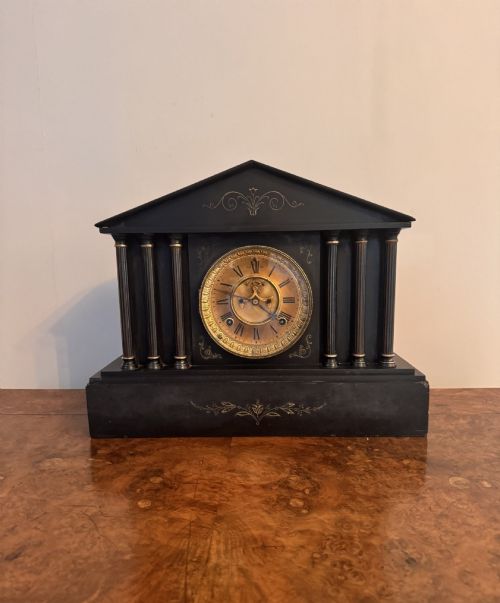
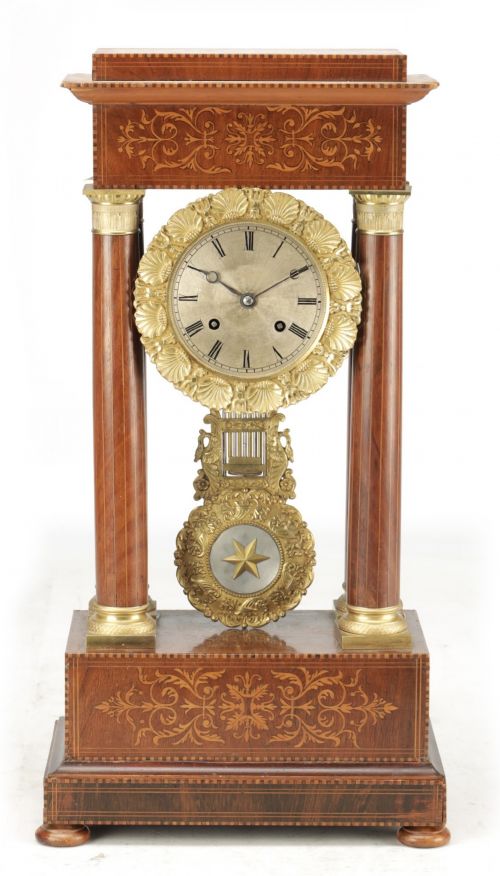
These victorian column mantle clock pieces bring striking architectural presence and reliable mechanical timekeeping into a room, drawing the eye with classic classical lines.
Victorian Column Mantle Clock
A victorian column mantle clock combines heavy stone architecture with precise mechanical movement, serving as both a functional timepiece and a striking decorative centrepiece. Buyers searching for a victorian column mantle clock will encounter various forms spanning the nineteenth century, including substantial architectural stonework and refined French designs.
The pieces available on this page reflect the Victorian period alongside French revival styles, with many examples originating from the eighteen sixties and eighteen eighties. Most selections showcase solid construction in slate or marble, often accompanied by brass details and enamel dials.
How they were made
Makers constructed these clocks using dense materials like black slate and marble, shaping them into classical architectural forms that mimic ancient columns and porticoes. Brass and gilt brass components provide structural framing and decorative accents, while glass protects the delicate dials.
Internal timekeeping relies on mechanical eight day movements, which require manual winding via keys to keep time. Dials feature white enamel surfaces paired with painted numerals, framed by cast bezels.
Victorian Column Mantle Clock Retail Price Guide 2026
Typical asking prices for victorian column mantle clock among the pieces listed under this phrase on Sellingantiques today, from the lower quarter to the upper quarter. They describe what is for sale here now, not the wider market.
Some carriage clocks travelled inside dedicated leather cases, protecting their delicate brass frames during nineteenth century journeys.
What varies in quality
Quality in these clocks rests upon the selection of materials, such as the depth and uniformity of the black marble or slate used for the architectural housing. Heavier, more substantial stone cases with precise inlaid decoration command greater attention than simpler constructions.
The refinement of the movement and the clarity of the enamel dial further distinguish finer examples. Signed dials or labelled movements by known makers elevate a piece beyond standard utilitarian production.
Philippes Paris·Baby and Jannings·H. Bilton
The Victorian Column Mantle Clock Glossary
- Garniture
- A set consisting of a central clock flanked by matching decorative ornaments, such as urns or vases, designed to sit together on a mantelpiece.
- Portico clock
- A distinct architectural clock style featuring a tall, recessed central section supported by columns, resembling a classical temple facade.
- Enamel dial
- A clock face made by fusing powdered glass to a metal substrate at high heat, producing a smooth, glossy, and durable white surface for painted numerals.
- Movement
- The internal mechanical engine of a clock, comprising gears, springs, and escapements that drive the hands and regulate time.
- Grande Sonnerie
- A complex striking mechanism in a clock that chimes both the hours and the quarters automatically on every quarter hour.
Victorian Column Mantle Clock: Frequently Asked Questions
How do I wind an eight day clock?
Use the appropriate winding key to turn the arbors located on the dial face until you feel firm resistance. Do not overwind the mainspring, as this can cause internal damage.
Most eight day movements require winding once a week to maintain accurate timekeeping. Ensure you turn the key in the correct direction indicated for each specific winding hole.
Where should I place a heavy marble clock?
Position the clock on a sturdy, level mantelpiece or shelf capable of supporting substantial weight. Stone and slate clocks are remarkably heavy and require a stable surface to prevent tipping.
Avoid placing the clock in areas subject to strong vibrations, direct sunlight, or damp conditions, which can affect both the stone case and the internal brass movement.
How do I date a Victorian architectural clock?
Examine the style of the case, the materials used, and any inscriptions or labels on the movement or dial. The integration of French revival styles and specific marble types often points to decades such as the eighteen sixties or eighteen eighties.
Consulting maker signatures or retailer labels inside the case can provide further clues to the precise decade of production during the nineteenth century.
What is a clock garniture set?
A garniture set comprises a main mantel clock accompanied by a pair of matching decorative side pieces, such as ornamental urns or vases. These matched groups were designed to create a balanced display across a fireplace mantel.
The side pieces typically use the same marble, slate, and brass materials as the central clock to maintain a unified aesthetic.