


Victorian Cobalt Porcelain Vases
Victorian cobalt porcelain vases bring deep blue glazes and gilt enrichment into a room, offering a striking focal point for a mantelpiece or side table.
Victorian Cobalt Porcelain Vases
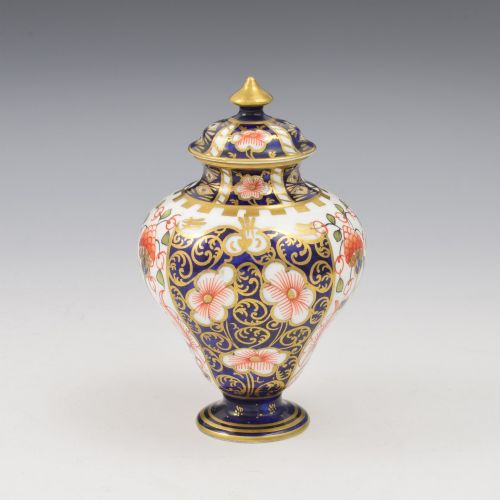
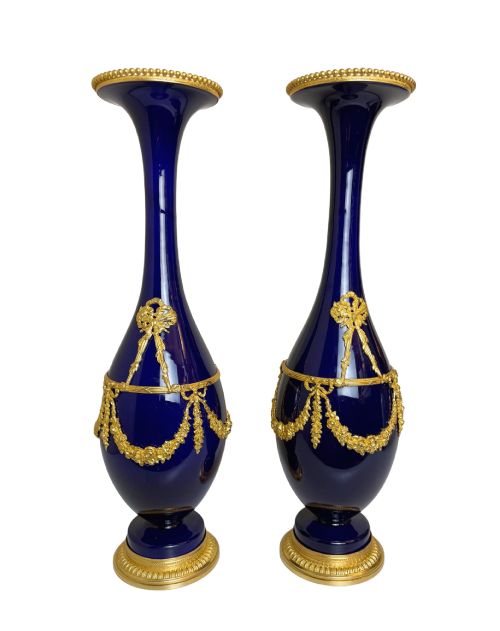
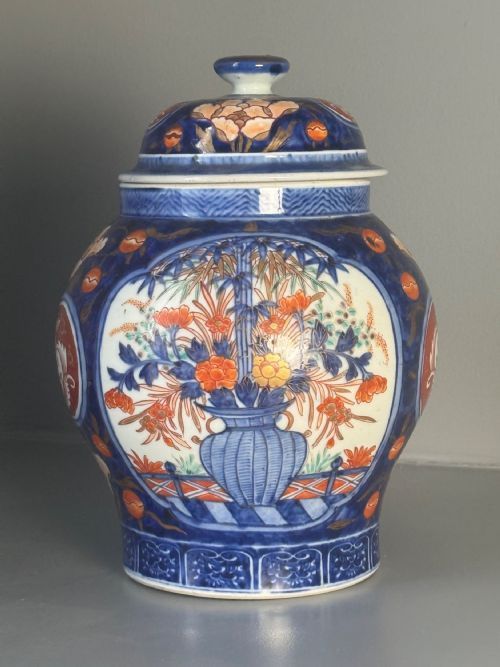
Victorian cobalt porcelain vases encompass richly glazed ceramic vessels produced across the nineteenth century, ranging from intimate bud holders to substantial floor-standing ornaments and clock garnitures. You will encounter pairs designed symmetrically for mantel placement as well as individual lidded ginger jars and pot-pourri containers.
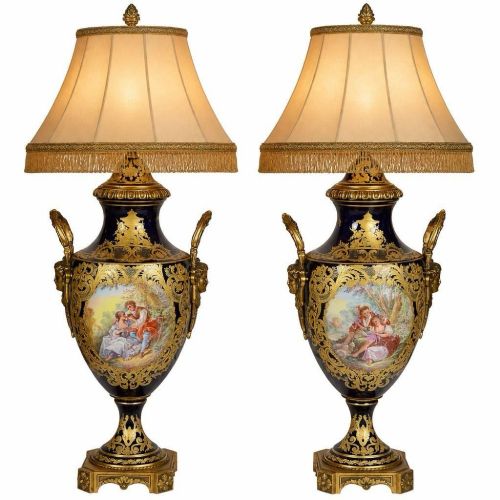
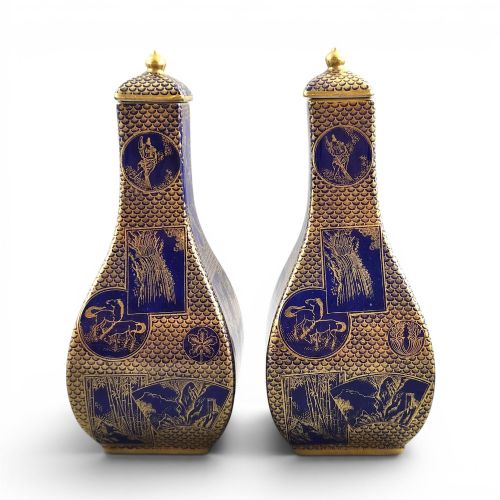
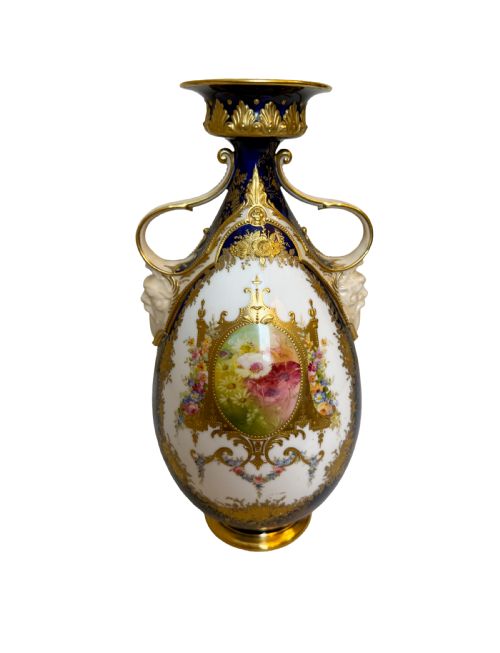
The objects span diverse stylistic revivals, including Rococo and Chinoiserie interpretations alongside classical forms, reflecting the eclectic tastes of the period. Many examples display deep blue grounds enriched with hand-painted details and metallic highlights that catch the light from domestic lamps.
Makers and factories across Britain and continental Europe contributed to this category, utilising ceramic bodies that vary from fine bone china to robust ironstone. These pieces served primarily as decorative focal points within nineteenth-century interiors, often displayed in pairs to balance a room's composition.
Materials and manufacturing techniques
Potters achieved the characteristic deep blue coloration by applying cobalt oxide beneath or within the glaze before firing the ceramic body at high temperatures. Artisans then applied enamel colours and gold leaf over the glaze, requiring subsequent lower-temperature firings to fix the metallic and painted details.
The underlying material varies from delicate porcelain and bone china to durable ironstone, shaped either by throwing on a wheel or by moulding in sections. Mounts in gilt bronze or brass frequently secure the bases and rims of French and English vessels, combining metalwork with ceramic craft.
Listings incorporate nineteenth-century periods, utilising enamel, gold leaf, and ironstone across diverse decorative forms.
Distinguishing quality in cobalt porcelain
The precision and depth of the hand-painted decoration distinguish finer vessels from standard production pieces, particularly where artists executed intricate floral or figural motifs over the dark blue ground. Crisp gilding applied by hand retains its brightness and definition, whereas lower grades show rubbing and flat application.
The crispness of the porcelain moulding and the symmetry of paired vases indicate the skill involved in the original production. Heavier, well-balanced bodies with integrated bronze mounts or cover fittings demonstrate a higher standard of manufacture than simpler, unmounted forms.
Royal Crown Derby·Royal Doulton·Mason's Patent Ironstone·Samuel Alcock·Wolfsohn Dresden·Ernst Wahliss·Moorcroft Macintyre·Stevenson and Hancock
The Victorian Cobalt Porcelain Vases Glossary
- Cobalt
- A deep blue metallic oxide used as a pigment for underglaze decoration on ceramics. It withstands high kiln temperatures without losing its intense hue.
- Gilt
- A thin layer of gold applied to the surface of porcelain or bronze mounts. It provides metallic contrast against the dark blue glaze.
- Ironstone
- A heavy, durable type of ceramic patented in the nineteenth century. It bridges the gap between earthenware and porcelain.
- Garniture
- A set of matching vases or urns, usually numbering three or five pieces, designed to be displayed together on a mantelpiece.
- Pot-pourri
- A vase or jar featuring a pierced lid designed to hold dried scented plant material. The perforations allow fragrance to diffuse into a room.
Victorian Cobalt Porcelain Vases: Frequently Asked Questions
How do I clean a cobalt porcelain vase?
Dust the surface gently with a soft, dry brush to prevent the accumulation of particles in recessed moulded areas.
Avoid immersing pieces with gilt enrichment in water, as moisture can lift delicate gold leaf and enamel over time.
Were these vases meant to hold water?
Many nineteenth-century decorative vases served purely as ornamental objects rather than functional vessels for fresh flowers.
Check the interior glaze before filling, as some antique ceramic bodies remain porous or feature unglazed bases unsuited to standing water.
What is a clock garniture?
A clock garniture consists of a central mantel clock flanked by a matching pair of vases or urns.
This arrangement created a balanced decorative scheme for a fireplace mantel or large sideboard in Victorian parlours.
How can I tell ironstone from porcelain?
Ironstone produces a heavier, opaque ceramic body with high durability, designed to resist chipping during daily use.
Porcelain remains finer and often transmits light through thin sections, presenting a more translucent and delicate structure.