
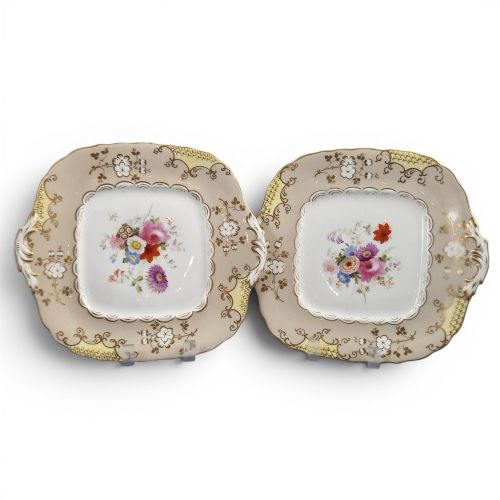


Victorian Coalport Porcelain
Victorian Coalport porcelain brings hand-painted floral panels and rich cobalt grounds into the drawing room.
Victorian Coalport Porcelain
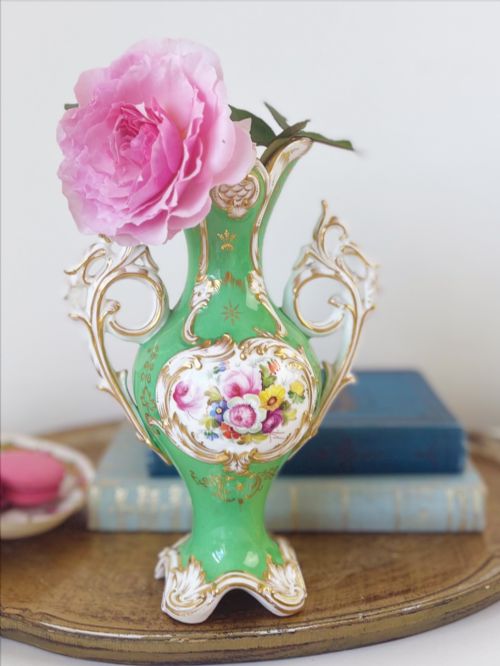
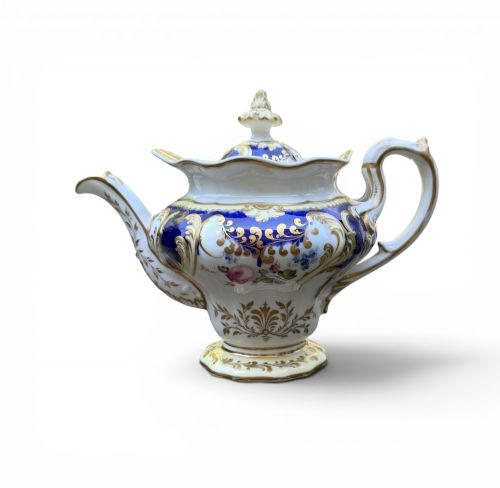
Victorian Coalport porcelain pieces comprise cabinet plates, dessert dishes, tazzas, ewers, and vases made during the nineteenth century. These items include decorative plates, teapots, and dinner service parts that reflect the tastes of the era.
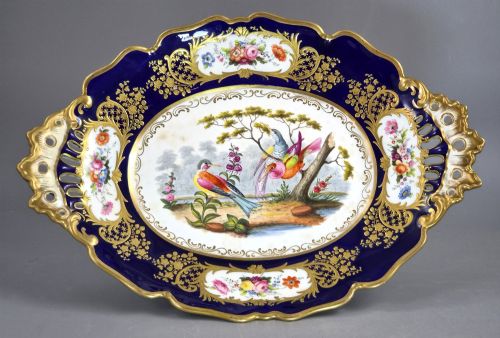
The objects frequently display floral motifs, turquoise or cobalt blue grounds, and gilt embellishments. Pieces range from early nineteenth-century items through to exhibition pieces produced towards the end of the century.
Buyers meet forms varying from simple dessert dishes to elaborate pilgrim flasks and jardinieres. Hand-painted scenes and topographical views appear regularly across the selection.
What Varies in Quality
Quality rests upon the execution of the hand-painted details, from standard floral arrangements to intricate topographical scenes and figural subjects like gallant scenes. The crispness of the moulding in rococo revival pieces also dictates the grade.
The application of gold leaf and enamel work separates standard production from exhibition pieces. Preservation of the original gilding and the clarity of the cobalt or turquoise ground determine the standing of each item.
Thomas Dickson
The Victorian Coalport Porcelain Glossary
- Bone china
- A type of soft-paste or hard-paste ceramic containing bone ash, which yields a strong, bright white body suited to fine casting.
- Tazza
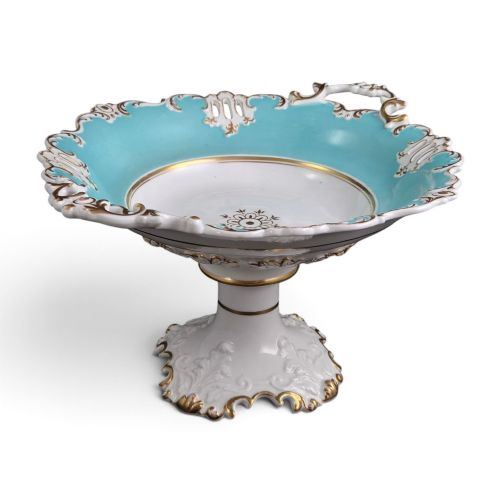
- A shallow ornamental bowl raised on a stem and foot, used historically for serving small portions or simply for display.
- Gilt
- A thin layer of gold applied to the ceramic surface for decoration. It is often burnished to catch the light.
- Jardinier
- An ornamental pot or stand designed to hold growing plants or flowers. These items sit on tables or pedestals within the interior.
- Pilgrim flask
- A flat-sided bottle vessel with handles, originating from medieval travel flasks but produced as a decorative object in the nineteenth century.
Victorian Coalport Porcelain: Frequently Asked Questions
How do I date Coalport porcelain?
Dating relies on stylistic shifts such as early rococo revival forms compared to later exhibition pieces, alongside recorded working periods.
Material composition and known decorators also assist in narrowing the production era.
Were these plates used for dining?
Many dessert dishes and service parts were made for formal dining and dessert courses. Cabinet plates, however, were primarily intended for display.
Hand-painted scenes and heavy gilding suggest items reserved for special occasions or drawing room presentation.
How should I clean porcelain with gilding?
Dust gently with a dry, soft cloth to remove surface particles. Avoid chemical cleaners and water to protect the delicate gold leaf and enamel.
Harsh scrubbing wears away the hand-painted details over time.
What is the difference between a tazza and a dessert dish?
A tazza is elevated on a central stem and foot, creating height on a table or cabinet. A dessert dish sits flat on the surface without a pedestal base.
Both forms appear within nineteenth-century service sets.