



Victorian Church Candle Stands
Victorian church candle stands bring soaring architectural presence and heavy metalwork into a room.
Victorian Church Candle Stands
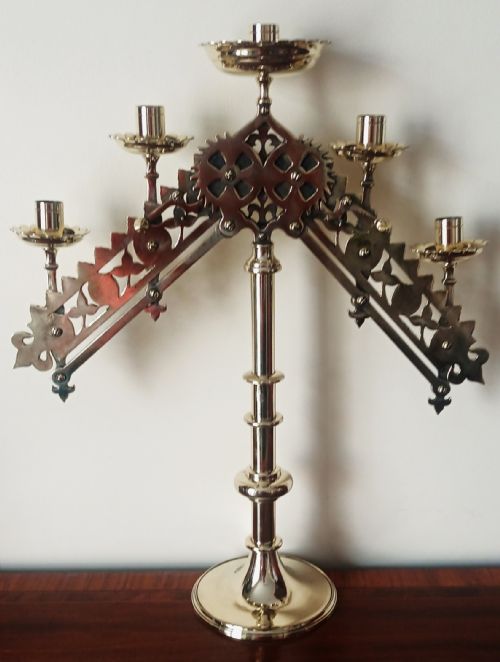
The aesthetic leans heavily into the Gothic Revival style, with architectural motifs borrowed from stone cathedrals translated into metal. Makers adopted various forms, from simple column shafts to elaborate articulated branches and multi-tiered candelabras.
How they were made
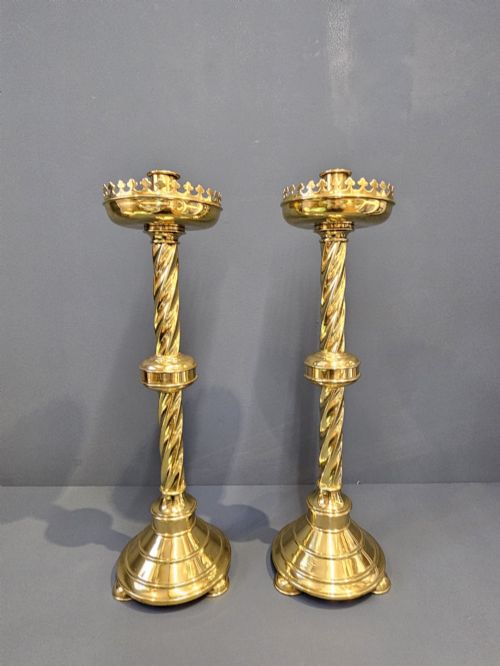
Foundry workers utilised brass, bronze, cast iron, and wrought iron to construct these heavy liturgical fixtures. Brass dominates the selection, often cast in sections and threaded together to achieve impressive heights.
Surface treatments range from polished and gilt finishes to painted metal and darkened iron. Surviving examples show a combination of heavy casting, turning on lathes, and hand-forging for structural wrought iron components.
Listings feature nineteenth-century materials including brass, bronze, cast iron, and wrought iron, with Gothic Revival standing as the predominant design style.
What varies in quality
Weight and casting crispness separate standard production pieces from workshop examples with intricate ornamentation. Heavier gauge metal and deep relief chasing on column capitals indicate superior manufacturing standards.
Proportion and scale dictate the visual impact of a pair, particularly with tall floor-standing models. Finer specimens maintain strict vertical alignment across multiple stacked sections without structural lean.
T Thomason & Co
The Victorian Church Candle Stands Glossary
- Pricket
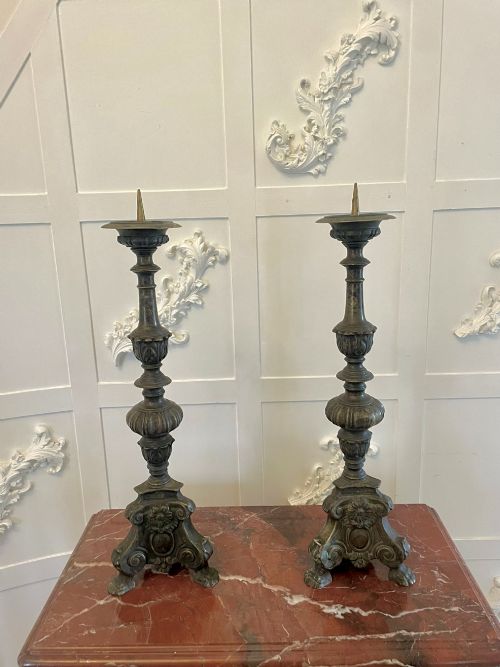
- A sharp metal spike on top of a candlestick designed to hold a large candle in place. This form is typical of ecclesiastical lighting where thick wax tapers were burned.
- Gothic Revival
- An architectural and decorative style popular during the nineteenth century that revived medieval forms. It draws inspiration from pointed arches and ecclesiastical stonework.
- Candelabra
- A branched candlestick holding multiple lights on separate arms. These pieces often feature articulated joints allowing the branches to move.
- Corinthian column
- A classical column style featuring ornate carved capitals decorated with acanthus leaves. This motif appears frequently on nineteenth-century pillar candlesticks.
Victorian Church Candle Stands: Frequently Asked Questions
How were these stands used in churches?
These tall stands held heavy wax candles on or near the altar during liturgical services. Their elevated height ensured the light carried across large ecclesiastical spaces.
Today, placing them in domestic settings creates a dramatic focal point, often utilised empty as sculptural metal objects or paired with appropriate pillar candles.
What is a pricket candlestick?
A pricket candlestick uses an upright metal spike instead of a traditional socket to secure the candle. The base of the wax taper rests directly upon a drip pan.
This design accommodates larger candles without standard base measurements and prevents wax from pooling unevenly down the shaft.
How do I identify Gothic Revival style?
Gothic Revival pieces incorporate architectural elements from medieval churches, including pointed arches, quatrefoils, and clustered columns. In metalwork, this translates to heavy cast brass with rich surface detailing.
These designs reflect a nineteenth-century fascination with medieval craftsmanship and ecclesiastical tradition.
Where should I place a tall floor candlestick?
Floor-standing models require adequate clearance to showcase their height and heavy metal construction. They suit corners of reception rooms or flanking architectural fireplaces.
Ensure the floor surface is level, as these heavy nineteenth-century items carry substantial weight at the top.