



Victorian Christening Cup
A victorian christening cup is a traditional gift of solid metal or plated ware meant to mark a child's birth or baptism.
Victorian Christening Cup
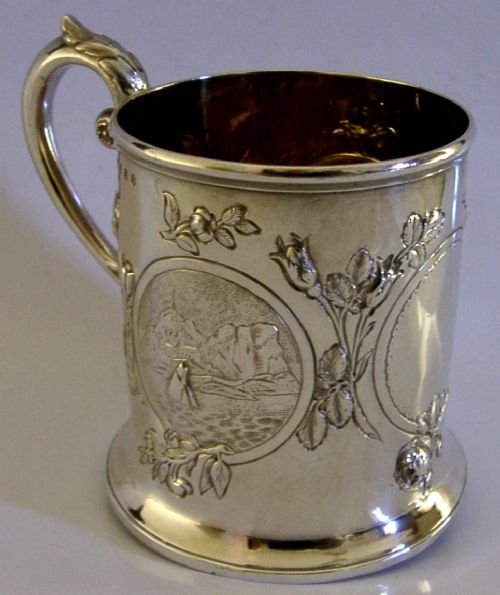
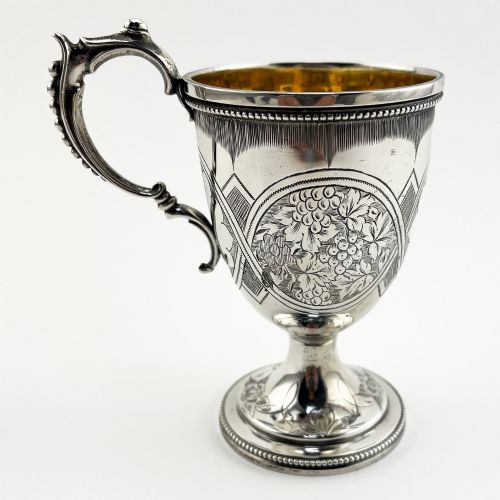
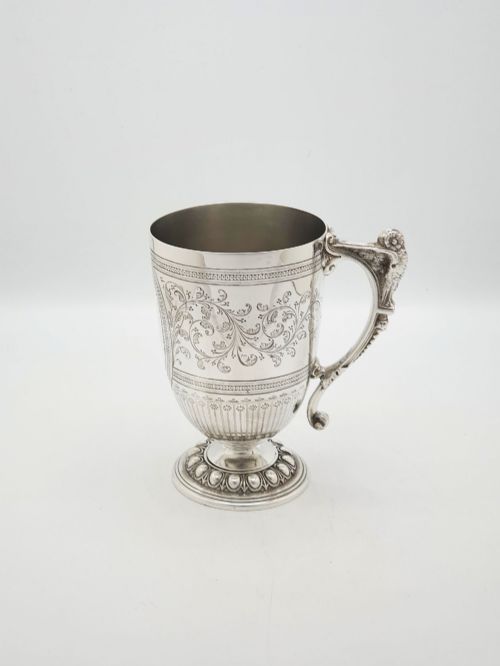
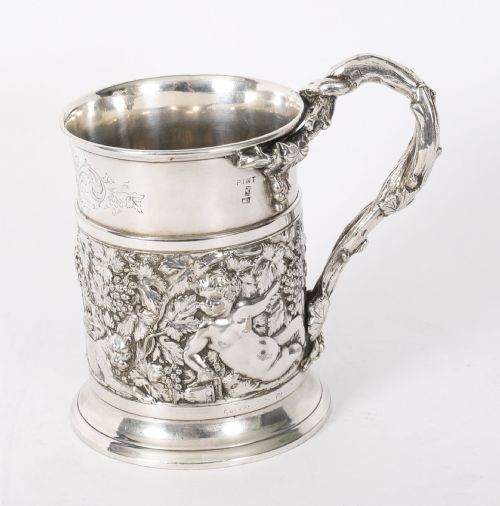
A victorian christening cup on this page typically takes the form of a small mug, tankard, or occasionally a matched set comprising cups, saucers, and spoons housed in fitted leather and velvet boxes. These vessels span the nineteenth century and extend into the Edwardian period, recording decades of domestic gifting traditions.
The objects take various shapes, including campana bodies, baluster forms, and cylindrical tankards fitted with scroll or novelty handles such as owls. Many items arrive with original fitted cases lined in silk and velvet, preserving the presentation format favoured by Victorian donors.
Materials and construction
Silversmiths utilised sterling silver, silver gilt, and silver plate over white metal or nickel silver, shaping the metal through raising and spinning before applying interior gilding to certain cups. Exterior decoration relied heavily on hand engraving, repousse work, and embossing to create floral motifs and rococo scrolls.
Handles were cast separately and soldered securely to the bodies, ranging from simple C-scrolls to naturalistic forms and figural animal designs. Makers frequently marked their pieces with town assay office stamps, date letters, and individual maker punches.
Victorian Christening Cup Retail Price Guide 2026
Typical asking prices for victorian christening cup among the pieces listed under this phrase on Sellingantiques today, from the lower quarter to the upper quarter. They describe what is for sale here now, not the wider market.
Judging the standard
Quality rests upon the crispness of the repousse embossing and the depth of the hand engraving, where sharper detailing denotes superior silversmithing. The weight of the metal and the structural integrity of the applied handle also determine the standard of the piece.
The presence of original fitted boxes lined with silk and velvet elevates the integrity of the survival, particularly when the interior lining remains clean and undamaged. Pieces bearing named maker marks or regional provenance within the nineteenth century generally command higher regard among collectors.
George Unite·Norman Marshall·Walker And Hall·Hilliard And Thomason·John Evans·G R Collis
The Victorian Christening Cup Glossary
- Repousse
- Metalworking technique where the design is hammered into relief from the reverse side. This method creates tactile floral and scroll patterns on the exterior of the mug.
- Gilt
- A thin layer of gold applied to the interior surface of a silver cup. This process protected the metal from acidic liquids and added a decorative interior contrast.
- Baluster
- A vertical architectural form with a swelling lower portion tapering toward the top. Many nineteenth century mugs utilise this graceful silhouette.
- Campana
- A bell-shaped vessel profile widening towards the rim. This classical shape appears frequently on nineteenth century presentation cups.
Victorian Christening Cup: Frequently Asked Questions
What was a christening cup used for?
A victorian christening cup served primarily as a ceremonial gift to mark a child's baptism or birth, often given by godparents as an enduring keepsake.
While some vessels saw actual use for milk or water during childhood, many were kept preserved in their fitted presentation boxes as display pieces.
How do I identify a Victorian cup?
Identification relies on examining the hallmarks stamped into the metal, which reveal the assay office, date letter, and silversmith mark corresponding to the nineteenth century.
Stylistic indicators such as heavy repousse floral embossing and rococo scroll handles further point towards Victorian manufacture.
Are silver plated cups authentic?
Silver plate was a common and accepted manufacturing method during the nineteenth century, offering an accessible alternative to solid sterling silver for gift givers.
Plated pieces from this era exhibit the same historical styles and decorative techniques as their solid silver counterparts.
How should I clean silver cups?
Cleaning requires a gentle silver cloth applied sparingly to remove tarnish without disturbing the fine hand engraving or soft patina built up over generations.
Harsh abrasive dips should be avoided entirely, particularly on silver gilt interiors and plated surfaces where the finish is thin.