


Victorian Chinoiserie Urn
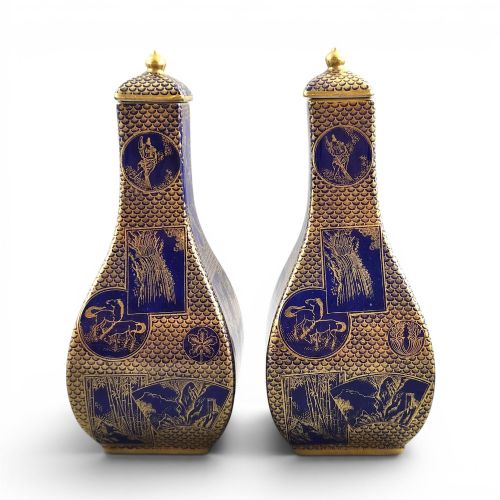
These victorian chinoiserie urn pieces and related vases bring together nineteenth-century European decorative arts and motifs drawn from Chinese export styles.
Victorian Chinoiserie Urn
A victorian chinoiserie urn search gathers nineteenth-century ceramic vases, ironstone vessels, and decorative objects styled with orientalist or Chinese export designs.
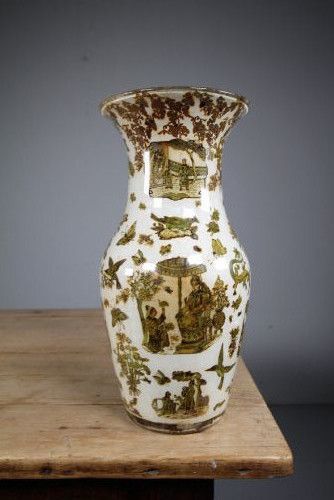
The selections on this page range from Mason's ironstone garnitures and potpourri vases to decalcomania glass vessels and Continental maiolica lidded vases.
Related forms such as table lamps, planter stands, and carved hardwood tables with marble inserts also appear alongside the primary ceramic urns.
How they were made
Potters utilised ironstone, ceramic, and stoneware bodies moulded into robust forms, often finished with mazarine blue ground colours and gold leaf or gilt highlights.
Alternative methods include decalcomania glass, lacquered papier-mâché, and cloisonné enamel, alongside carved hardwood and marble used for associated furniture stands.
What varies in quality
The standard of painting and transfer printing dictates the visual depth of the chinoiserie decoration across different pieces.
Makers' marks, such as stamps from established potteries, separate standard production wares from documented workshop output.
Mason's Patent Ironstone·Jennens And Bettridge
The Victorian Chinoiserie Urn Glossary
- Ironstone
- A patented ceramic body developed in the nineteenth century for durability and dense weight. It provides a crisp surface for transfer-printed and hand-painted orientalist patterns.
- Chinoiserie
- A European decorative style reflecting imaginative interpretations of Chinese and East Asian artistic traditions. It appears frequently on nineteenth-century ceramics and furniture.
- Decalcomania
- A technique involving the transfer of printed designs onto glass or other surfaces. It produces layered decorative effects common in nineteenth-century interior ornaments.
- Garniture
- A set of matching vases or urns designed for symmetrical display on a mantelpiece or sideboard. These sets often comprise three or more graduated pieces.
- Cloisonné
- An enamelwork technique where metal wires form small compartments to hold coloured paste. The piece is fired and polished to create a smooth, patterned surface.
Victorian Chinoiserie Urn: Frequently Asked Questions
What periods do these pieces date from?
The listings span the nineteenth century, with specific examples originating from the Georgian era through to nineteen hundred. Most items reflect Victorian interpretations of earlier designs.
Craftsmanship from this period utilises diverse materials, ranging from ironstone ceramics to lacquered papier-mâché and cloisonné enamel.
How were ironstone urns used?
Vessels such as potpourri jars and lidded vases served both decorative and practical functions in nineteenth-century interiors. They held dried flower petals scented with spices to fragrance formal rooms.
Larger garnitures of vases sat prominently on mantelpieces, while paired urns anchored symmetrical displays on sideboards and console tables.
What is decalcomania glass?
Decalcomania involves applying printed paper engravings to the interior or reverse of glass vessels, then sealing them with paint and varnish. This nineteenth-century method created rich, decorative textures resembling painted porcelain.
Such glass vases catch the light differently than solid ceramics, offering a translucent quality within a room display.
Are furniture stands included?
The selection incorporates associated furnishings like marble-topped plant stands, jardiniere tables, and carved hardwood lamp tables. These pieces complement the ceramic vessels and vases.
They share period characteristics and export-inspired motifs, often serving as display pedestals for large decorative urns.