




Victorian Chinoiserie Serving Tray
These Victorian chinoiserie serving tray examples combine English utility with painted oriental motifs, offering practical display surfaces for modern homes.
Victorian Chinoiserie Serving Tray
A victorian chinoiserie serving tray brings decorative painted oriental landscapes into nineteenth-century domestic interiors. These pieces appear in forms ranging from flat server dishes to deep platters and waiter trays mounted on stands.
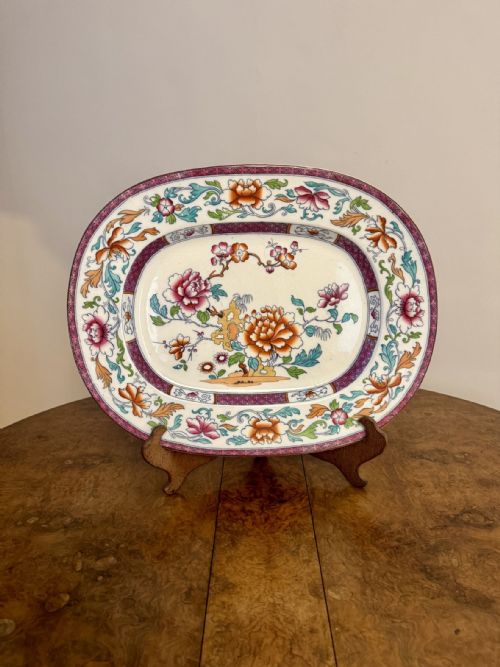
Makers of the period applied distinct Eastern-inspired motifs to familiar European serving shapes. Buyers encounter both papier-mâché surfaces and ceramic platters bearing pagoda scenes and floral arrangements.
Originating largely in the nineteenth century, these items bridge utilitarian dining room service and decorative display. The surviving pieces reflect both the Regency roots of the style and later Victorian manufacturing.
Materials and construction methods
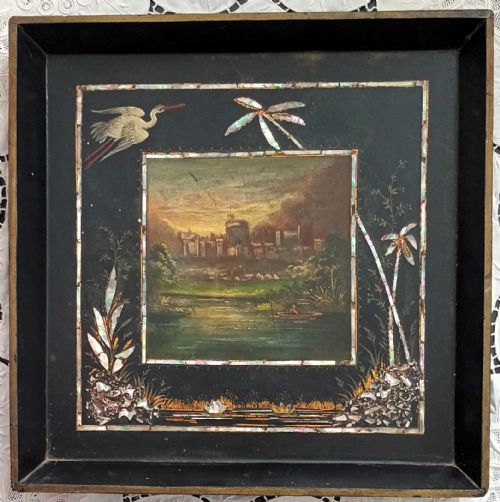
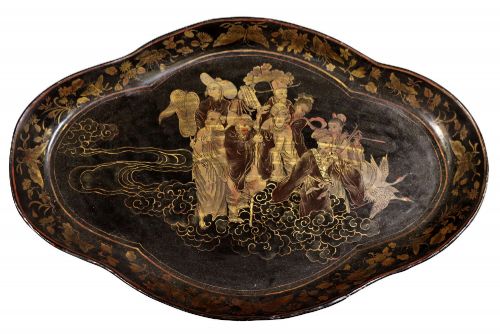
Papier-mâché forms the base of many lighter serving pieces, built up from paper pulp or sheets, pressed into moulds, and dried. Artisans then applied ebonised finishes and detailed paintwork.
Ceramic makers utilised ironstone, earthenware, and standard glaze techniques for heavier meat platters and game plates. Gold leaf and enamel provided highlights across both paper-based and ceramic surfaces.
Some trays double as occasional furniture by perching on folding wooden stands, ready to hold afternoon tea.
Quality variations in the range
The precision of the painted detail and the preservation of the original gilt work distinguish finer examples from standard production. Lacquer durability and the crispness of moulded papier-mâché edges also mark the tier of manufacture.
Ceramic items depend on the clarity of the printed or hand-painted Chinese Villa and Pagoda patterns beneath the glaze. Ironstone density and the absence of firing faults define the better ceramic platters.
Minton·Elkington·Elkin Knight And Bridgwood
The Victorian Chinoiserie Serving Tray Glossary
- Chinoiserie
- European artistic interpretation of Chinese and East Asian artistic traditions. This style dominates the decoration of these trays and platters.
- Papier-mâché
- Composite material made of paper pulp or reinforced paper sheets, used for lightweight trays. It accepts ebonising and lacquer finishes smoothly.
- Ironstone
- Heavy, durable ceramic body developed in the nineteenth century as a robust alternative to porcelain. It forms the base of many large meat platters.
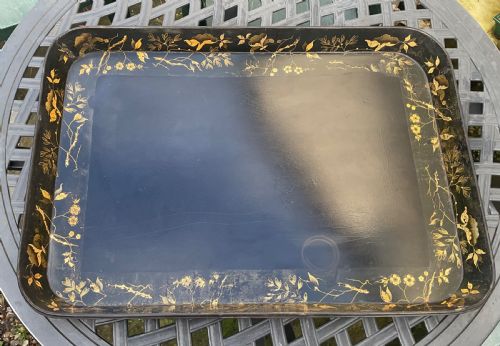
- Toleware
- Painted or enamelled tinplate items produced in various nineteenth-century workshops. These trays offer a metallic base for decorative finishes.
- Well and tree
- A serving platter design featuring channels and a small well to collect meat juices. This functional feature appears on ceramic platters from the period.
Victorian Chinoiserie Serving Tray: Frequently Asked Questions
What is a Victorian chinoiserie serving tray?
These items are nineteenth-century serving surfaces decorated with painted or lacquered oriental motifs. They include both papier-mâché boards and ceramic meat platters.
Craftsmen produced them in various forms, from flat trays to pieces mounted on stands for butler service.
How were papier-mâché trays cleaned originally?
Original care required gentle wiping with a dry or barely damp cloth to protect the delicate lacquer and gold leaf. Harsh water immersion damaged the paper core.
Modern owners should maintain this careful approach to preserve the ebonised surfaces.
Can I use these trays for serving food?
Ceramic meat platters handle food service well, provided the glaze remains intact and stable. Papier-mâché and lacquered trays suit dry presentation or decorative display better.
Using paper-based trays for wet or hot dishes risks marking the antique finish.
How do I identify the period of a tray?
Dating relies on material composition, maker marks on ceramics, and the style of the painted decoration. Nineteenth-century pieces show specific ebonising and lacquer techniques.
Regency examples often display earlier neoclassical crossover elements within the oriental design.