
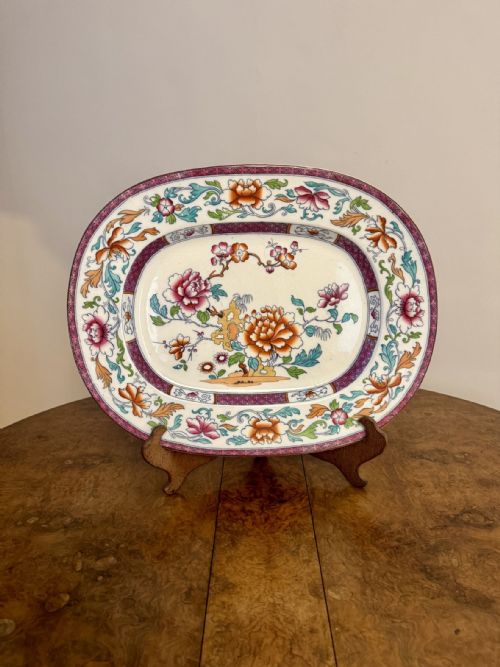
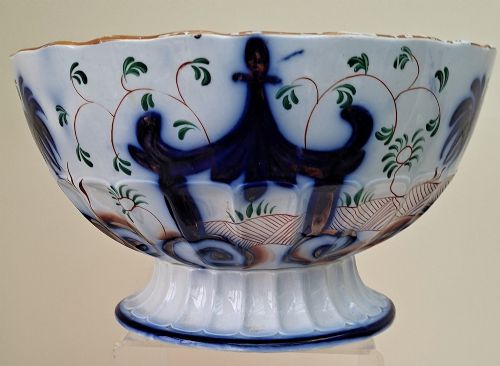


Victorian Chinoiserie Dish
These nineteenth-century pieces bring together vibrant transfer-printed scenes and durable earthenware bodies, offering a distinct visual appeal for collectors of victorian chinoiserie dish examples.
Victorian Chinoiserie Dish
A victorian chinoiserie dish encompasses a range of serving vessels, meat platters, soup tureens, and decorative plates created during the nineteenth century. These objects draw on eastern design motifs interpreted through British ceramic traditions.
The most common versions on this page are large meat platters, footed bowls, and blue and white transferware plates. Makers utilised patterns featuring pagodas, Chinese gardens, and oriental motifs across various serving forms.
Pieces span periods from the Georgian and Regency eras through to the Victorian period, reflecting evolving tastes in domestic dining. The inventory includes specialised forms such as cheese dishes, comports, and large chargers.
Materials and technique
Potters relied heavily on ironstone, earthenware, and stone china to achieve durable bodies suitable for heavy daily use and large serving vessels. These ceramic bases provided a stable ground for detailed blue and white transfer printing.
Transfer printing allowed workshops to apply intricate patterns like the Willow, Pagoda, and Chinese Garden designs with remarkable consistency across plates and tureens. Selected highlights incorporate enamel colours and gold leaf to accent the printed motifs.
Several platters incorporate hidden drainage wells designed to keep nineteenth-century Sunday roasts clear of their own gravy.
Assessing the execution
The clarity and depth of the transfer print separate standard utility wares from finer display pieces. Crisp lines in complex pagoda or garden scenes indicate careful plate engraving and skilled presswork.
The weight and refinement of the ironstone or ceramic body contribute significantly to a piece's standing. Well-balanced footed bowls and heavy meat platters demonstrate superior potting techniques employed by prominent nineteenth-century potteries.
Coalport·John Ridgway·Masons Ironstone·Copeland and Garrett·Minton·Elkin Knight and Bridgwood
The Victorian Chinoiserie Dish Glossary
- Ironstone
- A dense, durable type of earthenware patented in the nineteenth century to rival true porcelain. It resists chipping and provided an ideal surface for transfer-printed decoration.
- Transferware
- Pottery decorated by applying a printed design from a copper plate onto paper, which is then transferred onto the unglazed or bisque ceramic body. This technique revolutionised mass production in British potteries.
- Comport
- A raised serving dish or pedestal bowl used for presenting fruit or sweetmeats at the table. These elevated forms often feature detailed handles or footed bases.
- Charger
- A large decorative plate primarily used for display or as a base setting rather than for individual dining. They frequently showcase elaborate oriental-style scenes.
- Well and tree platter
- A large meat serving dish featuring channels carved into the ceramic surface to collect meat juices into a central well. This practical design was common in large nineteenth-century dining services.
Victorian Chinoiserie Dish: Frequently Asked Questions
What were these dishes used for?
These ceramics served practical roles in nineteenth-century dining, ranging from large meat platters and soup tureens to cheese dishes and fruit comports. They accommodated the multi-course meals of the period while displaying fashionable eastern-inspired motifs.
Over time, many of these utilitarian serving pieces transitioned into decorative display items. Their intricate transfer-printed scenes made them suitable for enrichment in dining rooms and drawing rooms.
How do I date a Victorian piece?
Dating relies on maker marks, pottery registry stamps, and the specific composition of the ceramic body, such as improved stone china or ironstone. Stylistic shifts between Regency patterns and later Victorian interpretations also help narrow the timeframe.
Examining the transfer print colour and glaze characteristics provides further clues. Earlier nineteenth-century examples often feature distinct deep blue tones, while later production incorporated varied polychrome enamels.
How do I care for ironstone ceramics?
Wash these pieces gently by hand using mild soap and warm water to protect the historic glaze and any delicate enamel or gold leaf details. Avoid harsh abrasives and automatic dishwashers, which can dull the ceramic surface over time.
Store large platters and heavy soup tureens securely on stable surfaces where they bear no weight from other items. Proper support prevents stress fractures in the dense earthenware bodies.