




Victorian Chinese Lamp
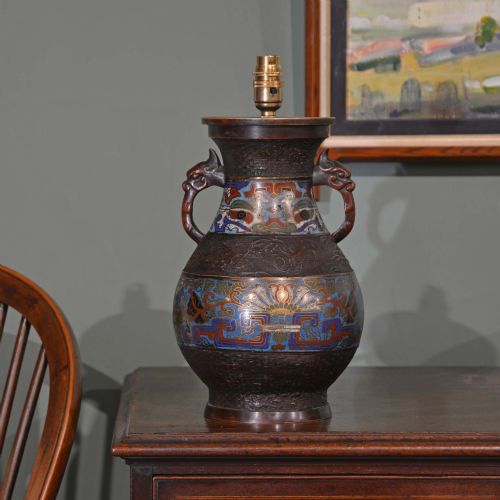
When a victorian chinese lamp catches your eye, you are looking at a fusion of Far Eastern export ceramics and nineteenth-century British furnishing tastes.
Victorian Chinese Lamp
A victorian chinese lamp typically combines imported porcelain vessels, bronze, or cloisonné with period mounting, often paired with fabric shades. You will frequently encounter table lamps fashioned from Canton Famille Rose, Famille Verte, blue and white prunus blossom, and Rose Medallion vases.
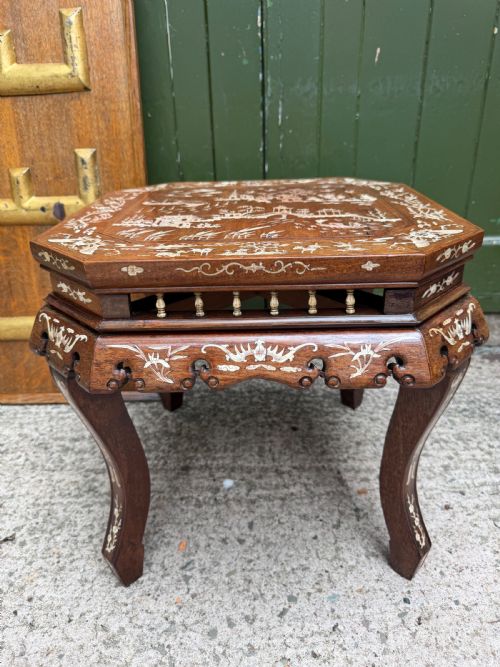
Beyond direct vase conversions, the selection includes related wooden furnishings adapted for lighting, such as carved root wood, ebonised occasional tables, and hardwood lantern stands. These items bridge domestic British interiors and nineteenth-century Chinese export craftsmanship.
Materials and construction
Makers utilised imported ceramic bodies, bronze, brass, enamel, and ormolu mounts to secure the electrical or oil-burning fittings. Hardwoods like carved root wood and ebonised timber form the structural bases and associated lamp tables.
Porcelain decoration relies on traditional hand-painted enamel palettes, whilst metal components show cast or chased ormolu detailing. Fabric is employed primarily for the accompanying shades.
Listings combine porcelain, brass, fabric, hardwood, marble, lacquer, ormolu, and enamel across the nineteenth century.
Distinguishing quality
Quality rests in the harmony between the imported vessel and its metal mounts, where finely chased ormolu or heavy brass elevates the piece. The crispness of the hand-painted enamel work on the porcelain vase dictates visual merit.
Stability and timber selection matter greatly in the associated stands and bases, with dense carved hardwoods outperforming lesser construction. The integration of the lamp fitting without compromising the original ceramic body marks superior conversion work.
The Victorian Chinese Lamp Glossary
- Famille Rose
- A palette of opaque pink enamel introduced to Chinese ceramics during the Qing dynasty. It dominates many nineteenth-century export vases subsequently converted for lighting.
- Ormolu
- Gilded bronze mounts applied to furniture and porcelain vessels. French in origin, it gained popularity in British Victorian decorative arts.
- Cloisonné
- Enamelwork created by soldering wire compartments onto a metal base before filling them with paste and firing. This technique produces vibrant, patterned surfaces on lamp bodies.
- Jardiniere Stand
- A low table or pedestal designed to hold plant pots or flower bowls. Many examples are repurposed as lamp tables in modern interiors.
- Canton
- A major port in southern China that exported vast quantities of decorated porcelain to Western markets during the nineteenth century.
Victorian Chinese Lamp: Frequently Asked Questions
Are these lamps originally electrified?
Most pieces began life as vases, ginger jars, or tea canisters before conversion to lighting during the nineteenth century or later. Some retain traces of oil lantern fittings.
Rewiring is common to meet modern safety standards while preserving the antique ceramic or bronze body.
How do I identify a Victorian Chinese lamp?
Look for nineteenth-century British mounting styles paired with Qing dynasty export porcelain, bronze, or enamel vessels. Ormolu mounts and ebonised wooden bases often point directly to the Victorian period.
Archival records show similar pairings of Chinese vases with nineteenth-century brass and fabric shades.
What styles of porcelain are most common?
Famille Rose, Famille Verte, and blue and white prunus blossom designs appear frequently across the listings. Rose Medallion and Canton export wares are also well represented.
These decorative schemes reflect the Victorian appetite for vibrant oriental ornamentation.
Can I use associated stands as side tables?
Yes, many items listed alongside the lamps are designated as jardiniere stands, occasional tables, or plant stands. They were built from marble, bamboo, and hardwood to support planters or lamps.
Their dimensions make them versatile as small wine tables or occasional furniture.