


Victorian Ceramic Column
These victorian ceramic column pieces bring striking height and glaze to a room, offering the perfect display surface for plants and lamps.
Victorian Ceramic Column
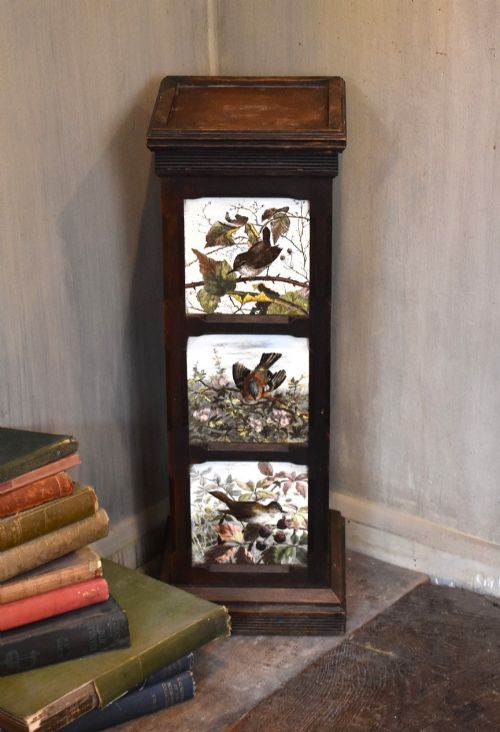
A victorian ceramic column typically takes the form of a tall pedestal, plant stand, or jardinière base designed to elevate flora and decorative objects within a room. These forms draw upon nineteenth-century Neoclassical, Aesthetic Movement, and Arts and Crafts design traditions.
The versions most commonly met on this page span the late nineteenth century into the Edwardian period, often incorporating glazed earthenware, majolica, or faience finishes. Makers utilised these durable ceramics to create stable vertical supports for indoor greenery and sculptural oil lamps.
How they were made
Makers constructed these columns using earthenware and pottery bodies, which were frequently shaped into naturalistic or classical fluted forms. Skilled artisans then applied rich coloured glazes, including majolica and faience finishes, before high-temperature kiln firing.
Many examples integrate supportive structural elements such as brass mounts, dark wood bases, or internal iron rods for stability. Glazing techniques varied from high-gloss monochrome surfaces to mottled multi-toned colourways across the ceramic body.
Listings feature items from the 1860s through the Edwardian era, incorporating materials such as earthenware, brass, glaze, glass, and dark wood.
What varies in quality
The distinction between standard production and superior examples lies in the depth and execution of the glaze. Rich, even coverage with complex colour blending indicates a higher grade of pottery manufacture.
Structural complexity also defines the tier of a piece. Elaborate naturalistic moulding, crisp Neoclassical detailing, and the integration of secondary materials such as brass or bronze distinguish finer workshop output from simpler utilitarian wares.
BURMANTOFTS ART POTTERY·Woodlesford Art Pottery
The Victorian Ceramic Column Glossary
- Majolica
- A type of earthenware decorated with opaque coloured glazes over a white tin-glaze ground. This technique produced vivid, glossy surfaces popular in nineteenth-century decorative arts.
- Faience
- Tin-glazed earthenware produced by European potteries. The term often describes decorative architectural ceramics and art pottery vessels.
- Jardinière
- A large ornamental pot or container for plants or flowers. These are frequently paired with matching ceramic pedestals.
- Aesthetic Movement
- A late nineteenth-century design current that emphasised visual and material beauty over narrative content. It influenced the patterning and colour palettes found on art pottery.
- Neoclassical
- A style inspired by the classical art and architecture of ancient Greece and Rome. It manifests in columns through fluting, classical proportions, and formal ornamentation.
Victorian Ceramic Column: Frequently Asked Questions
What rooms suit a ceramic column?
These tall stands suit conservatories, hallways, and principal reception rooms where vertical display space adds architectural interest.
They provide a stable platform for heavy plants, jardinières, and decorative table lamps without dominating the floor plan.
How are jardinières and pedestals displayed?
Jardinières are traditionally placed directly upon matching columnar pedestals to create a unified focal point in an interior.
Single columns also function independently as display stands for sculptures, decorative ceramics, or oil lamps.
How do I identify a Victorian ceramic piece?
Victorian ceramic columns typically display period design motifs such as Neoclassical fluting or Aesthetic Movement patterns. The weight of the earthenware and the characteristics of the coloured glaze help indicate the nineteenth-century origin.
Examining the underside often reveals manufacturing characteristics, unglazed clay edges, or workshop marks typical of the period.
Were these columns used for lighting?
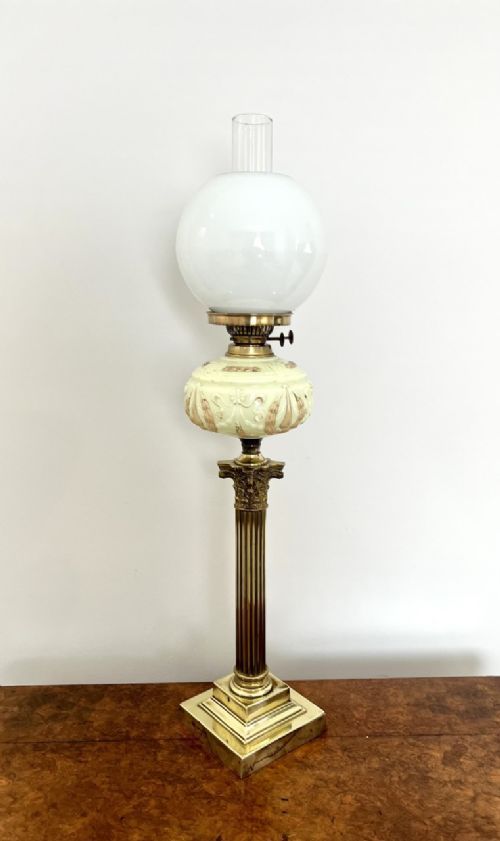
Many ceramic columns and bases were manufactured specifically to house oil lamps or to support electrified table lamps. The combination of glazed ceramic and brass components provided both weight and decorative contrast.
These combination pieces served as functional illumination sources while adding colour and height to a room.