

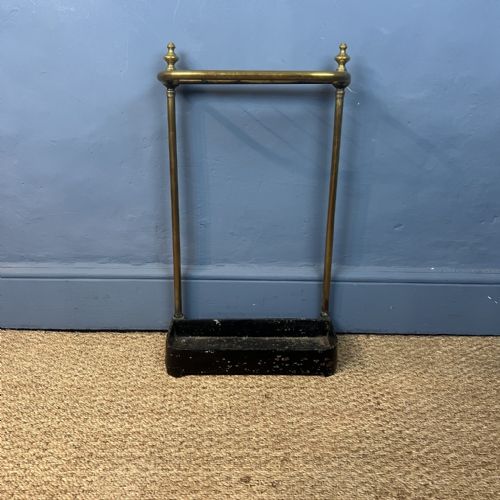
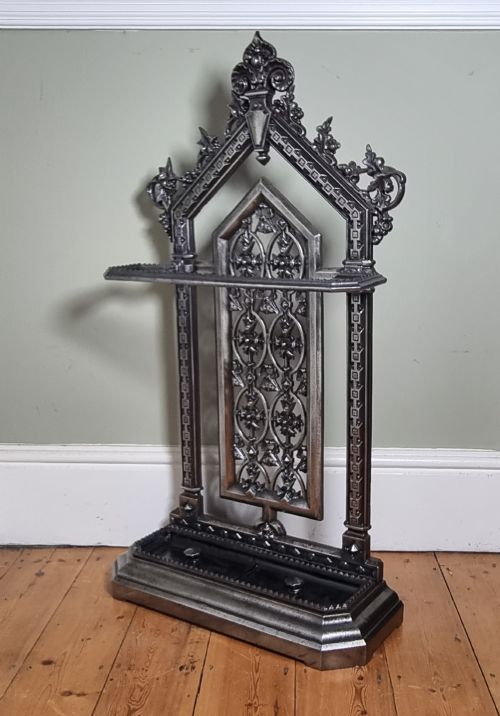
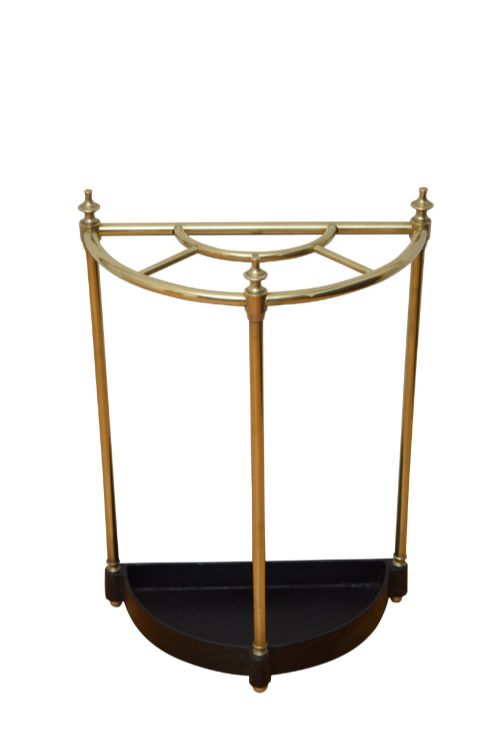
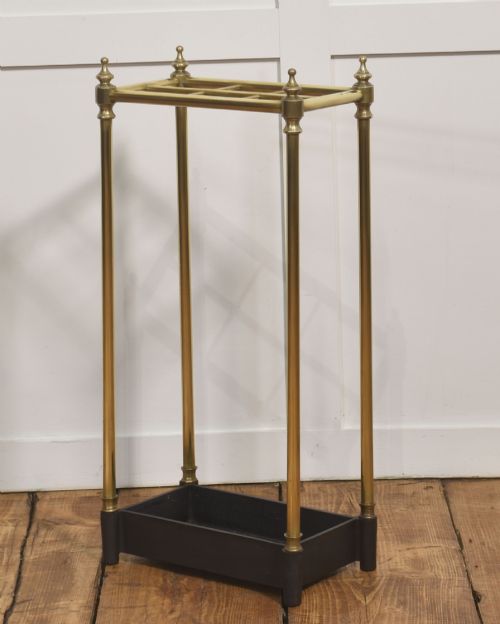
Victorian Cast Iron Stick Holder
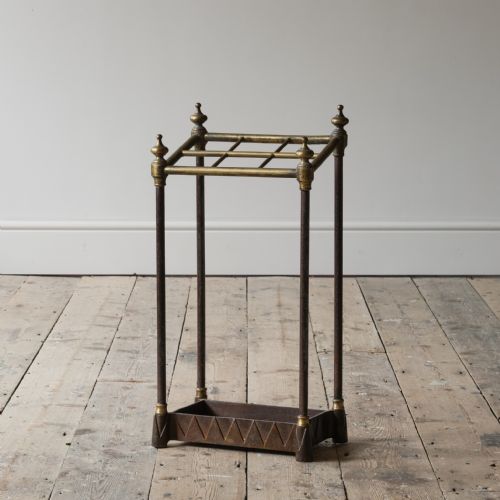
A victorian cast iron stick holder stands ready in the hallway to catch dripping umbrellas and heavy walking canes.
Victorian Cast Iron Stick Holder
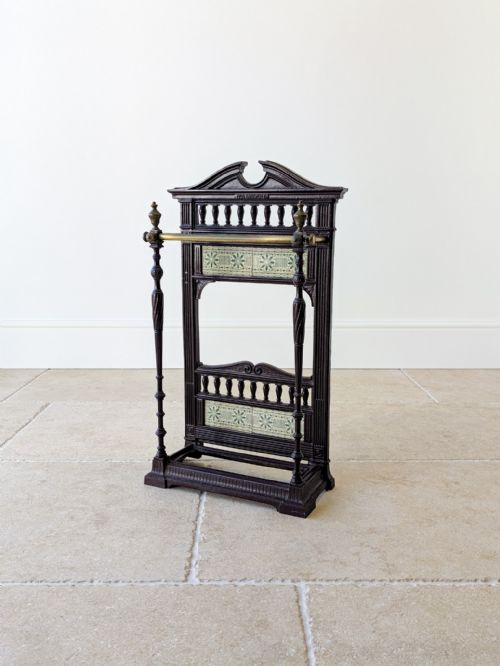
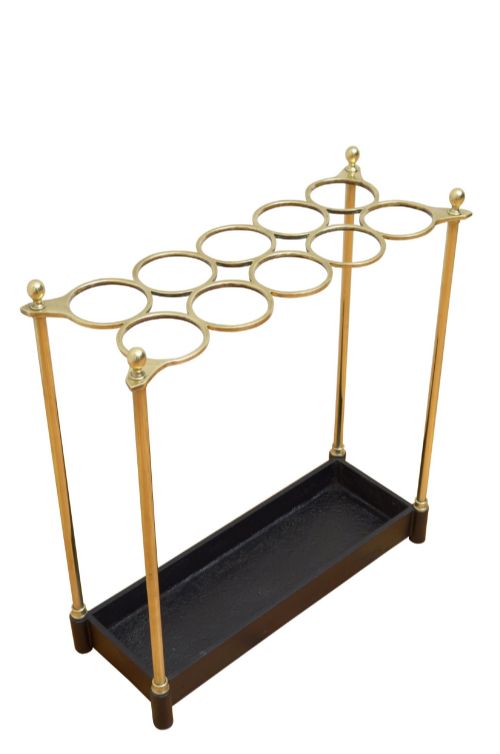
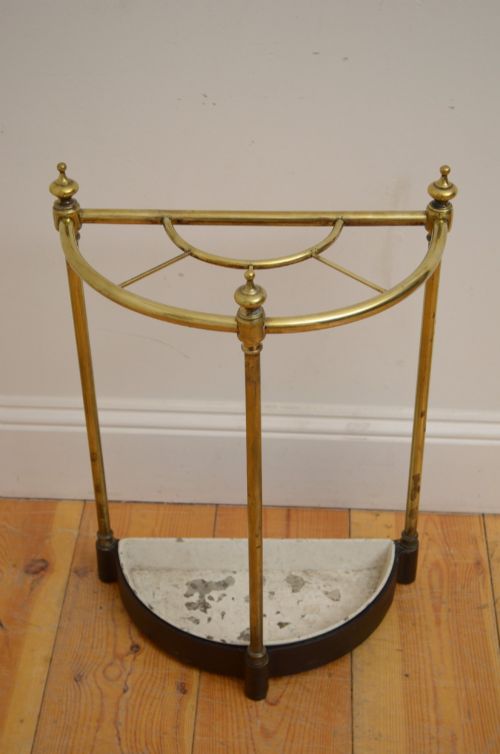
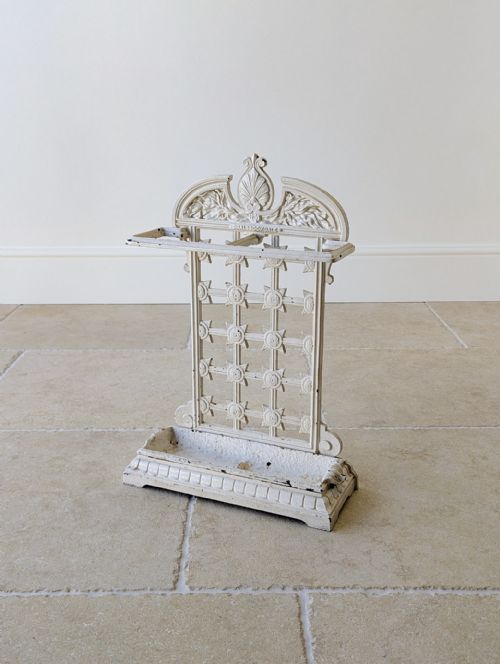
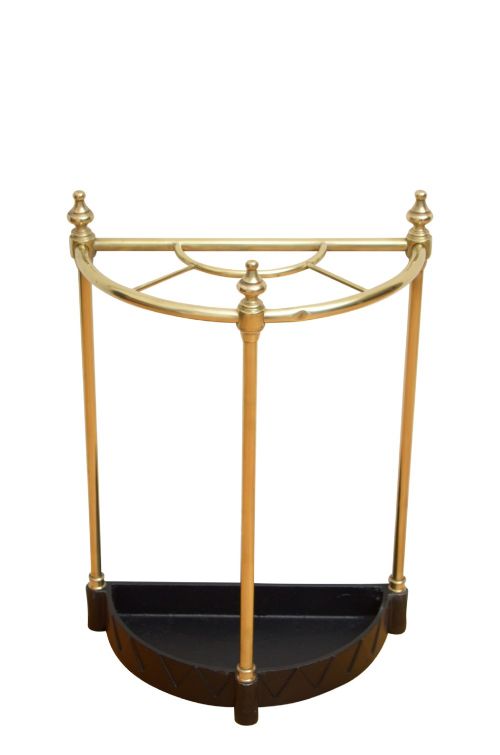
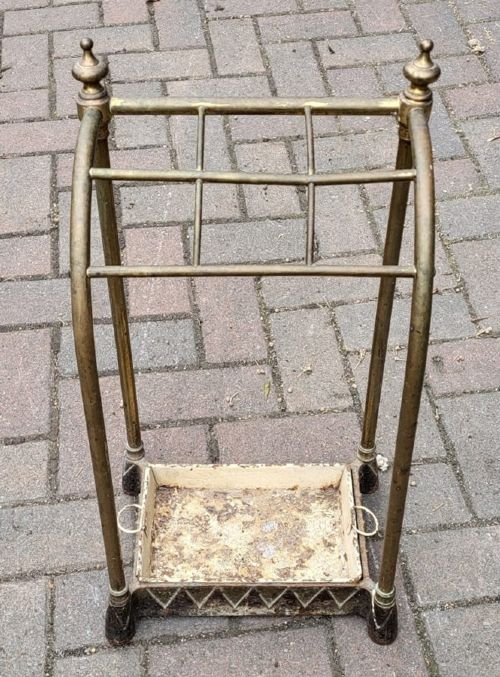
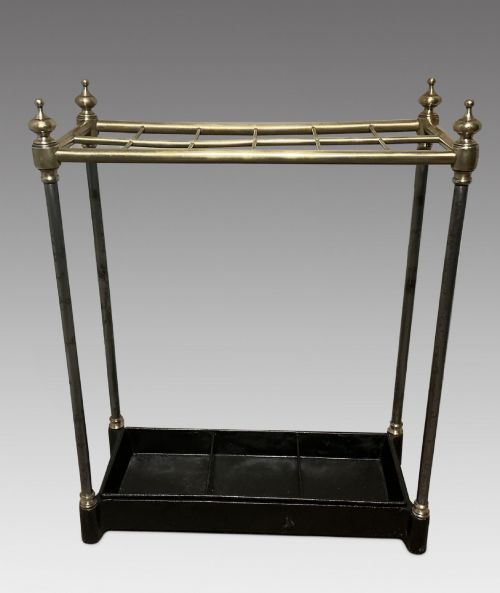
A victorian cast iron stick holder is a functional hallway furnishing designed to store umbrellas and walking sticks upright. These items appear primarily from the Victorian and Edwardian eras, spanning the nineteenth and early twentieth centuries. Forms range from freestanding umbrella stands and stick stands to half-moon demi-lune designs and larger hall stands.
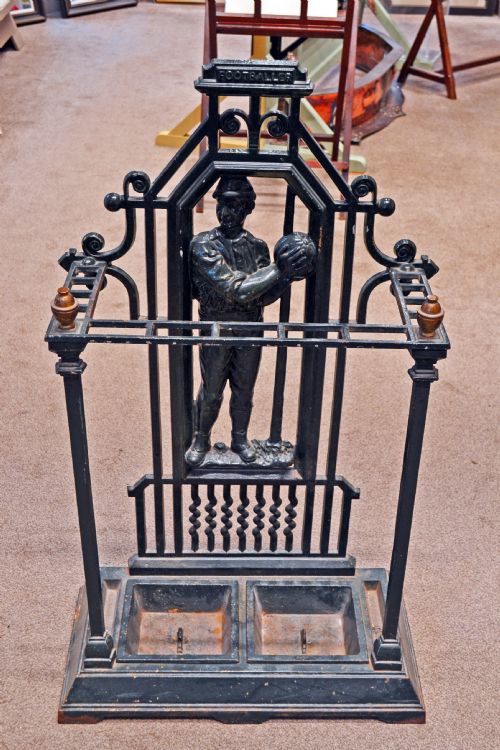
The objects combine heavy metal frames with practical drip trays to protect entrance flooring. Buyers encounter standard upright configurations alongside figural designs depicting subjects such as footballes, gun dogs, and literary themes like Jack and the Beanstalk. Many examples incorporate brass elements or ceramic inserts to complement the primary iron structure.
What varies in quality
The distinction between standard utility items and finer pieces lies in the crispness of the casting and the ambition of the design. Workshops known for artistic metalwork produced panels with sharp relief and well-defined decorative motifs, whereas mass-produced utilitarian versions display softer edges and simpler geometric patterns.
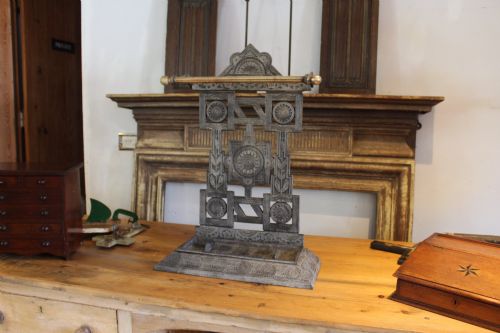
Makership and design attribution elevate certain examples significantly above basic hallway furniture. Pieces bearing foundry stamps or executed in distinct styles like the Aesthetic Movement or French Art Nouveau demonstrate superior proportion and design integration.
Coalbrookdale·Thomas Jeckyll·Falkirk Ironworks·A. Kenrick & Sons
The Victorian Cast Iron Stick Holder Glossary
- Demi-lune
- A half-moon shape designed to sit flat against a hallway wall and save floor space. This profile is frequently seen in brass and iron combinations.
- Aesthetic Movement
- A late nineteenth-century design style emphasising visual beauty over narrative content. Pieces from this movement often feature stylised natural motifs.
- Foundry mark
- An impressed stamp or raised lettering on the metal identifying the manufacturing ironworks. These marks help attribute pieces to specific makers.
- Drip tray
- The bottom basin designed to catch water running off wet umbrellas. These trays are often fashioned from brass, iron, or ceramic.
- Figural casting
- Iron shaped into recognizable characters, animals, or scenes rather than standard abstract lattice patterns. Examples include sporting figures and literary characters.
Victorian Cast Iron Stick Holder: Frequently Asked Questions
How do I clean cast iron?
Cast iron is maintained by removing dust with a soft brush and wiping surfaces with a dry cloth. Moisture should be avoided to prevent surface rust from forming on unpainted areas.
Where painted finishes are intact, a mild damp cloth handles dirt removal. Drip trays lift out separately for thorough washing and drying.
Where were these stands placed?
These holders stood primarily in entrance halls, vestibules, and boot rooms of period homes. They provided an immediate drop-off point for wet rain gear and walking aids upon entering the house.
Country houses and urban townhouses alike utilised these pieces near the front door to keep hallways tidy and dry.
How do I identify a maker?
Maker identification relies on inspecting the base or underside of the iron frame for raised lettering or stamped foundry names. Specific ironworks applied distinct registration numbers or company monograms during the casting process.
Stylistic markers and known catalogue designs also assist in attributing pieces to prominent nineteenth-century foundries.