




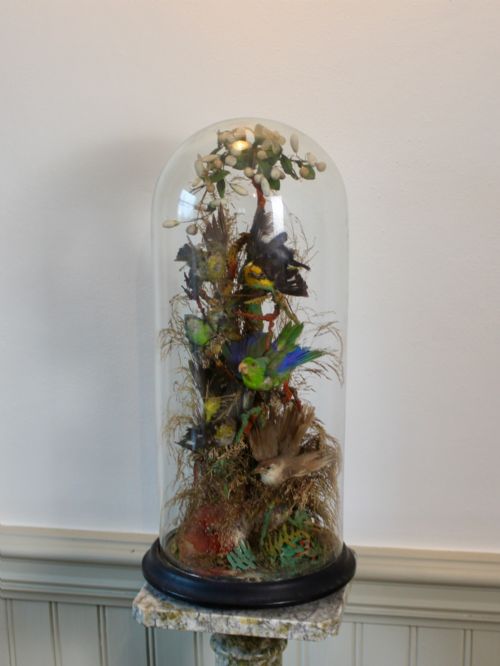



Victorian Cased Taxidermy Birds
Victorian cased taxidermy birds bring preserved natural history specimens into domestic interiors inside protective glass and timber enclosures.
Victorian Cased Taxidermy Birds
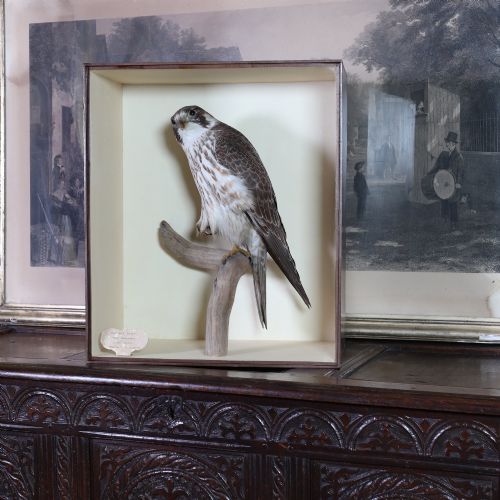
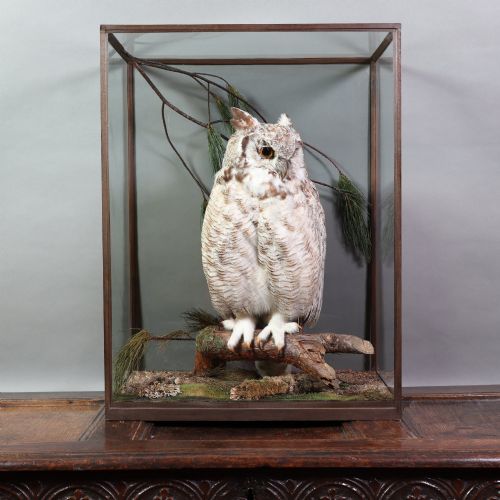
When you search for victorian cased taxidermy birds, you encounter preserved avian specimens displayed within glass domes or timber frames. These pieces originate primarily from the nineteenth century and the early twentieth century, spanning periods from the Victorian era into Edwardian times.
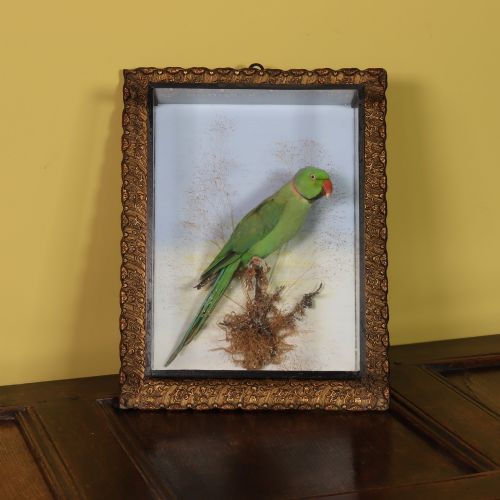
The specimens appear either as solitary subjects like owls, parrots and ducks, or arranged in complex compositions featuring multiple colourful birds. You also find pairs and trios such as kingfishers, waxwings, snow buntings and pheasants placed alongside natural elements.
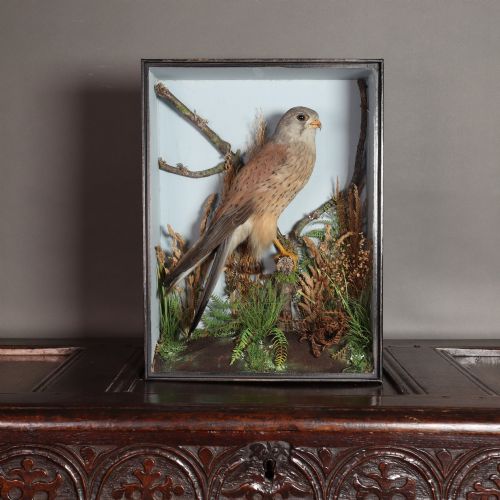
Enclosures take specific forms including picture frame cases, flat sided domes, oak cases and ebonised wood frames. These displays often incorporate simulated habitats constructed from moss, flora and painted paper backgrounds.
Materials and construction
Taxidermists constructed these displays using preserved bird specimens mounted inside protective housings made from glass and timber. Wood frames were frequently ebonised or built from oak to frame the viewing window.
Internal settings relied on organic and fabricated materials to mimic natural environments. Creators arranged dried moss, paper, flora and artificial snow scenes to support the mounted birds.
Victorian Cased Taxidermy Birds Retail Price Guide 2026
Typical asking prices for victorian cased taxidermy birds among the pieces listed under this phrase on Sellingantiques today, from the lower quarter to the upper quarter. They describe what is for sale here now, not the wider market.
A pair of snow buntings caught mid-hop inside a flat sided glass dome.
Quality variations
Quality depends on the skill of the taxidermist in rendering a natural posture and anatomical proportion for each bird. Works by established practitioners demonstrate superior preservation and lifelike arrangements compared to anonymous pieces.
The complexity of the composition and the integrity of the original glass housing influence the overall standard of the piece. Elaborate multi-bird displays and specialised dome enclosures reflect higher ambition in design.
J Griffiths of Burford·Rowland Ward Ltd·T. E. Gunn·William Bazeley & Sons·James Gardner·W.F. Homer London
The Victorian Cased Taxidermy Birds Glossary
- Taxidermy
- The art of preserving, stuffing and mounting the skin of animals for display. This practice formed a central part of nineteenth century natural history collecting.
- Ebonised wood
- Timber treated to resemble ebony through a dark staining or finishing process. This material frequently frames nineteenth century display cases.
- Dome
- A rounded glass cover set upon a base to protect fragile specimens from dust and handling. Flat sided versions provide alternative viewing angles for mounted birds.
- Flora
- Plant life utilised within display cases to construct artificial environments. Creators arranged these botanical elements around the mounted specimens to simulate natural habitats.
Victorian Cased Taxidermy Birds: Frequently Asked Questions
How do I clean a glass dome?
Clean the exterior glass surface gently using a standard glass cleaner applied to a soft cloth rather than directly onto the dome. Avoid disturbing the seal where the glass meets the base.
Keep the enclosure away from direct sunlight and damp environments to protect the preserved feathers and internal plant materials from degradation.
What periods do these pieces date from?
These preserved specimens and their enclosures date primarily from the Victorian era through to the Edwardian period. Listings typically span the nineteenth century into the early twentieth century.
Specific dates on maker labels or recorded histories help narrow the timeline for individual works.
Are the display cases removable?
Glass domes lift away from their timber bases while framed cases enclose the specimens permanently behind glass panels. Removing a dome requires careful handling to prevent damage to the delicate mounted birds inside.
Sealed cases maintain a stable internal microclimate that protects the preserved feathers and moss from atmospheric moisture.
How were natural habitats recreated?
Taxidermists constructed miniature landscapes inside the enclosures using preserved moss, paper backgrounds and dried flora. Some winter scenes incorporated artificial snow to frame species like buntings and waxwings.
These detailed settings were designed to mimic the natural environments of the birds before enclosure in glass and wood.