


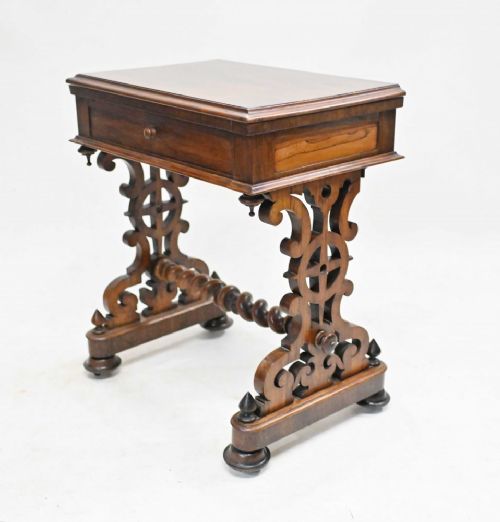
Victorian Carved Work Table
A victorian carved work table brings refined nineteenth-century utility to a room, offering clever compartments alongside polished timber surfaces.
Victorian Carved Work Table
A victorian carved work table combines domestic craft functionality with ornate nineteenth-century cabinetmaking, often serving multiple purposes as a sewing station or games surface. The pieces appearing on this page span the Victorian era alongside related nineteenth-century periods, showing considerable variety in their fitted interiors and top configurations.
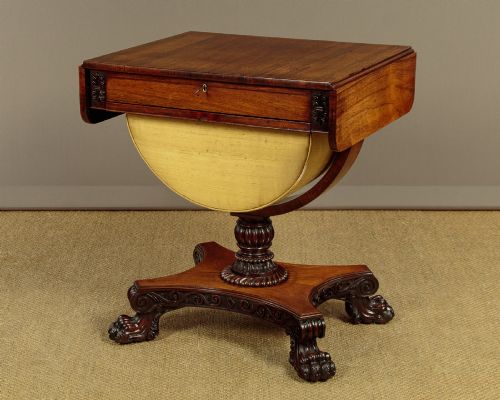
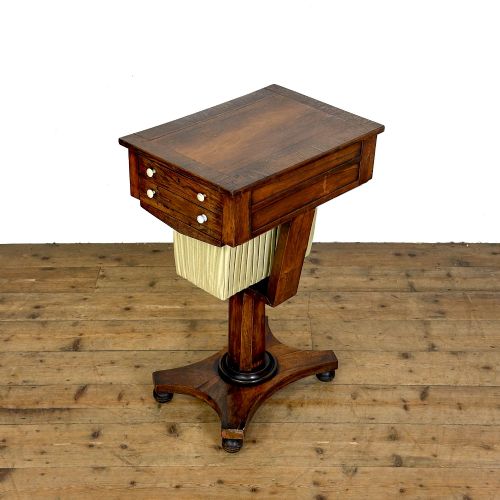
The most frequent examples encountered here utilise burr walnut or rosewood, constructed as freestanding sewing tables, games tables, or trumpet tables. Many incorporate hinged lids opening to reveal fitted compartments for needlework alongside sliding bags or drop-leaf extensions.
Materials and Construction
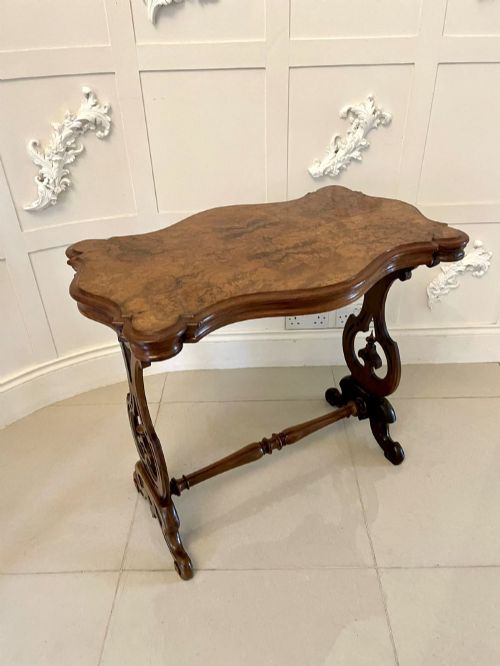
Cabinetmakers constructed these tables primarily from dense hardwoods like mahogany, rosewood, and walnut, frequently applying burr walnut veneers to create highly figured top surfaces. Wood inlay, boxwood stringing, and elaborate carving define the decorative vocabulary across the periods represented.
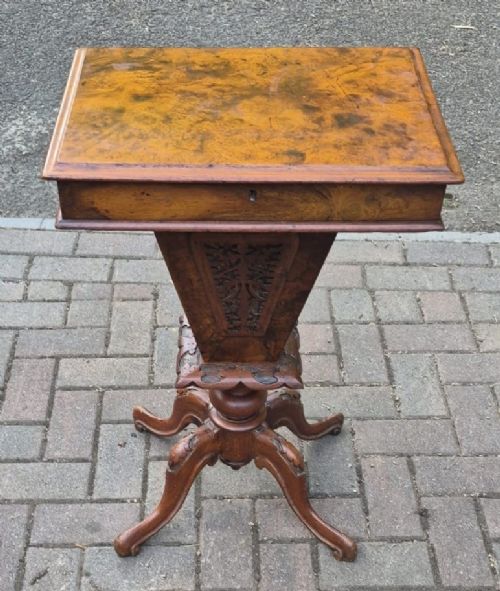
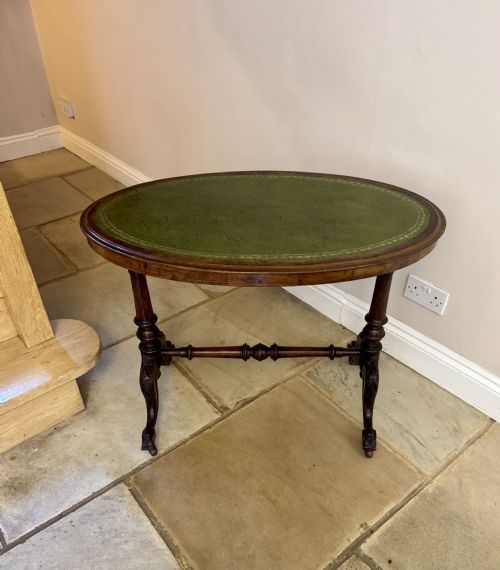
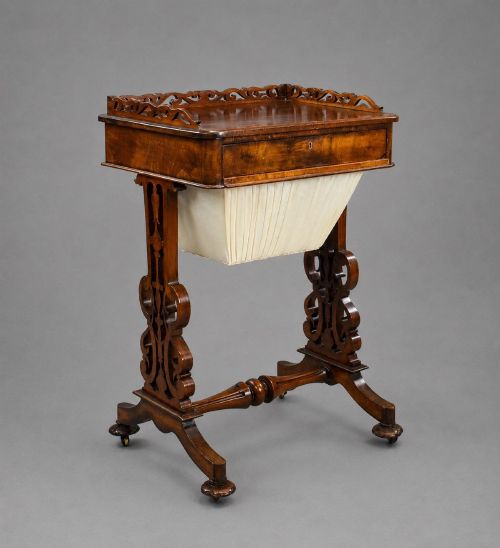
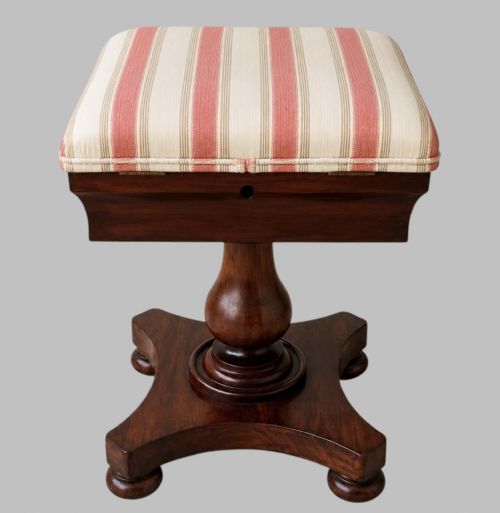
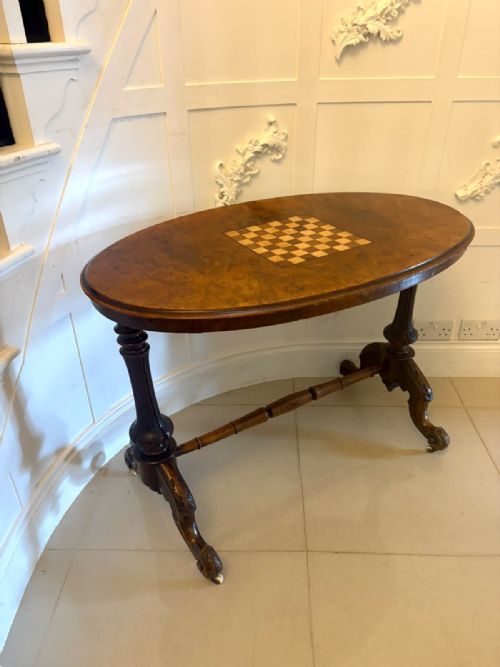
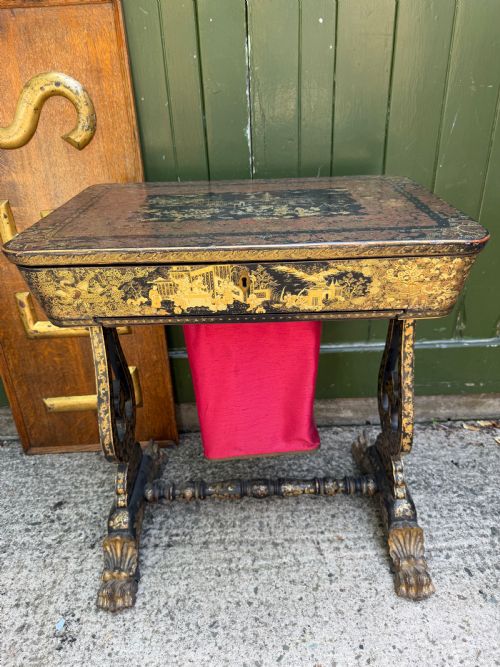
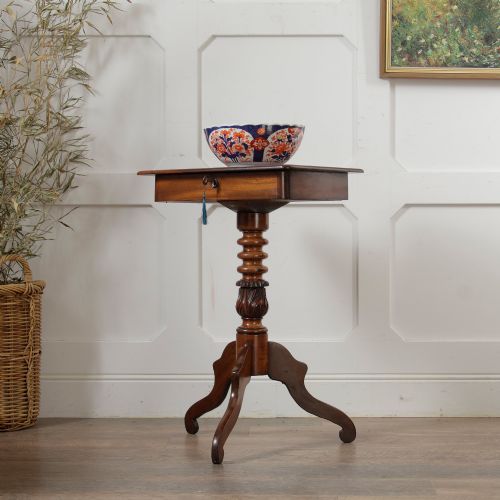
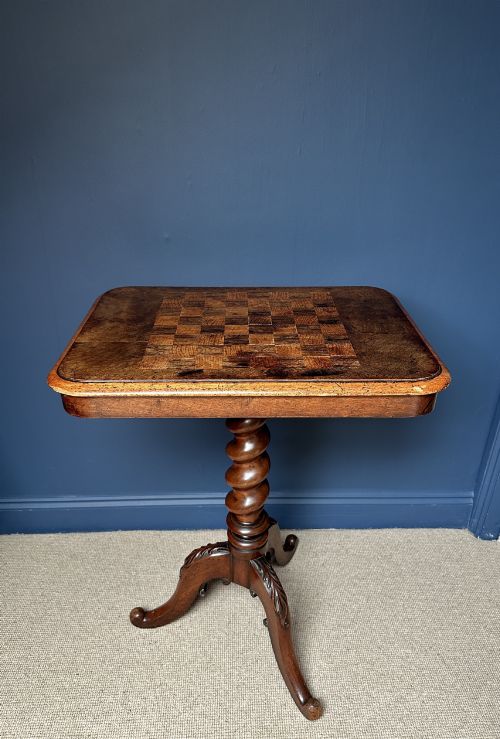
Internal components often feature fabric sewing bags suspended beneath the main carcase, while writing and games variants incorporate leather panels or inlaid chess boards. Pedestal bases, bobbin-turned supports, and trumpet-shaped columns provide the structural framing for the upper compartments.
Listings feature walnut, burr walnut, mahogany, and rosewood across Victorian, Regency, and William IV periods.
Assessing Quality
The standard of timber selection and veneer matching dictates the visual distinction of a piece, with figured burr walnut and rich rosewood sitting at the upper end of the scale. Crispness in the execution of carved foliage and precision in inlaid wood details separate standard workshop production from finer examples.
Internal complexity and the retention of original fitted compartments, fabric elements, and operating mechanisms influence the overall integrity of the work table. Tables demonstrating sophisticated multi-use engineering, such as combined chess and sewing interiors, reflect higher standards of period craftsmanship.
The Victorian Carved Work Table Glossary
- Trumpet table
- A work table featuring an octagonal or flared body widening toward the base, resembling the bell of a musical instrument. These typically open via a hinged top to reveal internal wool compartments.
- Work table
- A specialised nineteenth-century item designed for needlework and small domestic crafts, incorporating interior storage and frequently a hanging fabric bag.
- Marquetry
- The decorative technique of applying fitted pieces of wood veneer to a structural surface to create pictorial or geometric patterns. It appears frequently on walnut table tops.
- Drop-leaf
- A hinged flap on the side of a table that can be raised to extend the surface area or lowered when space is constrained.
- Grotto style
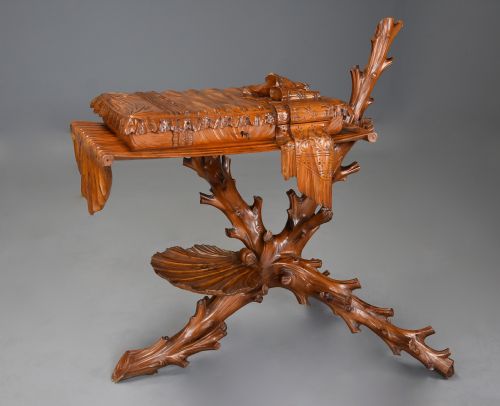
- An elaborate nineteenth-century aesthetic characterised by naturalistic carved motifs resembling coral, shells, and rustic woodland forms, seen in occasional and work tables.
Victorian Carved Work Table: Frequently Asked Questions
What is a work table?
A work table is a nineteenth-century piece of furniture designed for needlework, sewing, and small domestic tasks, featuring specialised internal compartments and storage.
Many examples include hanging fabric bags below the main drawer or box to hold wool and sewing implements while remaining decorative enough for a principal room.
How do I identify a Victorian piece?
Victorian pieces are identified by characteristic nineteenth-century timbers such as burr walnut and rosewood, combined with specific revival styles and construction methods.
Details like turned pedestals, boxwood inlay, and carved walnut framing help distinguish items produced during this expansive industrial and domestic design era.
Were these tables used for games?
Numerous work tables double as games tables by incorporating inlaid chess, draughts, or backgammon boards directly into the rotating or folding top surface.
Lifting the top often reveals both the gaming board and the sewing storage compartments hidden directly beneath the playing surface.
Where should I place a work table?
A work table functions well as an occasional piece beside a chair or sofa, offering a compact surface alongside internal storage for small household items.
Freestanding pedestal and trumpet forms allow the table to be viewed from all sides within a room, making them versatile additions to traditional interiors.