

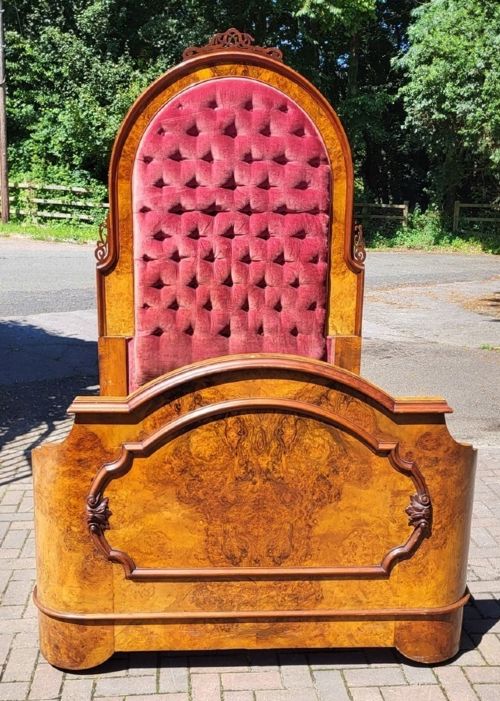


Victorian Carved Wooden Bedstead
A victorian carved wooden bedstead brings substantial timber presence and period character into a bedroom.
Victorian Carved Wooden Bedstead
When searching for a victorian carved wooden bedstead, a buyer encounters a substantial piece of furniture designed to anchor a principal bedroom. These frames span the nineteenth century and encompass single, double, king, and super king proportions.
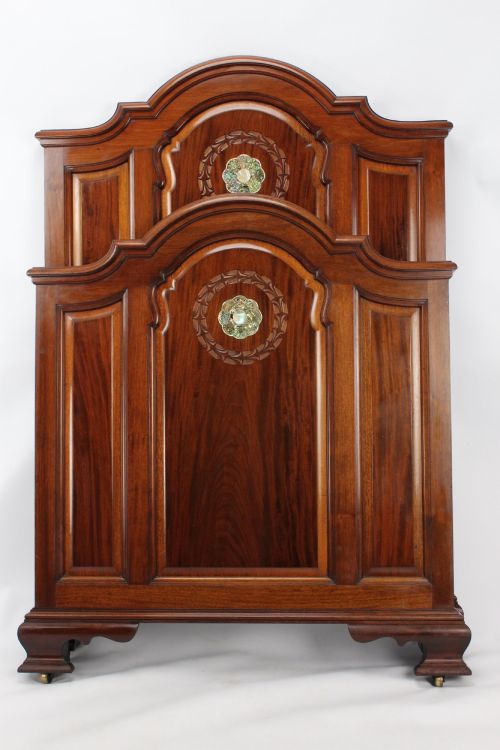
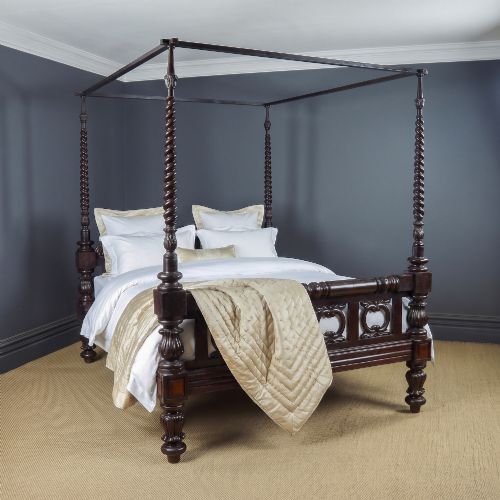
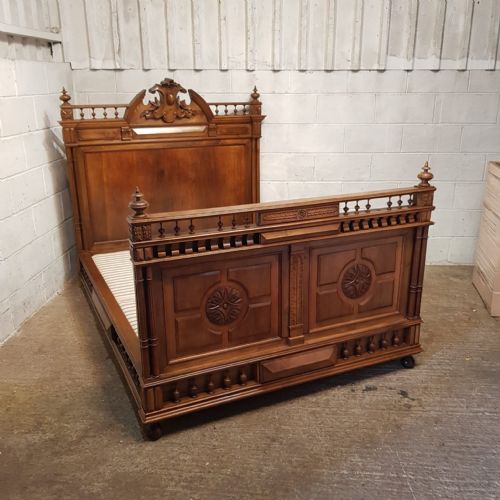
The selections on this page demonstrate a rich variety of forms, from standard high-back frames to grand four poster structures and half tester designs. Woods such as mahogany, walnut, and burr walnut dominate the pieces available.
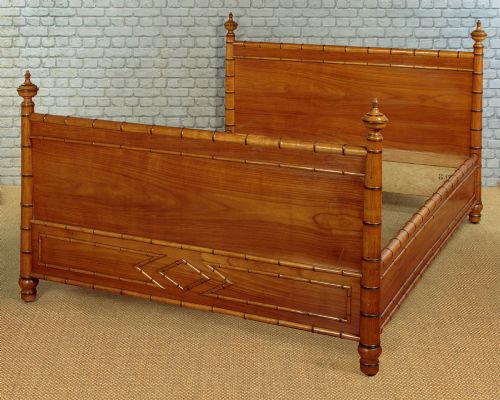
Stylistic expressions range widely across the listings, covering French Aesthetic Movement, Gothic Revival, French Renaissance Revival, and Anglo-Indian Colonial Raj designs. Alongside these grander statements, simpler pine, oak, and faux bamboo examples appear.
How they were made
Cabinetmakers constructed these bedsteads using solid timbers like mahogany, walnut, oak, and pine, frequently applying flame mahogany or burr walnut veneers to prominent surfaces. Brass hardware often secured the heavy joints and accommodated the required sizing.
Carving formed a central part of the manufacturing process, utilised by makers to embellish headboards, posts, and footboards with period motifs. Upholstery techniques appeared on high button back and padded panels, integrating textiles directly into the wooden frame.
Victorian Carved Wooden Bedstead Retail Price Guide 2026
Typical asking prices for victorian carved wooden bedstead among the pieces listed under this phrase on Sellingantiques today, from the lower quarter to the upper quarter. They describe what is for sale here now, not the wider market.
Several beds embrace the nineteenth-century fascination with plant forms by carving solid timber to look entirely like bamboo.
What varies in quality
Quality in a victorian carved wooden bedstead rests upon the choice of primary timber and the ambition of its construction. Highly figured veneers like burr walnut and flame mahogany indicate a more costly original commission.
The depth and execution of the carving separate standard workshop output from exceptional cabinet work. Structural complexity, such as that seen in four poster or half tester frames, demands superior joinery to support the weight of the timber canopy.
Howard and Sons·Maple and Co
The Victorian Carved Wooden Bedstead Glossary
- Bedstead
- The framework of a bed, consisting of posts, headboard, and footboard, designed to support a mattress and base without necessarily including modern slats or bedding.
- Half Tester
- A bed style featuring a canopy that extends only partway over the head of the bed, supported by the headboard and two projecting front posts rather than a full four-post structure.
- Burr Walnut
- A highly prized wood veneer taken from the burl growth of a walnut tree, yielding swirling, knotty patterns that create a decorative surface on grander Victorian furniture.
- Faux Bamboo
- A decorative finish where solid timber is carved, turned, and painted to imitate the segmented stalks of natural bamboo, popular during the nineteenth-century Aesthetic Movement.
- Aesthetic Movement
- A late nineteenth-century design current that prioritized visual beauty and artistic styling over heavy historic revivalism, influencing furniture forms toward lighter, cleaner lines.
Victorian Carved Wooden Bedstead: Frequently Asked Questions
Will a victorian bed fit a modern mattress?
Many nineteenth-century bedsteads were built to nineteenth-century dimensions rather than contemporary standard mattress sizes. Adjustments to rails or custom mattress ordering are frequently required for a proper fit.
Buyers should measure the interior frame carefully before acquiring bedding to ensure the structure accommodates modern bases safely.
How do I assemble a wooden bedstead?
These frames typically rely on heavy metal bolts, iron brackets, or traditional slot-in bed rail fasteners to connect the headboard, footboard, and side rails. Assembling the structure usually requires two people to support the heavy timber components.
Checking that all original ironwork or replacement bolts are secure ensures the frame remains stable and square once upright.
How do I care for antique wood finishes?
Maintenance involves dusting with a soft, dry cloth and avoiding modern silicone-based polishes that can build up over time on nineteenth-century wood and veneer. Maintaining a stable room temperature prevents the timber and veneer from splitting.
Applying a traditional beeswax occasionally helps nourish the polished surface and preserve the depth of the grain.