
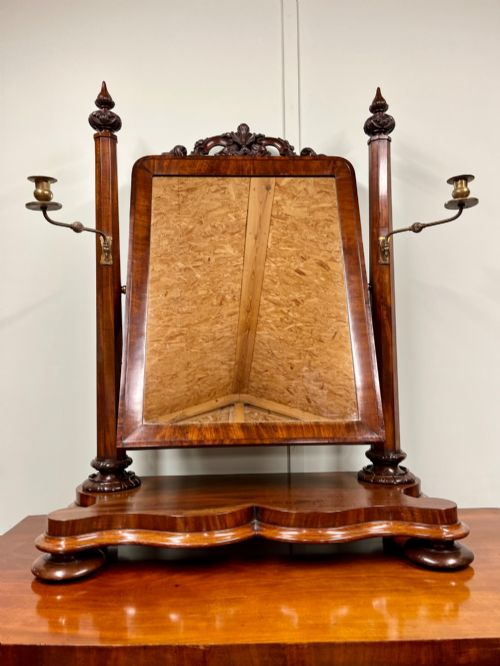
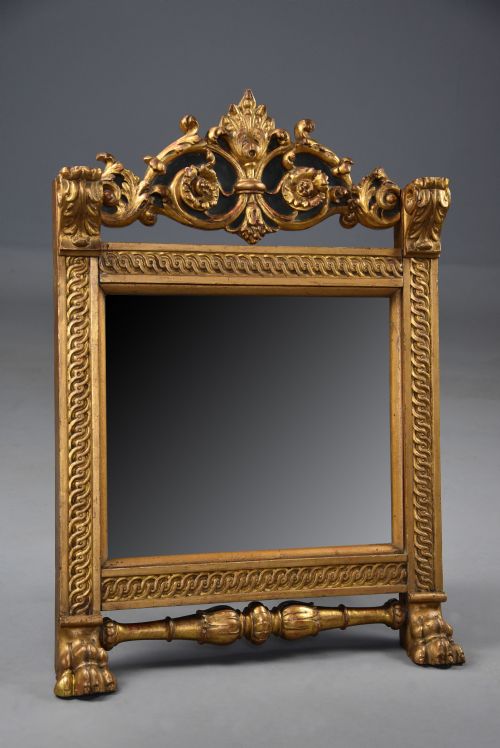
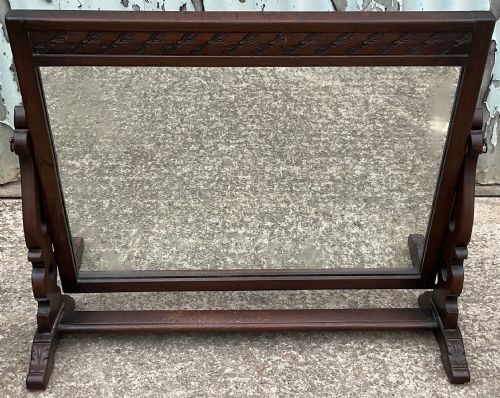


Victorian Carved Toilet Mirror
A victorian carved toilet mirror sits on the dressing table, bringing adjustable reflection and carved wood into the bedroom.
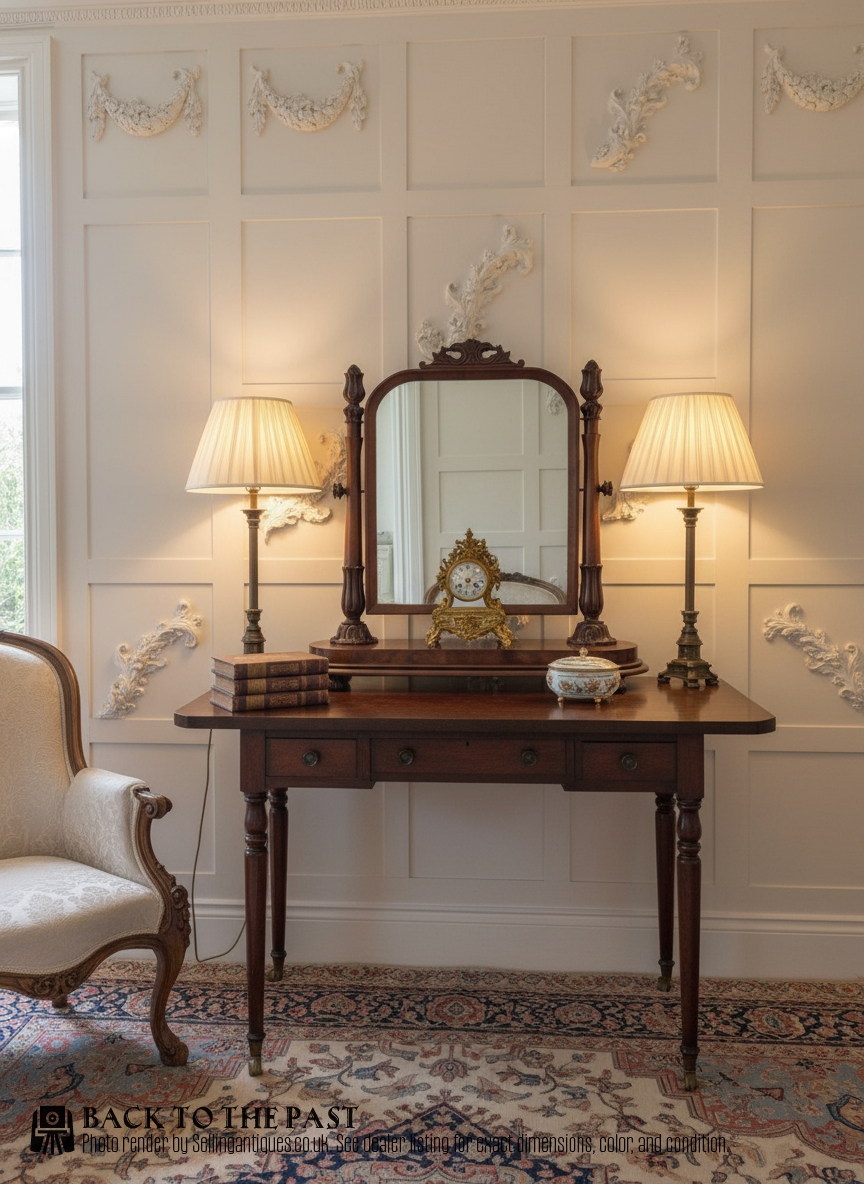
Victorian Carved Toilet Mirror
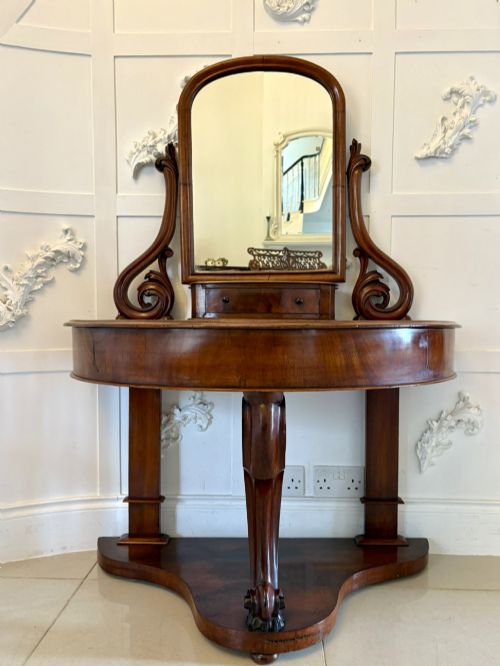
A victorian carved toilet mirror is a tabletop or dressing table glass designed for personal grooming and bedroom decoration. The pieces found here span the Victorian period, along with related pieces from the Regency and William IV eras.
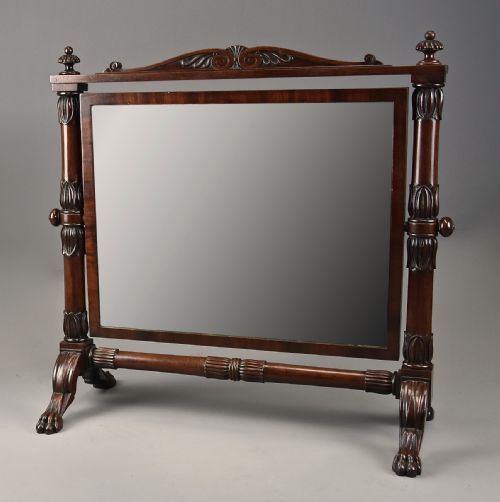
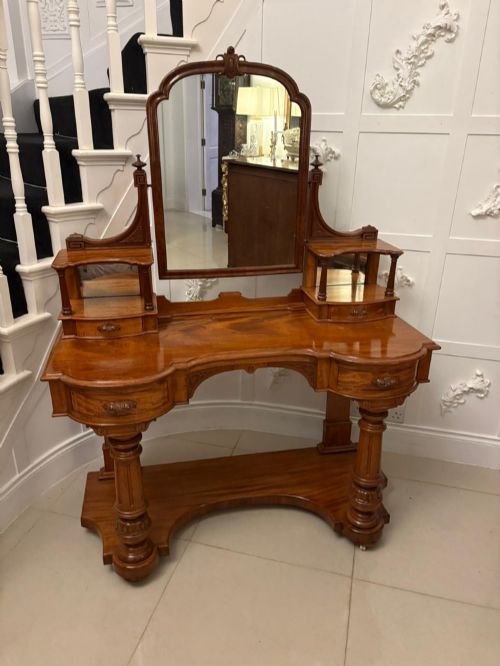
Most examples take the form of a swing mirror supported by upright arms, often resting on a base fitted with trinket drawers. Variations include cheval mirrors, shaving stands on tripod bases, and easel table mirrors.
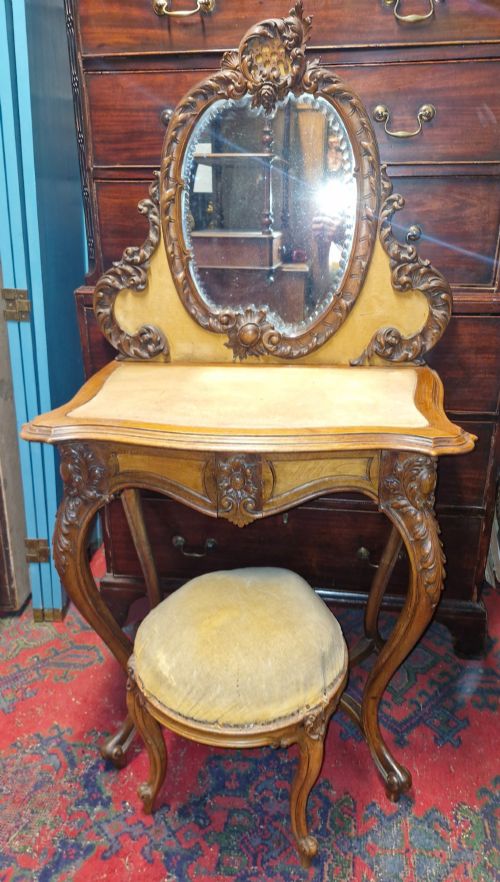
Makers utilised various woods including mahogany, walnut, oak, and satin wood, alongside glass and brass fittings. Stylistic influences range from Rococo Revival and Renaissance Revival to Victorian Gothic Revival and the Arts and Crafts movement.
Materials and construction
Cabinet makers constructed the frames and bases predominantly from solid and veneered timbers such as mahogany, walnut, and oak. These woods were shaped with hand carving and mounted with brass pivots or hinges to allow the glass to tilt.
The reflective surfaces consist of traditional mirror glass set within shaped wooden or giltwood frames. Some more substantial iterations include marble tops on the base structure, adding weight and a solid foundation.
Boot maker's mirrors allowed gentlemen to inspect their footwear from every possible angle.
Assessing quality and craftsmanship
Quality rests in the crispness of the timber carving and the selection of figured veneers like burr walnut or Cuban mahogany. Dense, well-chosen wood and balanced proportions separate standard production from finer workshop pieces.
The mechanical integrity of the swing mechanism and the neatness of the joinery determine the lasting utility of the frame. Well-executed brass fittings and solid backing boards indicate careful assembly.
P and MA Nicholson
The Victorian Carved Toilet Mirror Glossary
- Swing mirror
- A glass frame hung on pivots between two upright supports, allowing the angle of reflection to change. This is the defining mechanism of the toilet mirror.
- Trinket drawer
- A small compartment built into the base plinth beneath the mirror glass. These were used for storing jewellery and small personal items.
- Cheval mirror
- A full-length standing dressing glass mounted on a freestanding frame. These larger pieces permit a complete view of attire.
- Giltwood
- Timber treated with gold leaf or metallic paint finish. It appears on decorative revival frames.
- Rococo Revival
- A design style characterised by asymmetrical scrolls, shell motifs, and elaborate floral carving. It drew inspiration from earlier French decorative arts.
Victorian Carved Toilet Mirror: Frequently Asked Questions
What is a victorian carved toilet mirror?
A victorian carved toilet mirror is a tabletop or bureau glass designed to sit upon a chest of drawers or dressing table. It provides an adjustable reflection for grooming.
These pieces feature wooden frames, carved ornamentation, and pivoting supports that tilt the glass to the desired angle.
How were these mirrors used?
They served as functional grooming accessories in nineteenth century bedrooms, assisting with hair styling and dressing.
The integrated drawers in the base held small items like hairpins, cosmetics, and jewellery.
Where should I place one?
They sit comfortably atop a sturdy chest of drawers, sideboard, or dedicated dressing table. Ensure the surface is level and deep enough to support the base.
Position the glass near natural light for practical use while letting the carved woodwork complement the room's furniture.
How do I identify the period?
Dating relies on timber selection, construction methods, and stylistic revival motifs. Mahogany and walnut were dominant across the Victorian era.
Carving details such as Gothic Revival tracery or Rococo scrolls point directly to the prevailing tastes of the nineteenth century.