

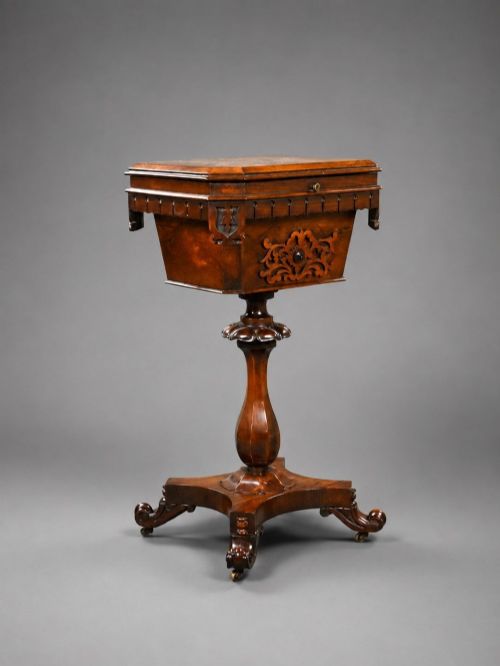


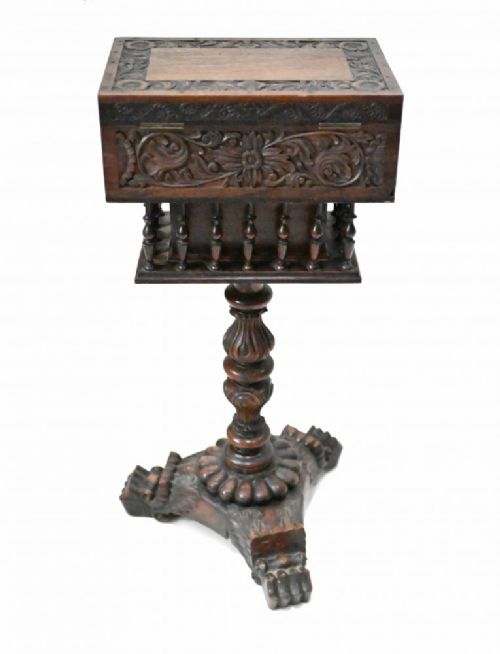


Victorian Carved Tea Box
A victorian carved tea box brings domestic history straight to your room, holding dry leaf and personal trinkets alike.
Victorian Carved Tea Box
A victorian carved tea box encompasses refined timber vessels and sturdy teapoys designed to preserve dry leaves in eras past. The examples found here span forms like the sarcophagus tea caddy, occasional tables, and miniature sideboards originating from the nineteenth century.
How they were made
Carpenters utilised dense tropical hardwoods and indigenous timbers, notably rosewood, mahogany, walnut, and oak, often elevated by burr walnut veneers or pollard oak accents. These sturdy shells were then shaped into sarcophagus forms or supported on carved pedestals and tables.
Surface enrichment relied upon hand carving, bone inlay, brass hardware, and parquetry patterns rather than machine stamping. Interior compartments frequently retained remnants of foil lining or fitted wooden lids designed to keep delicate leaves dry.
Victorian Carved Tea Box Retail Price Guide 2026
Typical asking prices for victorian carved tea box among the pieces listed under this phrase on Sellingantiques today, from the lower quarter to the upper quarter. They describe what is for sale here now, not the wider market.
The listings here demonstrate that rosewood, oak, and walnut dominate the surviving nineteenth-century tea containers.
What varies in quality
The distinction between ordinary and exceptional examples rests upon the depth of the carving and the choice of cabinet timber. Finely figured burr walnut and rich rosewood display superior grain matching across the lid and sides.
Internal arrangement and hardware integrity define the upper tier of these vessels. Complete mixing bowls, intact foil linings, and original bone escutcheons elevate an item above a stripped or heavily altered counterpart.
Gillows·Tahan of Paris
The Victorian Carved Tea Box Glossary
- Teapoy
- A pedestal table designed for serving tea or a tabletop tea caddy resting on a dedicated stand. They often feature internal compartments for different leaf varieties.
- Sarcophagus
- A box shape with a domed or sloping lid tapering downwards, resembling an ancient stone coffin. This profile proved popular for large rosewood and mahogany caddies during the nineteenth century.
- Parquetry
- Geometric patterns formed by fitting small pieces of wood veneer together on a surface. Walnut and other timbers were sliced and arranged to create contrasting decorative panels.
- Pollard oak
- Timber taken from trees that were cut back close to the trunk to encourage a dense cluster of branches, producing a heavily knotted and textured grain. It provides distinct visual movement on nineteenth-century boxes.
- Escutcheon
- A protective plate surrounding a keyhole, frequently fashioned from bone, brass, or mother-of-pearl on these containers.
Victorian Carved Tea Box: Frequently Asked Questions
What were tea boxes used for?
These boxes stored precious tea leaves securely under lock and key when tea was an expensive commodity. Servants typically brought the caddy to the parlour so the mistress of the house could measure out the leaves.
Inside, divided compartments kept different black and green teas separate, while a central glass or metal bowl allowed the blends to be mixed before brewing.
Can I use these boxes for modern storage?
These vessels adapt readily to holding jewellery, letters, or small keepsakes on a dressing table or desk. Their divided interiors protect delicate items from scratching against one another.
Care should be taken to keep them away from direct sunlight and severe humidity changes to preserve the nineteenth-century wood and interior veneers.
How do I identify a Victorian piece from a Regency one?
Regency and William IV pieces often display classical architectural motifs, heavier brass paw feet, and clean mahogany or rosewood surfaces dating from the early nineteenth century. Victorian iterations frequently embrace more ornate carving, burr walnut veneers, and varied surface inlays.
Construction details and secondary woods inside the compartments help confirm the exact manufacturing period when style lines overlap.