



Carved Wooden Teapoy
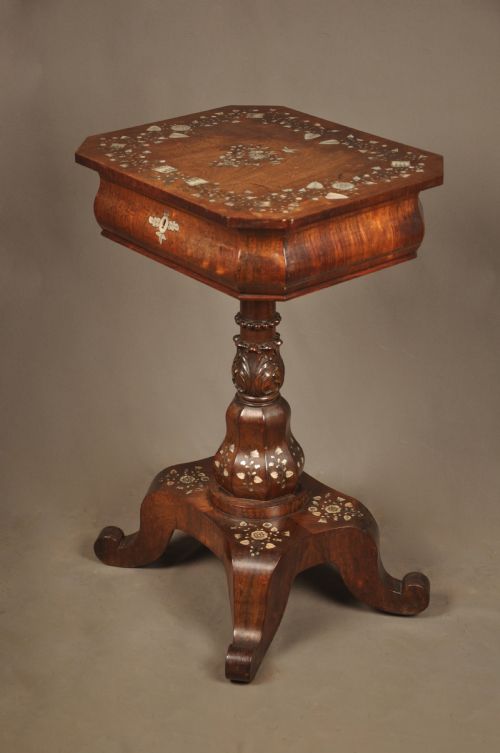
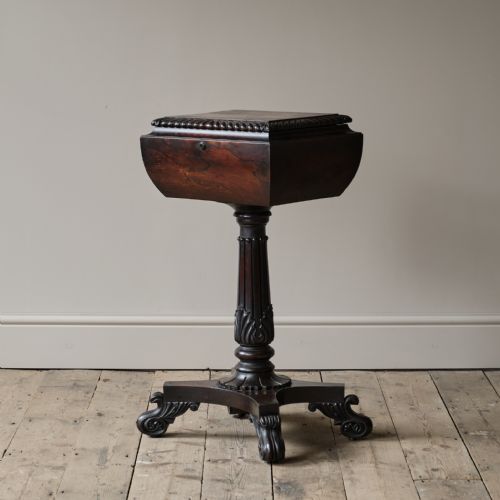
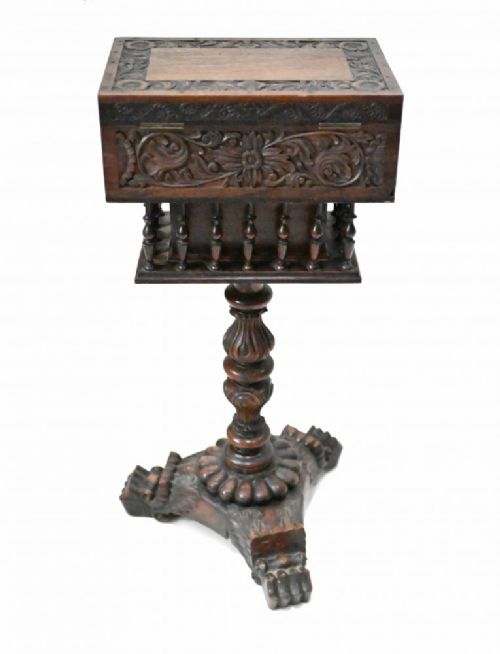
A carved wooden teapoy is a grand Victorian or Regency tea caddy on a stand, offering exceptional timber and intricate carving for the discerning interior.
Carved Wooden Teapoy
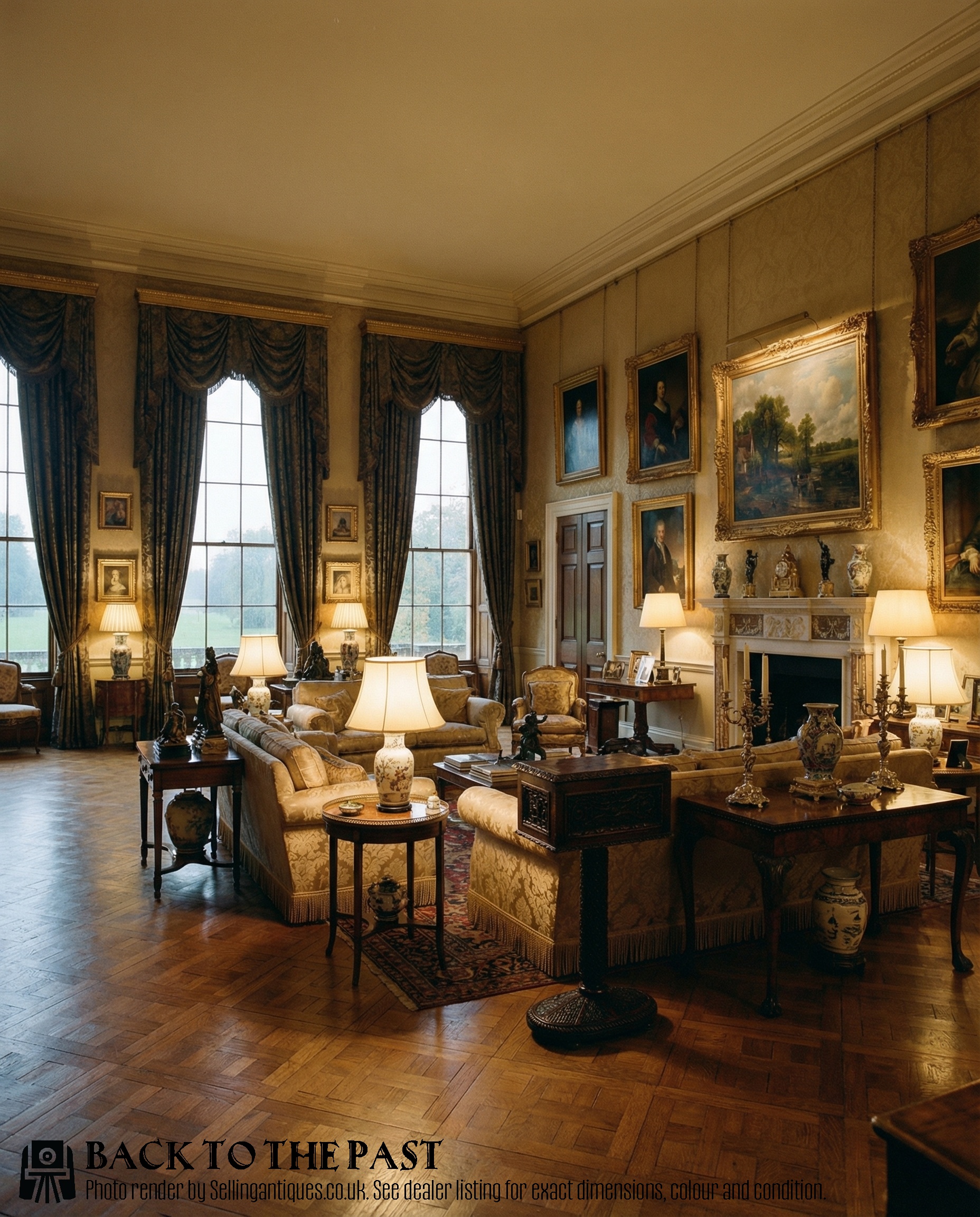
A carved wooden teapoy stands as a sophisticated tea caddy raised on its own dedicated stand, serving as a striking focal point in a period drawing room. These pieces functioned historically to store prized tea leaves securely under lock and key, safeguarding a costly commodity.
Originating across British and colonial workshops, these items reflect diverse stylistic influences, including Anglo-Indian colonial craftsmanship and traditional cabinet-making traditions. Surviving pieces demonstrate the enduring utility of antique occasional tables adapted for modern domestic use.
How they were made
Cabinet-makers utilised dense tropical and domestic hardwoods, selecting flame mahogany, burr walnut, and padouk for their dramatic grain patterns. These timbers were expertly turned, carved, and polished to highlight natural figures and depths.
Intricate hand-carving defines the ornamentation, appearing on sturdy pillar supports, shaped stands, and four carved feet. Marquetry inlay and brass fittings further enhanced the visual richness of the construction.
Carved Wooden Teapoy Retail Price Guide 2026
Typical asking prices for carved wooden teapoy among the pieces listed under this phrase on Sellingantiques today, from the lower quarter to the upper quarter. They describe what is for sale here now, not the wider market.
Listings feature items spanning the nineteenth century, including Regency, William IV, and Victorian periods, alongside Anglo-Indian colonial pieces.
What varies in quality
The distinction between ordinary and exceptional examples lies in the crispness of the hand-carved detail and the selection of timber figures. Superior pieces display deep, well-defined carving and beautifully matched veneers of flame mahogany or burr walnut.
Maker attribution elevates a piece, with documented workshops such as Gillows demonstrating superior structural joinery and refined proportions compared to unbranded vernacular items.
Gillows
The Carved Wooden Teapoy Glossary
- Teapoy
- A small stand or table designed to hold a tea caddy, evolving through the Regency and Victorian periods into a versatile occasional table.
- Sarcophagus
- A coffin-like shape with a domed lid and flared sides, frequently adopted for the lidded boxes of early nineteenth-century examples.
- Padouk
- A heavy, durable exotic hardwood native to Asia and Africa, utilised in Anglo-Indian colonial furniture for its rich red-brown hue and stability.
- Flame mahogany
- A prized veneer cut from the fork of the mahogany tree, showing a distinctive flickering flame pattern across the surface.
- Burr walnut
- A decorative timber derived from the growth warts of walnut trees, prized for its swirling, highly figured grain.
Carved Wooden Teapoy: Frequently Asked Questions
What is a carved wooden teapoy?
A carved wooden teapoy is a lidded container raised on a pedestal stand, originally designed for storing and serving loose tea in the nineteenth century.
Today, collectors appreciate them as decorative occasional tables that bring period character to drawing rooms and studies.
How were teapoys used originally?
In wealthy nineteenth-century households, the mistress of the house kept expensive tea leaves locked inside the teapoy's internal caddies to protect them from servants.
The containers often featured mixing bowls and multiple compartments for different varieties of tea.
How do I date a teapoy?
Dating relies on observing the prevailing styles of the woodwork, such as Regency sarcophagus forms or later Victorian burr walnut veneers.
Turned pillar supports, base configurations, and specific carving motifs help assign pieces to distinct nineteenth-century decades.
Can I use a teapoy as a lamp table?
Many collectors repurpose these sturdy stands as occasional or lamp tables, placing them beside armchairs or sofas.
Their compact footprints and flat top surfaces make them practical for modern living spaces while retaining antique charm.