

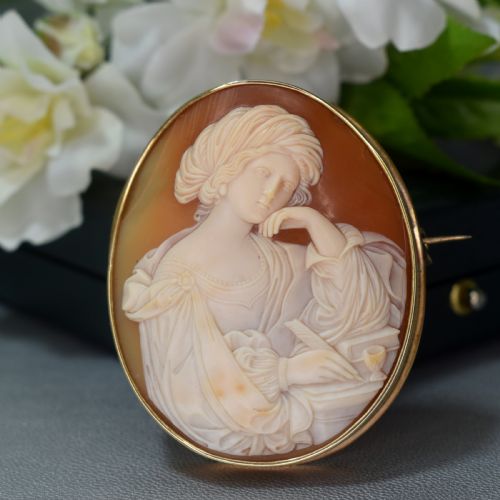


Victorian Carved Shell Cameo
A victorian carved shell cameo is a wearable miniature relief sculpture that brings classical mythology and portraiture into nineteenth-century jewellery.
Victorian Carved Shell Cameo
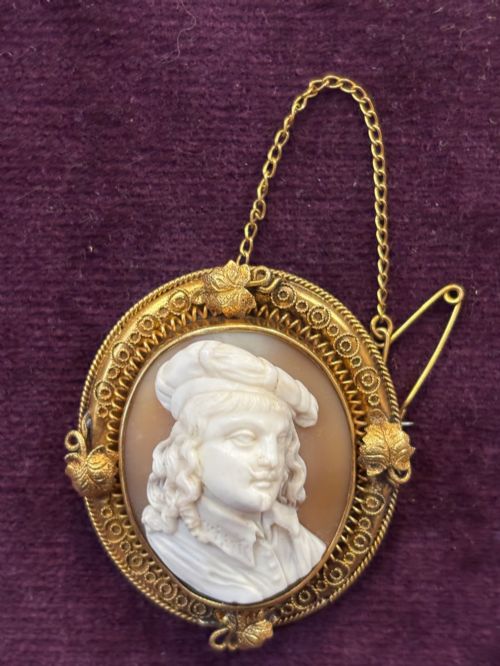
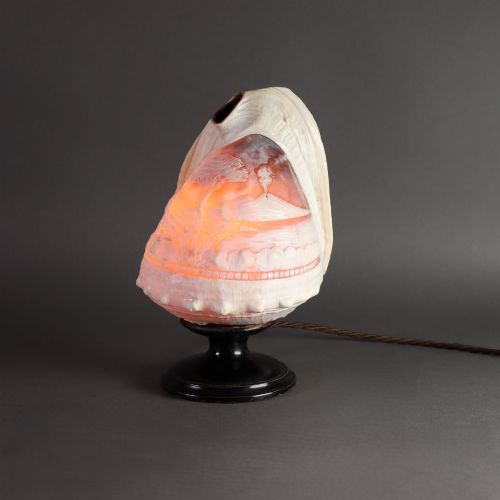
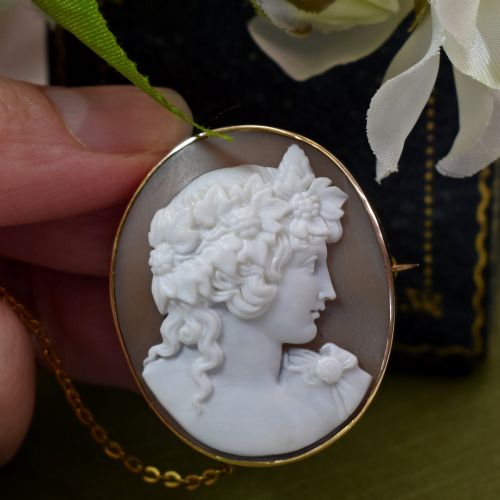
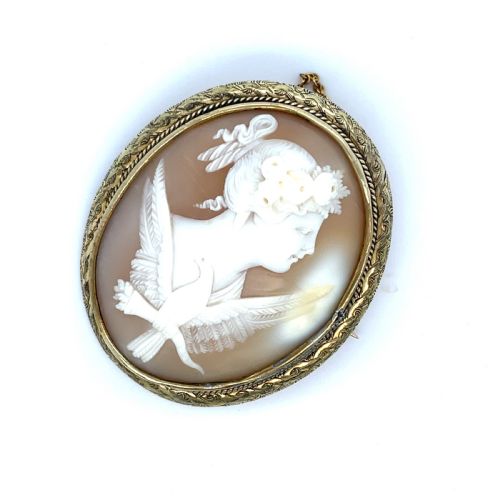
A buyer investigating a victorian carved shell cameo encounters brooches, pendants, earrings, bracelets, rings, and table lamps carved from natural shell. The pieces predominantly date from the nineteenth century, utilising shell layered with contrasting natural colours to raise a white classical profile, mythological figure, or landscape against an opaque dark background.
The common form on this page is the brooch mounted in gold or pinchbeck, depicting female classical profiles, historical figures, or mythological scenes such as Venus, Flora, or Psyche. Alongside personal ornaments, larger tabletop pieces and lamps appear, carved from conch shells to display Italian scenes.
Most items stem from the Victorian period, though Edwardian and mid-twentieth-century iterations also surface, reflecting revivals of interest in classical antiquity and the Grand Tour.
Materials and construction
The carved shell is secured within metal mounts fashioned from nine-carat, fourteen-carat, fifteen-carat, eighteen-carat, or twenty-carat gold, alongside silver and pinchbeck. Frames often feature ropetwist borders, cannetille wirework, or elaborate filigree, sometimes incorporating pearls or coral.
Listings feature nine-carat, fifteen-carat, and eighteen-carat gold alongside pinchbeck frames.
Factors influencing quality
The metalwork surrounding the shell provides an indication of standard, with heavier gold frames and intricate wirework or granulation matching the artistry of the carving. Maker attribution, such as signed work on larger tabletop pieces, further separates standard production from superior examples.
R. Pernice
The Victorian Carved Shell Cameo Glossary
- Cameo
- A method of carving an object such as a gemstone or shell where a relief is raised above a contrasting background. The technique relies on the natural stratification of the material to create a two-tone effect.
- Grand Tour
- A cultural journey of Europe undertaken by wealthy young men in the eighteenth and nineteenth centuries. Travellers frequently acquired carved shell cameos depicting Italian views and classical sculptures as souvenirs.
- Pinchbeck
- An alloy of copper and zinc invented in the eighteenth century to imitate gold. It provides a warm yellow metallic appearance used frequently for nineteenth-century jewellery mounts.
- Conch shell
- A large spiral shell derived from marine gastropods. Carvers utilise certain conch species for cameos to exploit their uniform pink or salmon colouration.
- Cannetille
- A style of ornate metalwork popular in nineteenth-century jewellery resembling fine gold or silver embroidery. The technique uses twisted wires and small metal granules to build textured decorative borders.
Victorian Carved Shell Cameo: Frequently Asked Questions
How do I wear a shell cameo brooch?
A shell cameo brooch fastens traditionally to the lapel of a jacket, the collar of a blouse, or the centre of a neckline. The pin mechanism at the reverse secures the piece through heavy fabrics.
Because the shell is organic and susceptible to sharp impacts, wearers avoid placing brooches where they might strike hard surfaces or catch on loosely knit garments.
Were these items worn daily?
Nineteenth-century owners wore cameos as daily accessories, pairing brooches, earrings, and matching sets with formal daytime attire or evening wear. The durability of shell made these ornaments suitable for regular social use.
Over decades of handling, mounts received occasional repairs or reinforcement to sustain this continuous personal wear.
How should I clean my cameo?
Cleaning requires only a soft, dry cloth or a slightly damp brush to remove dust from the carved recesses. Moisture should remain away from the back of the shell where adhesives or foil linings might reside.
Harsh chemical dips and ultrasonic jewellery cleaners damage the calcium carbonate structure of the shell and strip the polish from the background.
Are all carved shells from Italy?
While the capital of shell cameo production was centred in Torre del Greco near Naples, workshops across Europe also produced carved shell jewellery during the nineteenth century. Italian carvers dominated the export market, supplying Grand Tour travellers with classical motifs.
Local British production also incorporated imported shells into domestic gold and silver mounts.