
Victorian Carved Reading Chair
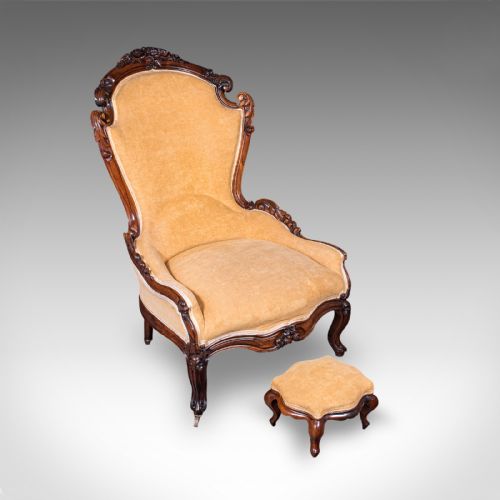
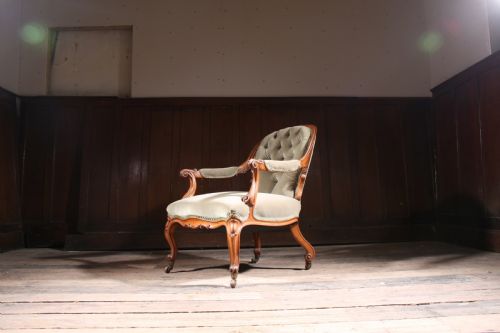
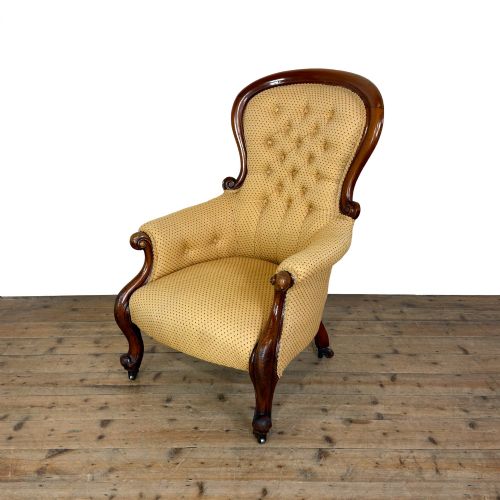
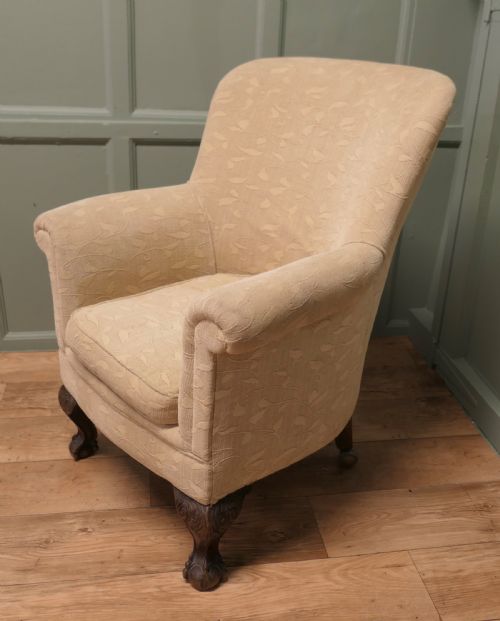
A victorian carved reading chair brings solid nineteenth-century comfort and dark timber frames into the study.
Victorian Carved Reading Chair
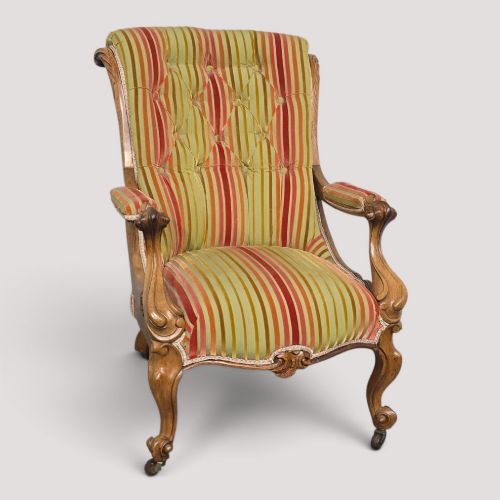
A victorian carved reading chair sits within the broader category of nineteenth-century library and desk seating, often appearing as mahogany or walnut armchairs with upholstered backs. The versions met most frequently on this page date from the mid to late nineteenth century, spanning periods from early Victorian to the eighteen-eighties.
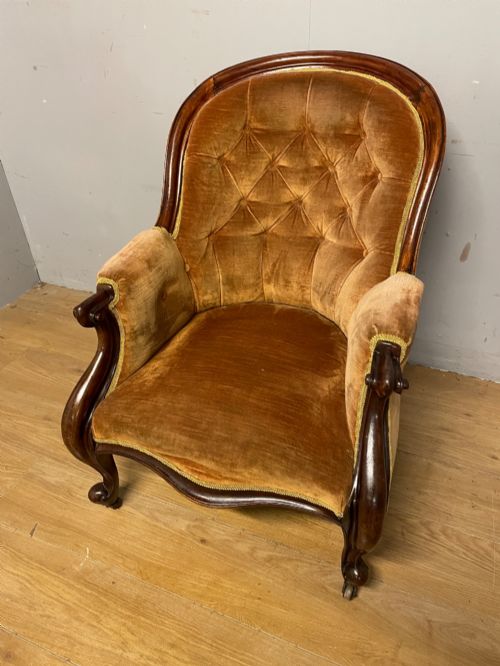
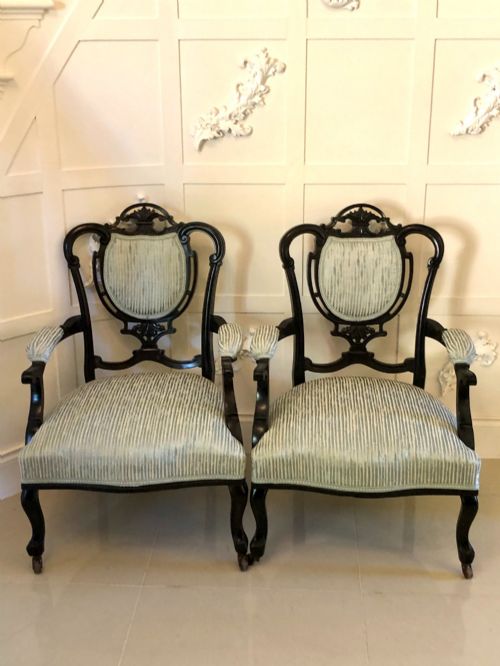
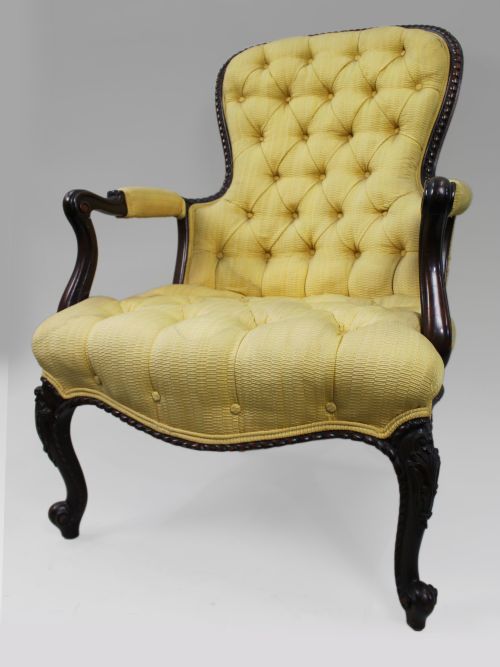
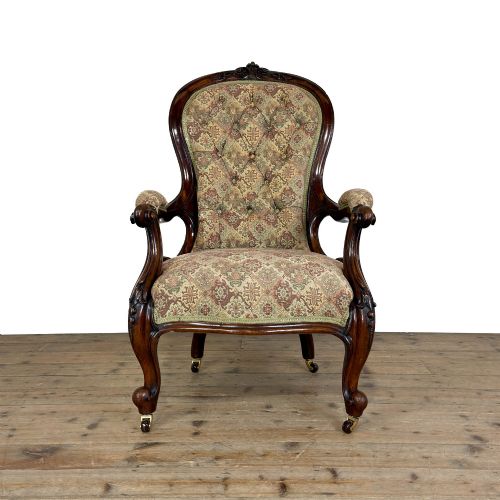
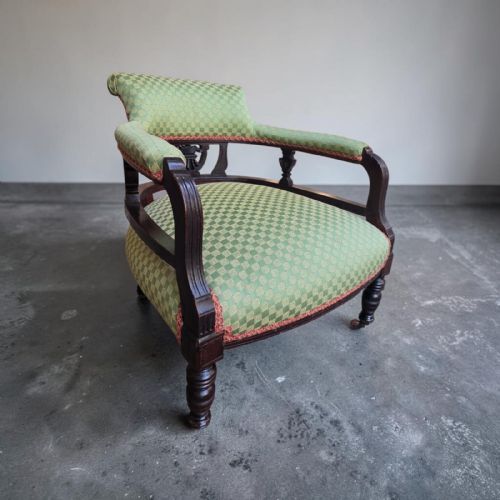
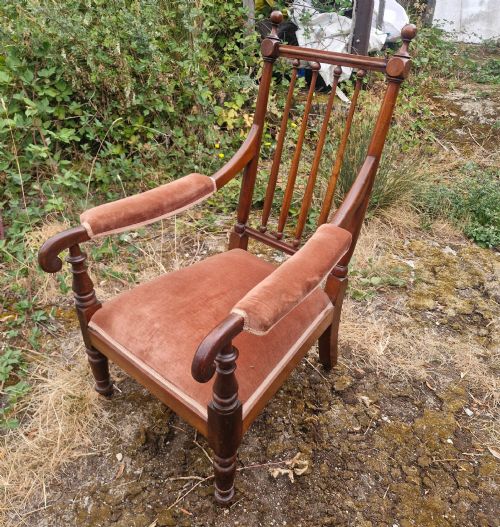
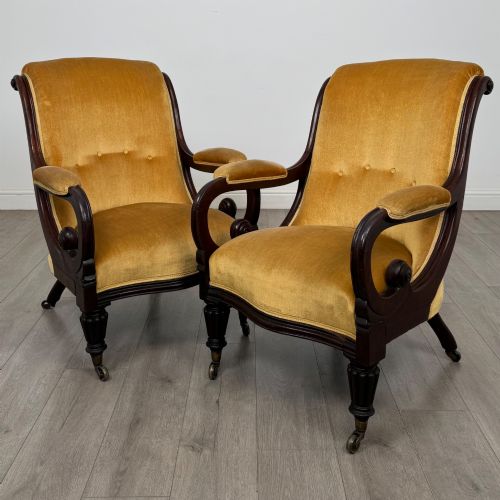
These pieces function primarily as library armchairs, occasional tub chairs, or gentleman's chairs designed for prolonged sitting. Formats range from button-backed mahogany frames to open-arm variants with cabriole legs, reeded supports, or spindle backs.
Makers and workshops of the era utilised revival styles including Chippendale, Queen Anne, and Gothic revival alongside standard Victorian forms. Buyers encounter both compact parlour seats and generous proportions built for country house libraries.
Materials and construction
Frames rely heavily on dense hardwoods, predominantly mahogany and walnut, with occasional examples in oak and rosewood. These timbers provide the structural rigidity necessary for carved armchairs and heavy library seating.
Upholstery techniques involve traditional stuffing secured beneath materials such as leather, velvet, fabric, and calico. Many surviving chairs retain button-backed detailing or cane seating paired with brass hardware.
Listings feature nineteenth-century seating constructed primarily from mahogany and walnut, with occasional examples in oak, rosewood, and brass.
Judging quality and execution
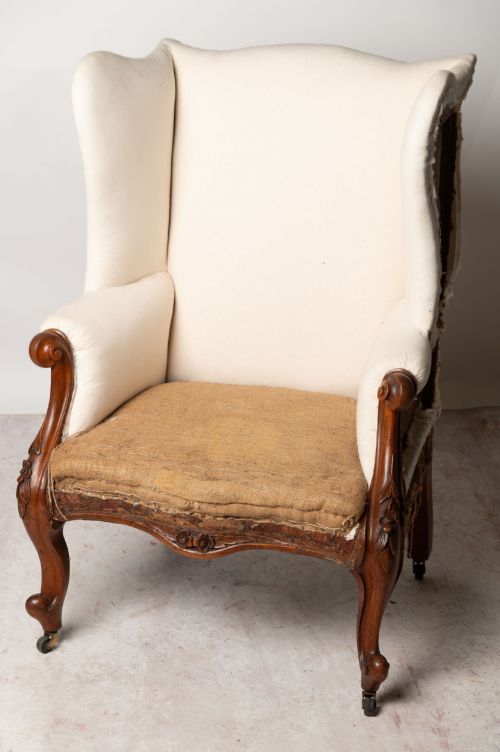
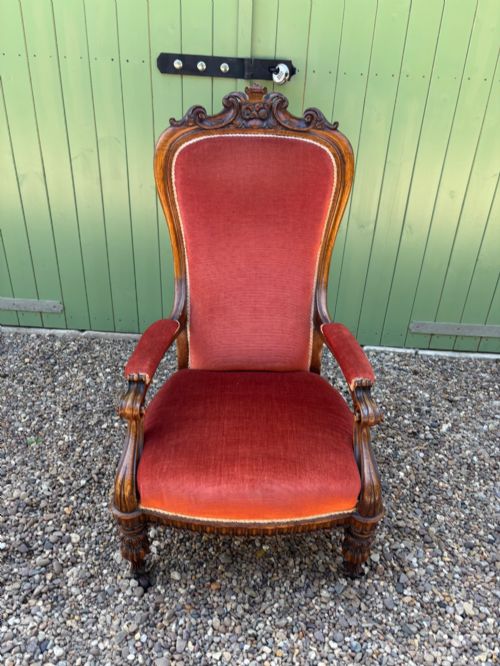
Quality rests in the crispness of the timber carving and the architectural proportion of the frame. Superior examples display deeply moulded cabriole legs, robust joinery, and carefully selected mahogany or walnut grain.
The standard of upholstery and the retention of original leather or textile coverings influence the integrity of the piece. Refined proportions in the arms and back distinguish standard parlour seating from exceptional library armchairs.
Hindley And Sons·Gillows·Howard And Sons
The Victorian Carved Reading Chair Glossary
- Bergere
- A closed-arm armchair with an upholstered seat and back, frequently featuring cane panelling along the sides. This French-inspired form gained popularity in nineteenth-century English libraries.
- Cabriole leg
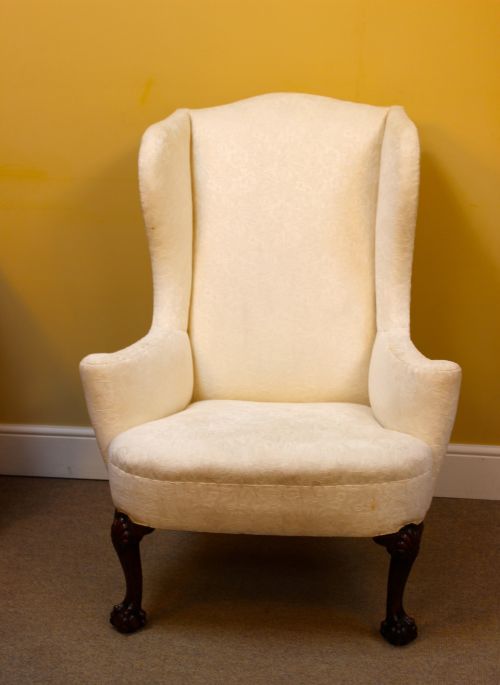
- A furniture leg that curves out and then in, resembling an animal's leg in motion. Makers of Victorian library chairs utilised this form to add elegance to heavy timber frames.
- Button-back
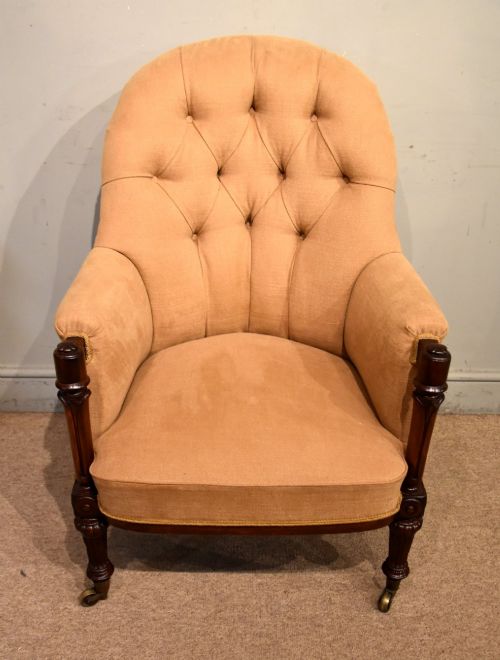
- An upholstery style where buttons are pulled deep into the padding in a diamond pattern. This technique secures the interior stuffing while adding visual texture to leather or fabric.
- Tub chair
- A curved armchair where the back and arms form a single continuous rounded enclosure. These pieces provide compact, enclosed seating suitable for studies and bedrooms.
- Reeded legs
- Timber legs carved with parallel convex mouldings that run vertically. This classical detail appears frequently on nineteenth-century mahogany and walnut frames.
Victorian Carved Reading Chair: Frequently Asked Questions
What is a victorian carved reading chair?
A victorian carved reading chair is a nineteenth-century timber armchair designed for study or library use, featuring solid mahogany or walnut frames.
These pieces typically incorporate padded upholstery, carved arm supports, and sturdy wooden legs built for daily reading.
How do I date a library armchair?
Dating relies on timber selection, structural style, and upholstery methods recorded in the piece. Mid-century examples often favour solid mahogany with cabriole legs.
Later Victorian pieces introduce walnut frames, button-backed leather, and revival details associated with the eighteen-eighties.
What woods were used for these chairs?
Constructors utilised dense hardwoods capable of supporting intricate hand-carving and heavy use. Mahogany and walnut appear most frequently across the listings.
Alternative timbers include oak for Gothic revival forms and rosewood on select library armchairs.
How were these chairs used originally?
These seats served as functional furniture in nineteenth-century libraries, studies, and parlours. Occupants used them for extended periods of reading, writing, or resting near the fire.
Generous proportions and upholstered armrests accommodated the comfort expected in formal country houses and town residences.