
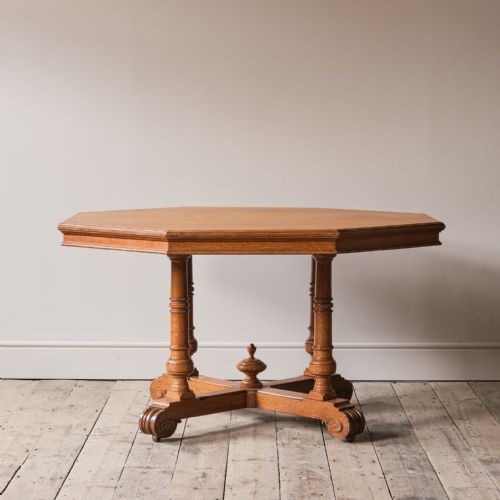
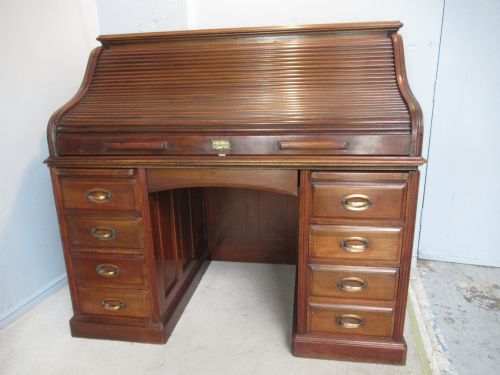
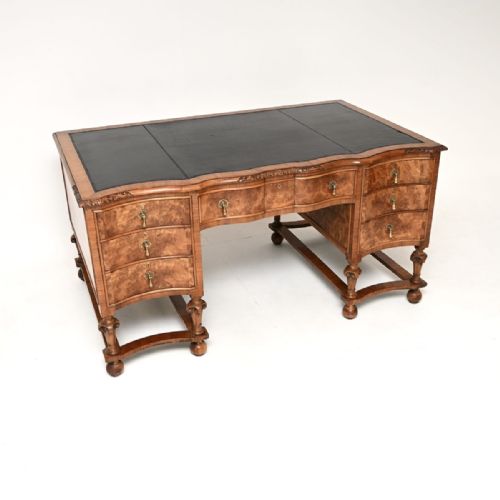
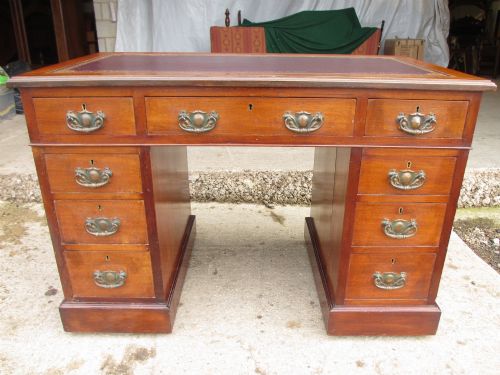
Victorian Carved Pedestal Desk
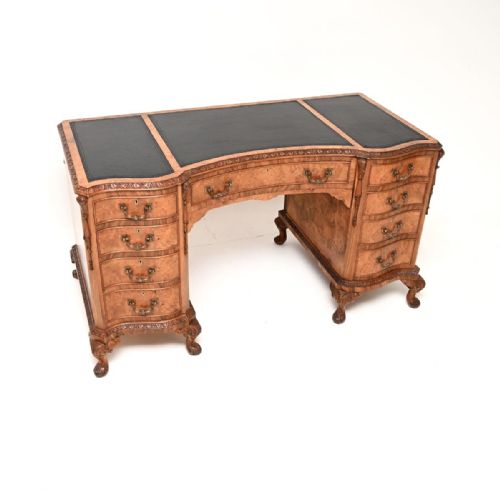
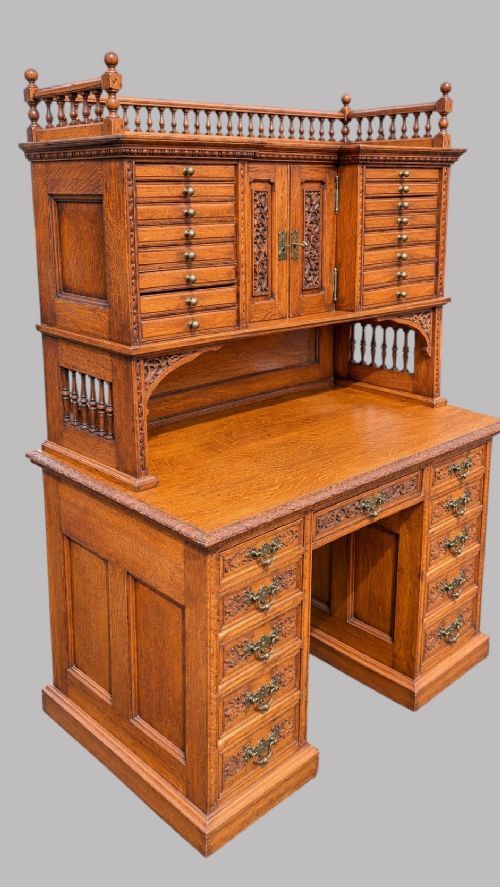
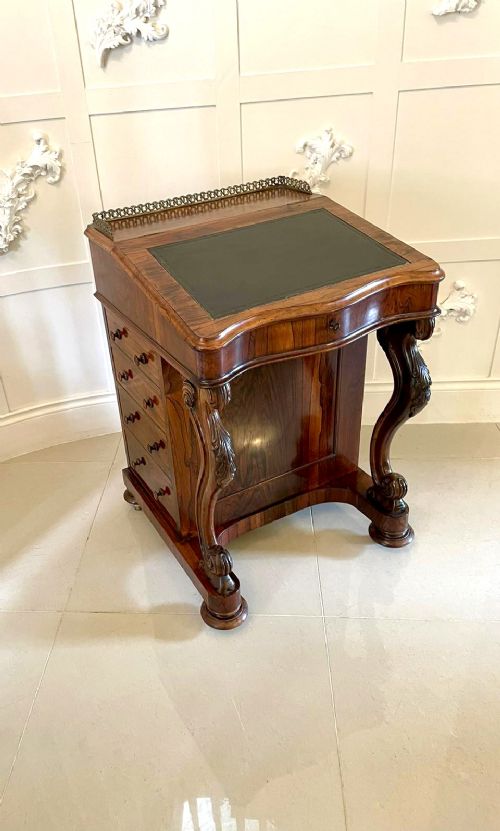
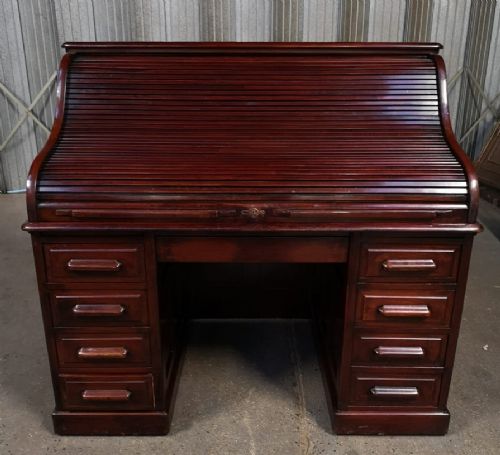
When you search for a victorian carved pedestal desk, you seek a substantial timber workspace featuring panelled banks of drawers and sculptural ornament from the nineteenth century.
Victorian Carved Pedestal Desk
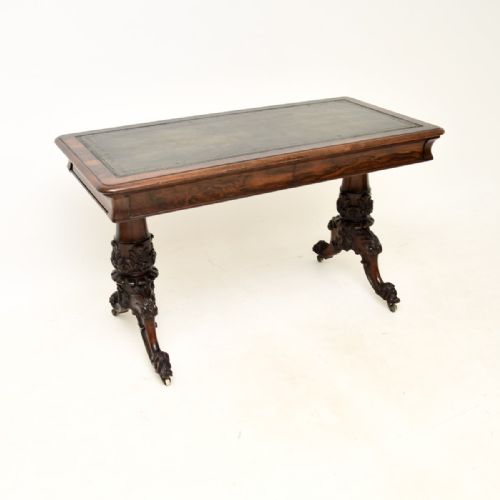
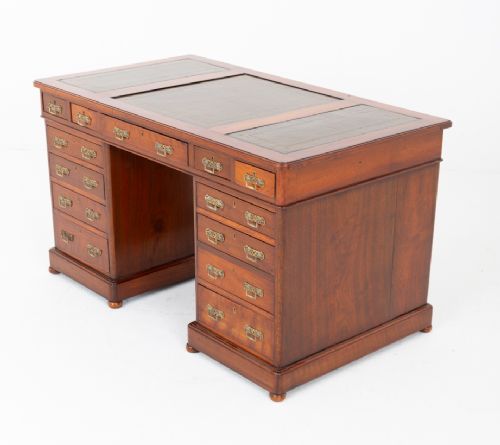
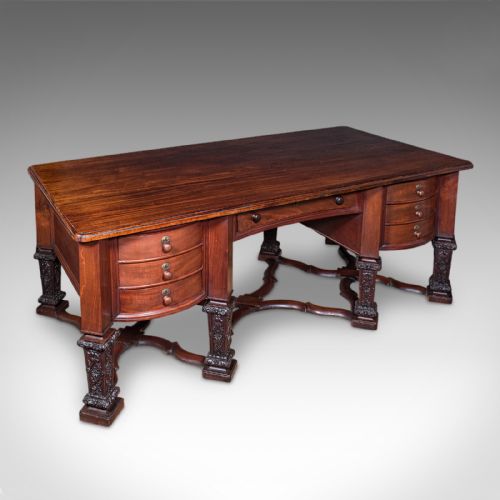
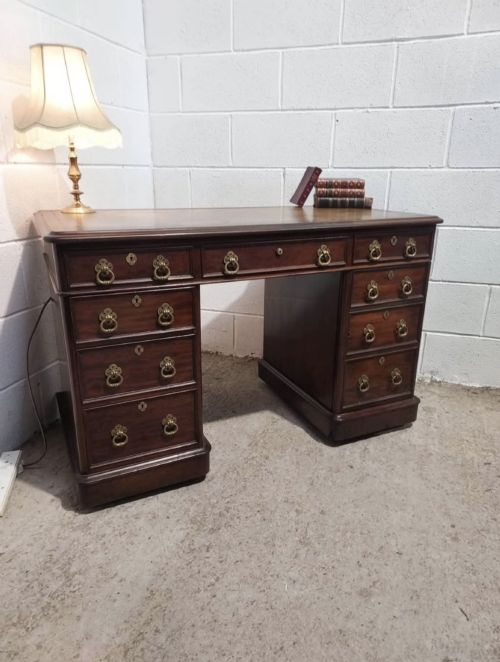
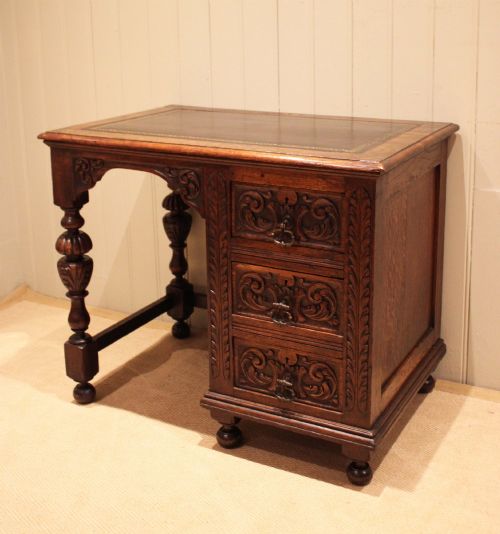
A victorian carved pedestal desk typically comprises two banks of small drawers supporting a heavy writing surface, frequently fitted with an inset leather writing pad. These heavy library and study pieces span the nineteenth century, emerging in mahogany, walnut, and heavily carved oak.
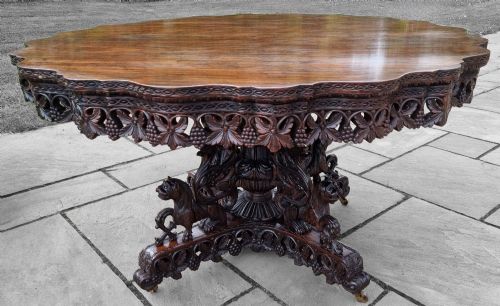
The oak variants frequently display elaborate sculptural relief, including green man masks and lion heads on the pedestals and drawer fronts. Walnut and mahogany examples lean towards architectural fielded panels, cockbeaded drawer edges, and traditional kneehole configurations.
Makers from this era, including Maple and Co, produced both twin pedestal writing tables and partners desks designed to be used from both sides. The proportions range from compact domestic kneehole forms to expansive double-sided library centerpieces.
Materials and Construction
The structural carcase relies on solid timber frames lined with secondary softwoods, faced with dense hardwoods such as oak, mahogany, walnut, and burr walnut veneers. Drawer linings are traditionally dovetailed by hand, operating within solid partitions.
Carved details like green man masks and scrolling foliage are executed directly into solid oak or applied as separate carved mouldings. Brass hardware, including drop handles and escutcheons, complements inset tooled leather writing surfaces secured by brass tacks.
Several heavy oak desks hide fierce carved lion heads and leafy green men guarding the stationery drawers.
Qualities of Construction
The distinction between standard utility furniture and superior cabinet work rests in the depth of timber selection and the crispness of the carving. Finely figured burr walnut veneers and deeply undercut oak foliage display an artisan's dedication missing from routine commercial production.
Originality of surface finish and hardware dictates lasting value. Desks retaining their untouched period polish, functioning brass lever locks with original keys, and contemporary tooled leather surfaces command greater appreciation among collectors.
Maple and Co·Mein of Kelso
The Victorian Carved Pedestal Desk Glossary
- Pedestal desk
- A heavy writing table supported by two upright banks of drawers flanking a central kneehole space. These units commonly separate into three manageable sections for transport.
- Partners desk
- A double-sided variant of the pedestal desk built with operational drawers and cupboards facing both directions. They were designed for joint office use in nineteenth-century libraries.
- Green man
- A sculptural architectural motif depicting a human face emerging from or entwined with foliage. It appears frequently as a central drawer pull or corner bracket on carved oak nineteenth-century furniture.
- Kneehole desk
- A compact writing desk featuring a recessed central space for the user's legs, framed by smaller proportions than a standard partners desk.
- Cockbeading
- A thin decorative semi-circular moulding projecting around the perimeter of drawer fronts. This technique frames the drawer edges and protects the underlying veneer from chipping.
Victorian Carved Pedestal Desk: Frequently Asked Questions
How do I care for the leather top?
Apply a microcrystalline wax sparingly to nourish the leather and prevent cracking over time. Avoid placing hot cups or moisture directly on the surface.
Dust regularly with a soft dry cloth and keep the desk away from direct sunlight and strong heat sources to preserve the vegetable-tanned hide.
Can these desks be dismantled for transport?
Most nineteenth-century pedestal furniture separates into three distinct components. The top lifts off the two independent drawer pedestals once internal securing screws are released.
This modular construction allows safe passage through narrow doorways and up stairwells during relocation.
What is a partners desk?
A partners desk provides identical drawer and cupboard storage capacity on both the front and reverse elevations. Two individuals could sit opposite each other while utilising the same writing surface.
These grand pieces usually occupied the centre of private libraries and administrative boardrooms.
How do I identify a green man carving?
Look for a distinct visage composed of carved oak leaves, vines, or sprouting foliage emerging from the mouth. This ancient decorative symbol experienced a widespread revival during the Victorian era.
Masks frequently adorn the central drawer fronts and corners of heavy library furniture.