
Victorian Carved Oak Hall Chairs
Victorian carved oak hall chairs are sturdy, decorative seats designed to anchor a hallway or entrance, offering distinct period character and craftsmanship.
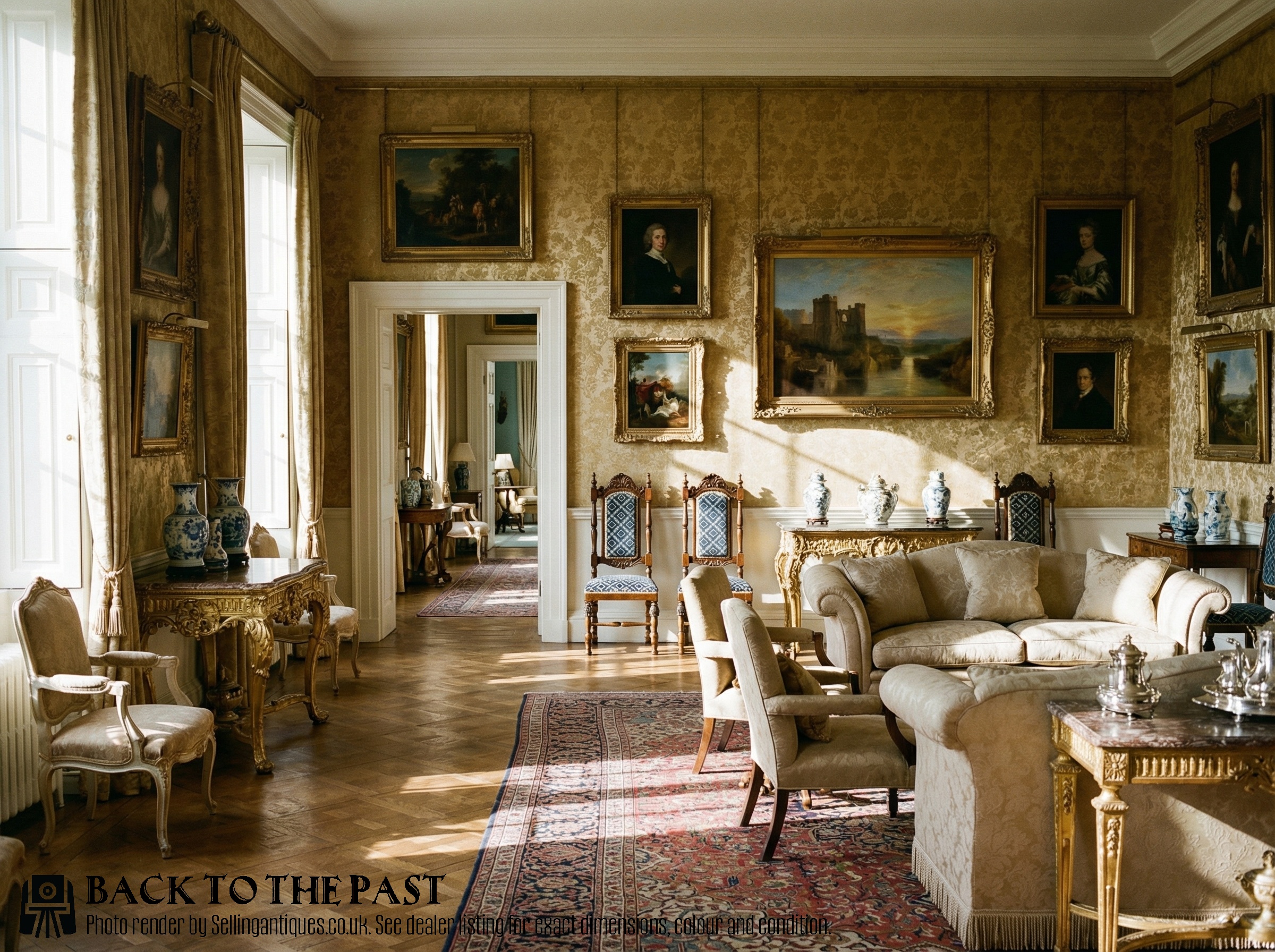
Victorian Carved Oak Hall Chairs
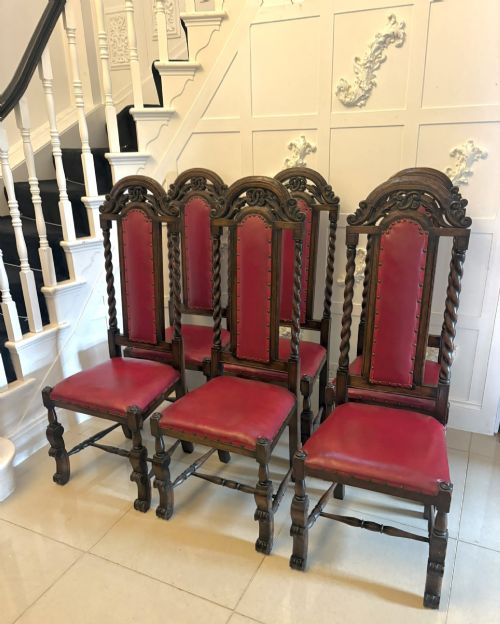
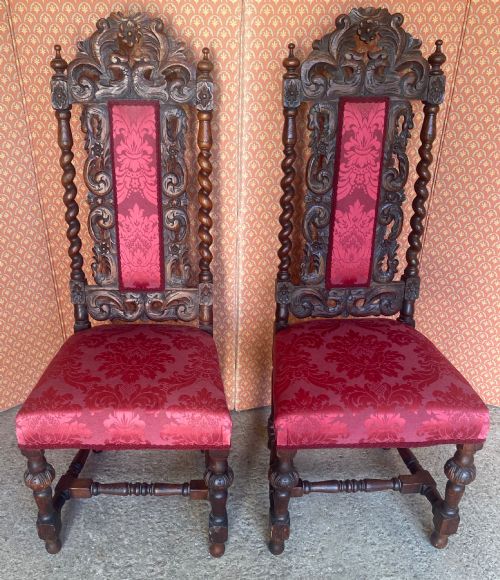
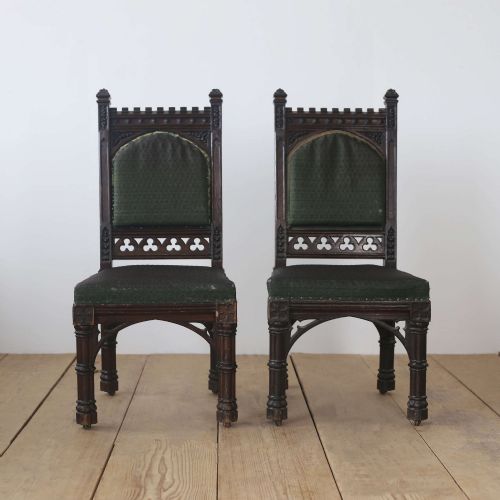
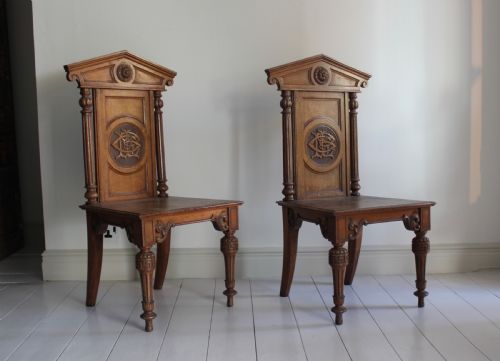
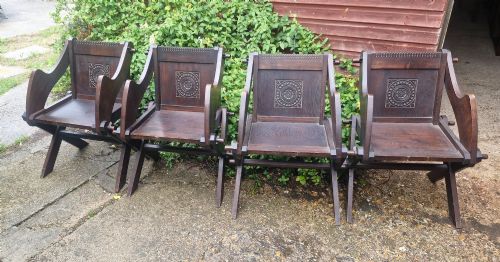
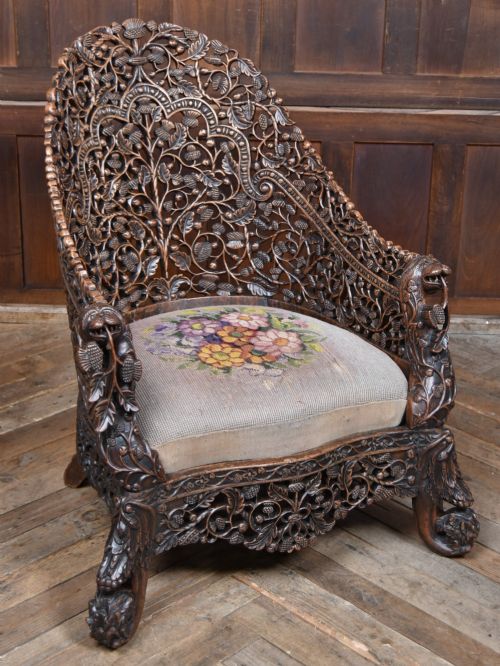
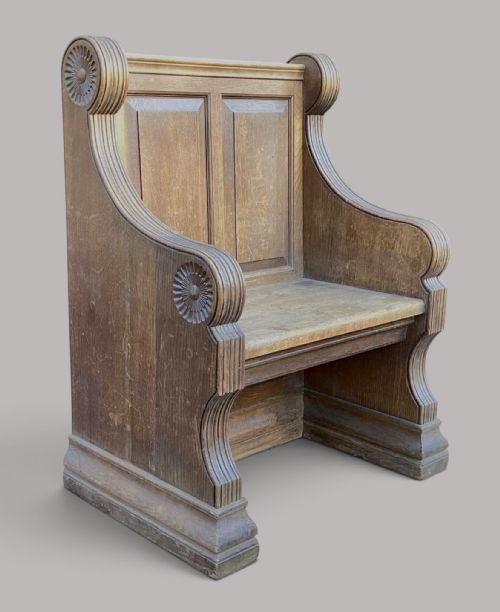
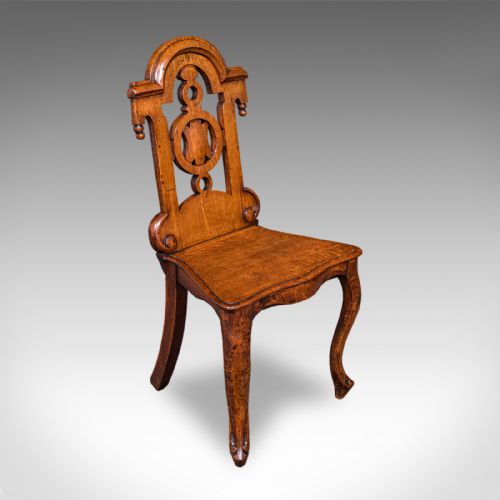
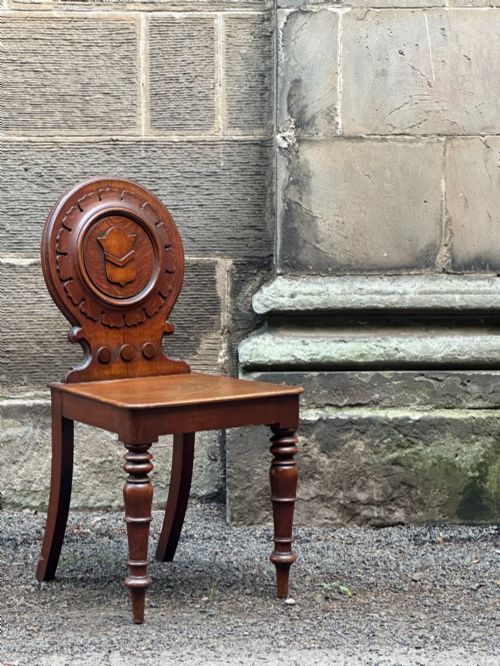
Victorian carved oak hall chairs are solid timber seating pieces created primarily during the nineteenth century for use in grand entrances, lobbies, and reception rooms. These chairs often feature rigid wooden seats, upright backs, and prominent heraldic shields, armorial crests, or deeply carved foliage motifs.
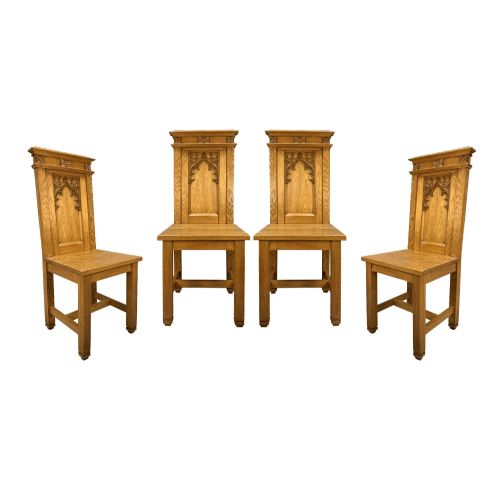
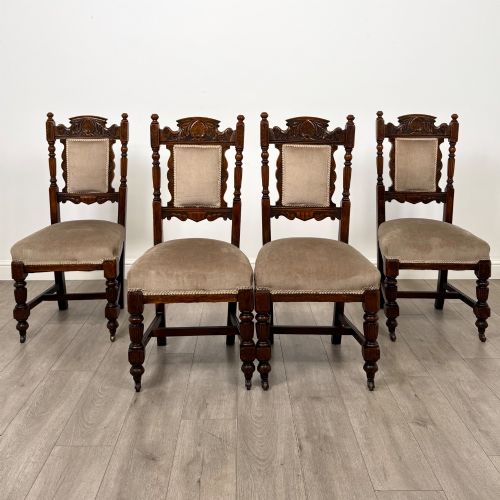
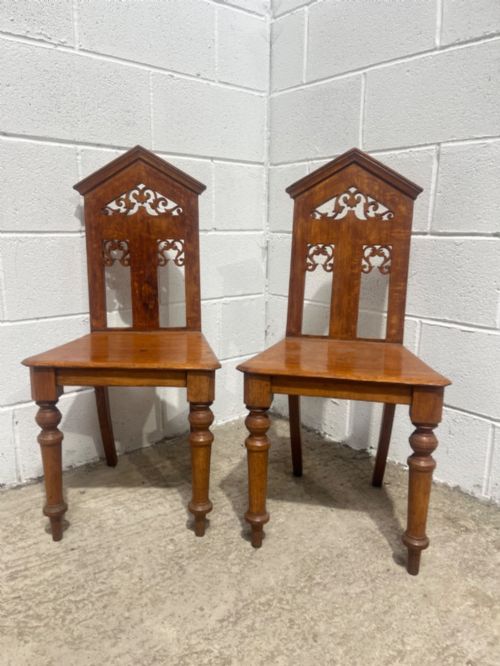
The versions most commonly met on this page are side chairs and occasional seats made in pairs or larger sets, frequently drawing inspiration from earlier historical movements. Makers applied revivalist designs spanning Gothic, Jacobean, Renaissance, and Baroque styles directly onto domestic timber frameworks.
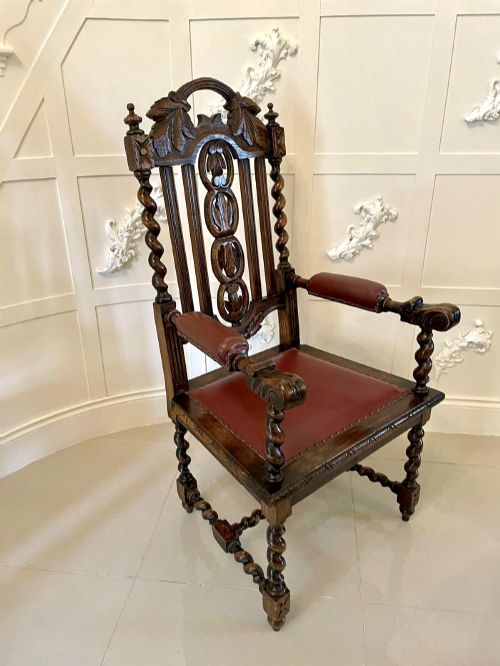
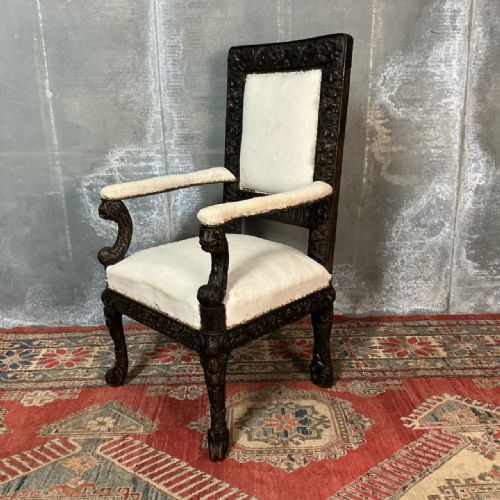
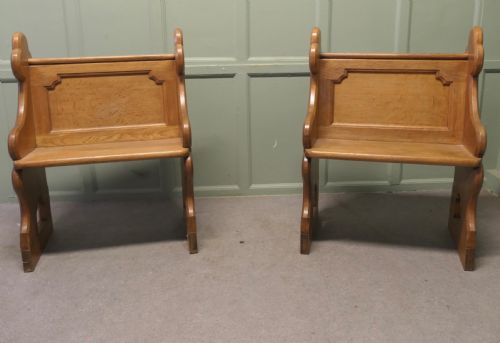
Beyond standard single and side chairs, the category extends to include architectural hall benches, monastic throne chairs, and occasional seating items incorporating woven leather, brass details, or upholstered panels. These variations reflect the diverse aesthetic demands placed on nineteenth-century domestic interior furnishings.
How They Were Made
Makers constructed these seats using solid oak timber, frequently shaping the dense grain through hand-carving techniques to produce elaborate relief patterns on the backrests and frame borders. Joinery relied heavily on traditional mortise and tenon methods to withstand regular daily use in busy household entryways.
Where upholstery appears, materials such as leather, velvet, fabric, or tapestry are secured to the frames using brass tacks or studs. Certain variations incorporate painted finishes or ebonised treatments applied directly to the oak surface to heighten the visual contrast of the carved details.
Listings feature oak combined with leather, brass, velvet, and tapestry across Victorian and Edwardian periods.
What Varies in Quality
The standard of a piece depends heavily on the depth and crispness of the timber carving, where sharp undercutting and intricate relief work distinguish superior examples from simpler, mass-produced workshop items. Heavy, well-seasoned oak timbers provide structural integrity and prevent the movement or splitting often seen in lesser woods.
Bruce Talbert·Gillows of Lancaster·A. W. N. Pugin
The Victorian Carved Oak Hall Chairs Glossary
- Gothic Revival
- A nineteenth-century design movement drawing inspiration from medieval architecture, featuring pointed arches, tracery, and solemn vertical lines. This aesthetic heavily influenced the ornamentation found on many entrance and church seating pieces.
- Wainscot Chair
- A heavy, solid wooden armchair characterised by a high panelled back and panelled seat construction originating in earlier centuries. Nineteenth-century makers frequently replicated this form to satisfy a demand for antique styling.
- Jacobean Revival
- A decorative style reviving the architectural motifs of the early seventeenth century, incorporating strapwork, geometric moulding, and heavy turned supports. Oak furniture from this movement often displays robust proportions and deep surface carving.
- Armorial
- Relating to heraldry, specifically depicting family crests, coats of arms, or shield devices carved into woodwork or embroidered onto textiles. These motifs frequently appeared on entrance chairs to signify family lineage.
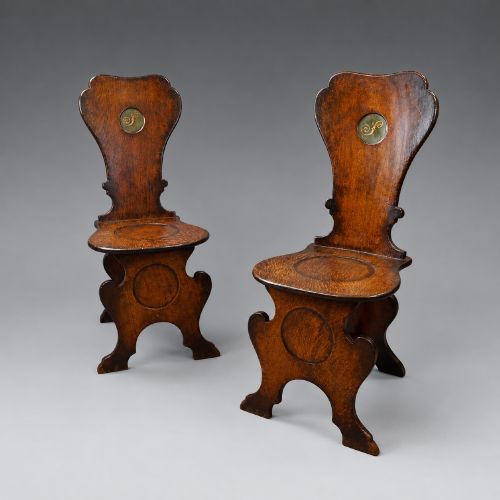
- Sgabello
- A portable wooden chair originating in the Italian Renaissance, featuring a solid back and trestle-like slab supports instead of conventional legs. These seats are occasionally rendered in nineteenth-century oak adaptations.
Victorian Carved Oak Hall Chairs: Frequently Asked Questions
Where were hall chairs placed?
These seats stood primarily in entrance halls, corridors, and grand reception areas to serve as practical furnishings for visitors waiting to be received.
They were designed more for visual impact and upright posture than for long periods of relaxation.
How do I identify a revival style?
Look closely at the decorative motifs carved into the oak backrests, such as pointed arches for Gothic or heavy geometric panels for Jacobean.
Makers frequently borrowed these historical vocabulary elements to give nineteenth-century seating an older, more established pedigree.
Are these chairs comfortable for daily sitting?
Most examples feature rigid wooden seats and straight, upright backs designed to encourage good posture rather than lounging.
Those fitted with leather pads, tapestry inserts, or upholstered panels offer slightly more cushion than their plain wooden counterparts.
Why are they often found in pairs?
Entrance furnishings were traditionally commissioned in matched pairs or larger sets to balance symmetrical architectural spaces within a hallway or foyer.
Surviving pairs retain their original decorative harmony, making them particularly desirable for interior display.