



Oak Entry Chairs Pair
These oak entry chairs pair practical seating with sturdy timber, offering an authentic period seat for a hallway or reception space.
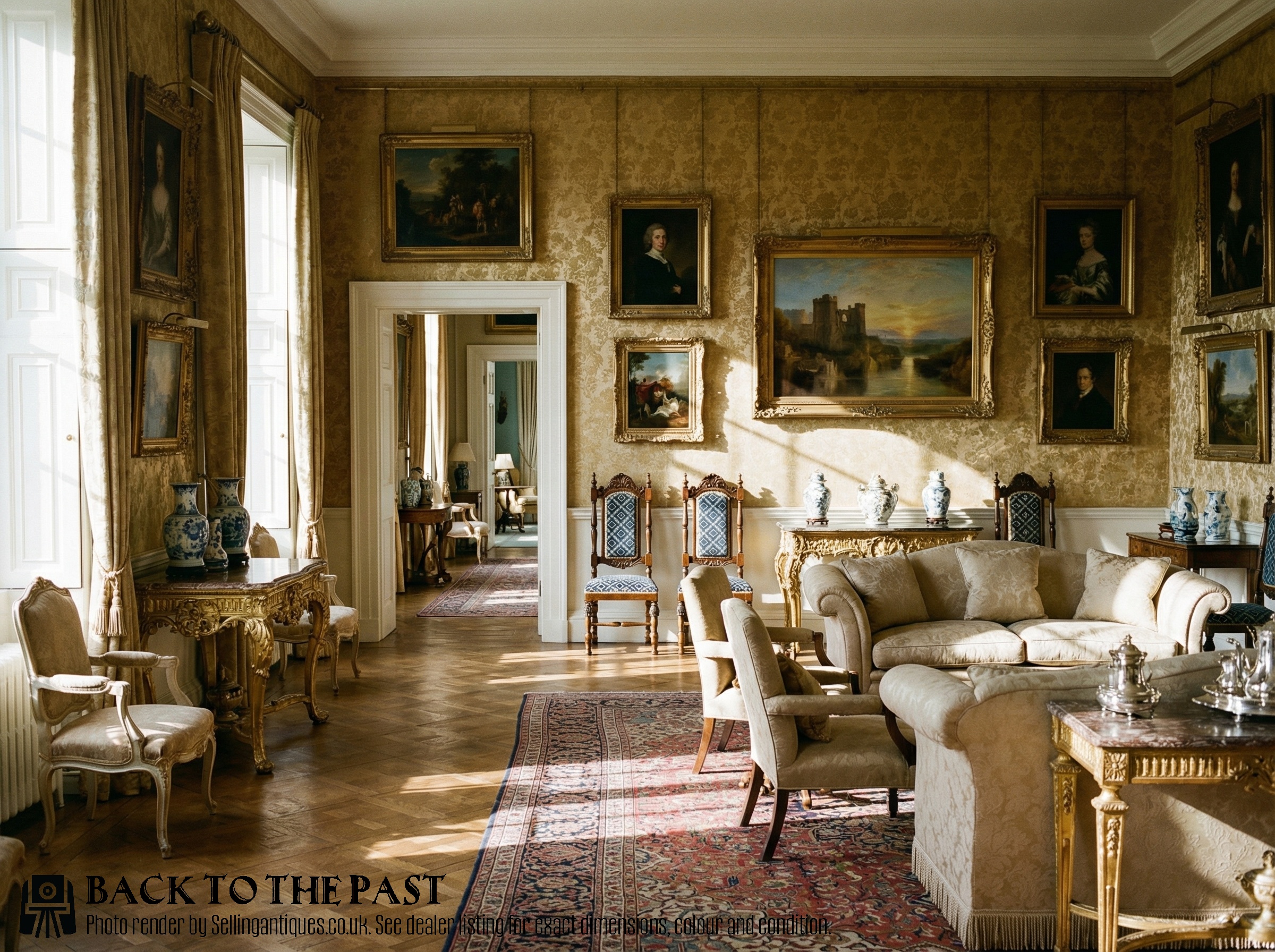
Oak Entry Chairs Pair
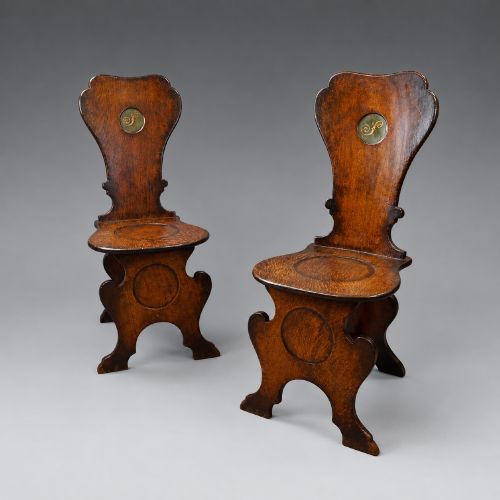
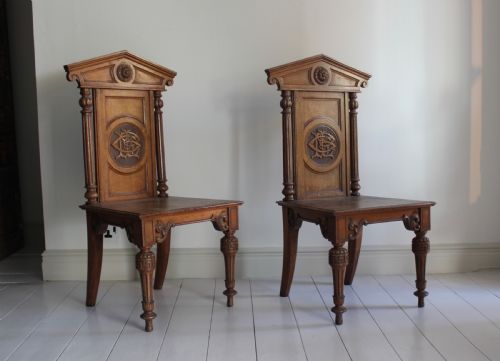
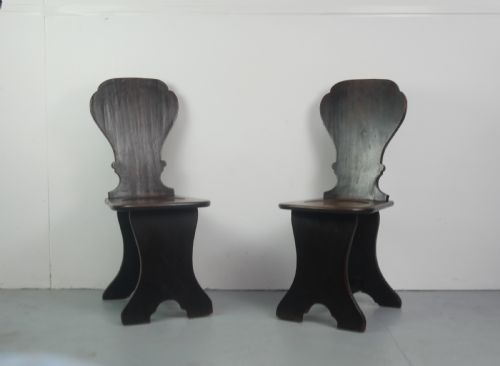
When searching for an oak entry chairs pair, buyers encounter pieces primarily originating from the Victorian and Regency periods, alongside 18th-century and 19th-century examples. These items function as hall chairs, side chairs, or reception seats designed for hallways and entryways.
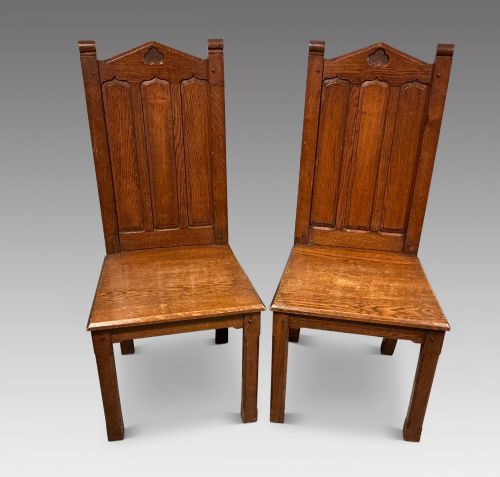
The selections on this page feature solid oak construction, sometimes enhanced with ceramic elements or fabric, and carved detailing that reflects styles such as Gothic Revival, Renaissance Revival, and Jacobean Revival.
English and Scottish origins dominate the listings, alongside Italian pieces, providing diverse regional interpretations of the form. Buyers frequently find Victorian and 19th-century interpretations ready for placement in traditional interiors.
Construction and Materials
These chairs rely primarily on solid oak, selected for durability and finished with carved details or paint. Workshops utilised traditional joinery to shape the timber into rigid frames suitable for heavy use in entrances.
Certain pieces incorporate ceramic tiles, such as Minton tiles, set into the wooden structure for decorative contrast. Fabric elements occasionally appear on the seating surfaces of specific Victorian and Regency variations.
Periods represented span from the 18th century through the Victorian era and Regency period.
Quality and Craftsmanship
The standard of carving sets the better examples apart, distinguishing deep, crisp relief work from flatter, simpler execution. Workshops that invested time in intricate Renaissance or Gothic motifs produced pieces with greater visual depth.
The choice of timber grain and the integrity of the solid oak frame determine structural longevity. Well-matched pairs demonstrate consistent timber selection and balanced proportions across both chairs.
Gillows of Lancaster
The Oak Entry Chairs Pair Glossary
- Sgabello
- A light wooden chair style originating from the Italian Renaissance, typically featuring a high back and solid trestle supports instead of four legs. These often serve as decorative hall seating.
- Hall chair
- A rigid wooden seat placed in an entryway or hallway for brief sitting rather than long comfort. They frequently display carved family crests or shields on the backrest.
- Gothic Revival
- An architectural and decorative style drawing on medieval forms, characterised by pointed arches, trefoils, and heavy carved tracery. It appears frequently on Victorian seating.
- Minton tiles
- Glazed ceramic tiles produced by the renowned English factory, occasionally integrated into the woodwork of Victorian furniture. They add colour and pattern to the oak frame.
- Regency
- The period of British design spanning the early nineteenth century, known for classical restraint and neoclassical motifs. Pieces from this era often show clean lines alongside traditional timberwork.
Oak Entry Chairs Pair: Frequently Asked Questions
Where should I place these chairs?
These pieces suit hallways, boot rooms, and entrance lobbies where occasional seating is useful. Their narrow profiles allow them to sit flat against a wall without obstructing movement.
They also function effectively in reception spaces or as accent seating in studies. The solid timber construction withstands high-traffic areas.
Were these seats meant for daily sitting?
Historical hall chairs served primarily for waiting or brief resting rather than long periods of relaxation. Their upright wooden backs encouraged proper posture in a hallway or reception area.
Modern owners often use them as decorative accents where comfort is secondary to visual impact. Adding a loose cushion can increase comfort for daily use.
How do I care for solid oak furniture?
Maintain the timber by dusting regularly with a dry cloth and avoiding placement near direct heat sources. Excessive temperature changes can cause the solid oak to dry out.
Apply a traditional beeswax polish occasionally to nourish the grain and protect the surface. Avoid harsh chemical cleaners that strip the historic finish.
How can I tell Victorian pieces apart?
Victorian examples often display heavier carving and distinct revival styles like Gothic or Jacobean influences. They frequently feature dark, rich finishes and solid oak frames built for sturdiness.
Earlier Regency pieces generally present cleaner lines and lighter proportions. Comparing the carved motifs and leg styles helps clarify the period of origin.