



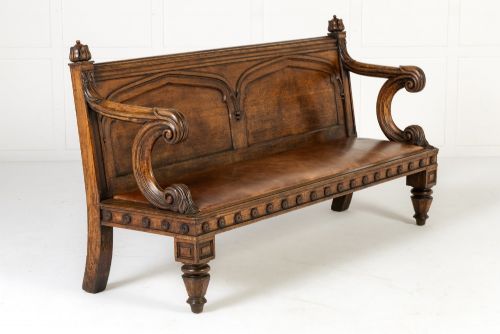

Victorian Carved Oak Hall Bench
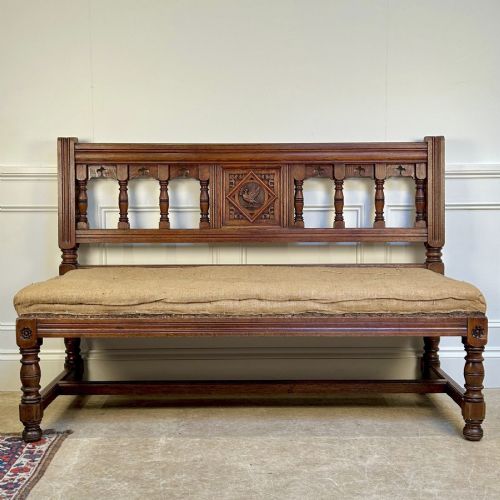
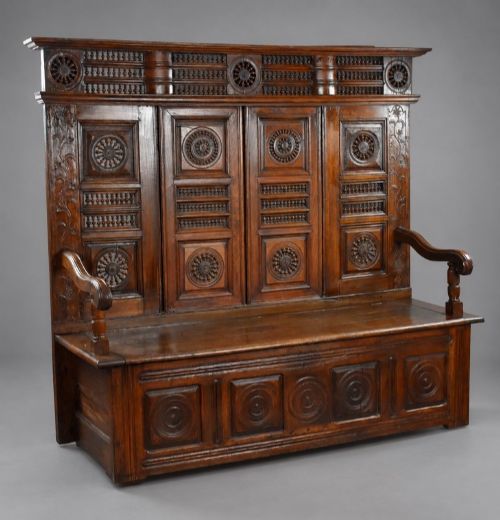
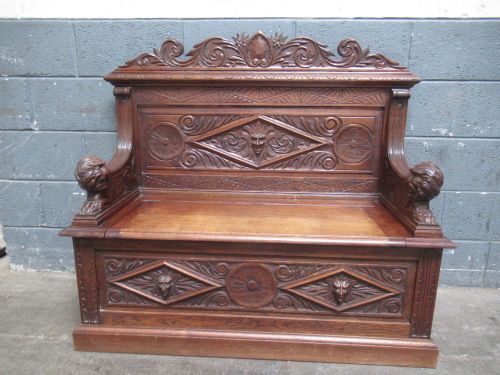
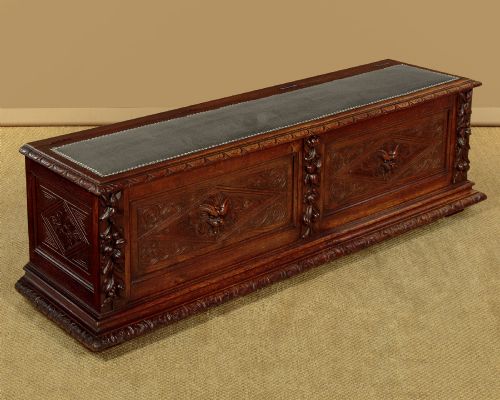
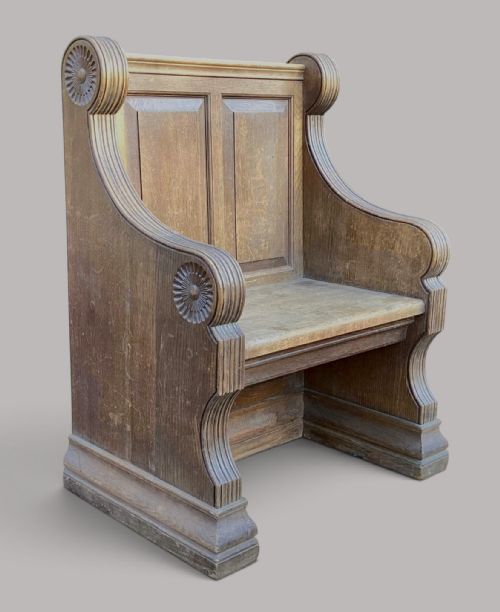
A victorian carved oak hall bench offers a sturdy architectural presence in an entranceway, combining heavy timber with deep relief carving.
Victorian Carved Oak Hall Bench
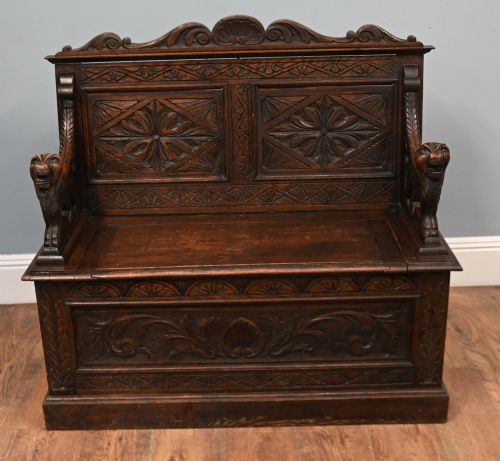
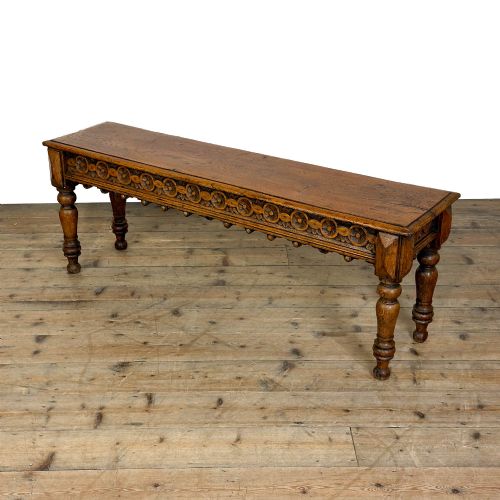
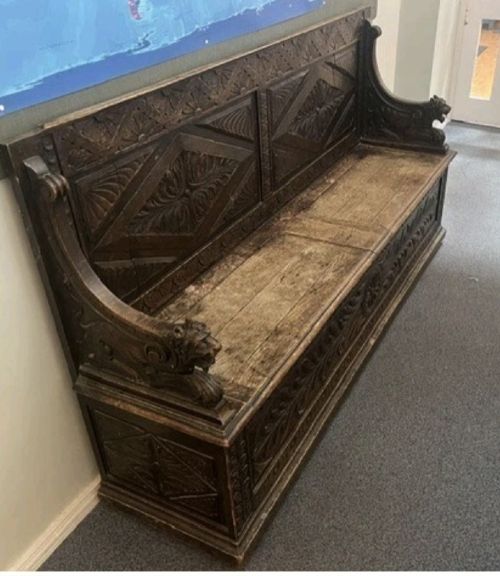
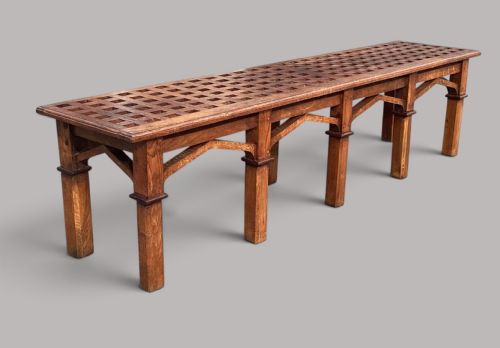
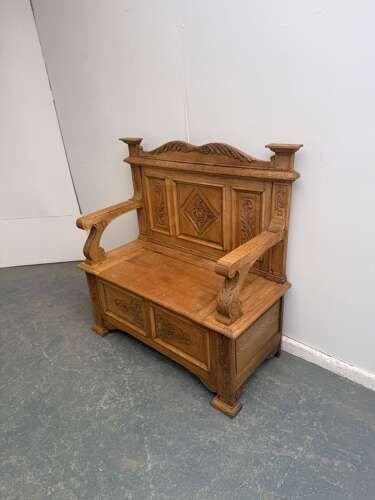
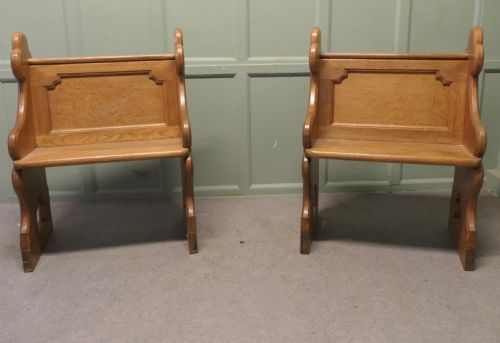
A victorian carved oak hall bench brings together nineteenth-century seating and storage formats designed for grand or modest corridors. The pieces on this page span the Victorian era alongside related nineteenth-century workshops, ranging from straightforward panelled settles to multi-functional monk's benches with lift-up box seats.
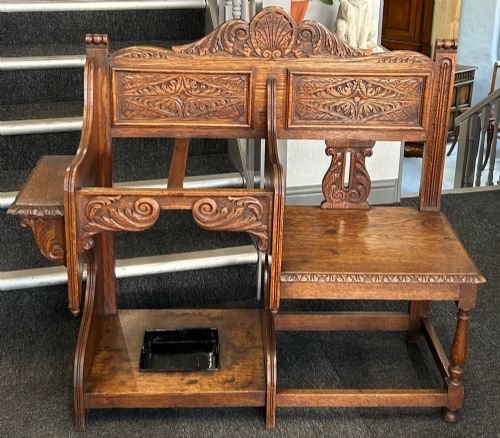
Makers of the period drew upon historic vocabulary, producing settles, window seats, and hall stands that integrated hat hooks, stick stands, and boot cupboards. These seating items served practical domestic utility while establishing an imposing architectural character for visitors upon entry.
Materials and Construction
Solid oak forms the primary structural foundation of these pieces, frequently complemented by secondary timbers such as elm or burr elm for specific panels and seats. Workshops utilised traditional joinery methods including pegged tenons, panelled construction, and heavy box compartments.
Metal elements such as brass and iron appear in structural brackets, hinges, and coat hooks, while occasional upholstery utilises hessian, leather, or fabric. Surface treatments rely upon waxed finishes that highlight the natural grain and deep hand-carved ornamentation.
Victorian Carved Oak Hall Bench Retail Price Guide 2026
Typical asking prices for victorian carved oak hall bench among the pieces listed under this phrase on Sellingantiques today, from the lower quarter to the upper quarter. They describe what is for sale here now, not the wider market.
Several examples incorporate hinged compartments originally intended for muddy boots, heavy woollen cloaks, and wet walking sticks.
Distinctions in Execution
The standard of carving dictates much of the distinction between standard utilitarian seating and exceptional cabinetwork. Crisp, deep relief work executed by hand distinguishes superior panels from mechanical or shallow tooling.
Proportion, timber selection, and integrated hardware further separate the output of standard regional joiners from notable firms. Denser grain configurations and cohesive architectural detailing indicate higher workshop ambition.
GIllows·James Shoolbred & Co.
The Victorian Carved Oak Hall Bench Glossary
- Settle
- A wooden bench featuring a high back to shield against drafts, often incorporating a concealed storage compartment beneath the seat.
- Monk's bench
- A convertible form possessing a hinged back that folds down to transform the seating unit into a table.
- Gothic Revival
- A design style inspired by medieval architecture, characterised by pointed arches, tracery, and heavy structural proportions.
- Arts and Crafts
- A movement prioritising visible construction, honest materials, and handcrafted simplicity over mass-produced ornamentation.
- Renaissance Revival
- A historicist style drawing upon sixteenth-century architectural motifs, cartouches, and elaborate figurative carving.
Victorian Carved Oak Hall Bench: Frequently Asked Questions
What is a monk's bench?
A monk's bench combines a seat with a folding back mechanism that converts the furniture piece into a flat table surface.
This dual-purpose design provided practical utility in smaller entrance spaces during the nineteenth century.
How do I identify Gothic Revival pieces?
Gothic Revival items display architectural motifs such as pointed arches, quatrefoils, and heavy structural framing inspired by medieval buildings.
Makers utilised these elements to project an aura of antiquity and solemn dignity in domestic hallways.
Where were hall benches placed?
Hall benches stood in entranceways and corridors to provide seating for putting on shoes as well as storage for outdoor garments.
Many examples integrated hat pegs, umbrella stands, or lift-up box compartments to contain everyday items.
What timber was used?
Solid oak serves as the predominant timber across these listings, offering structural strength and a heavy surface suitable for deep carving.
Secondary woods like elm and burr elm occasionally appear in seat panels and decorative accents.