


Victorian Carved Mahogany Whatnot
A victorian carved mahogany whatnot offers tiered display shelving that brings practical elegance and rich timber tones to a traditional interior.
Victorian Carved Mahogany Whatnot
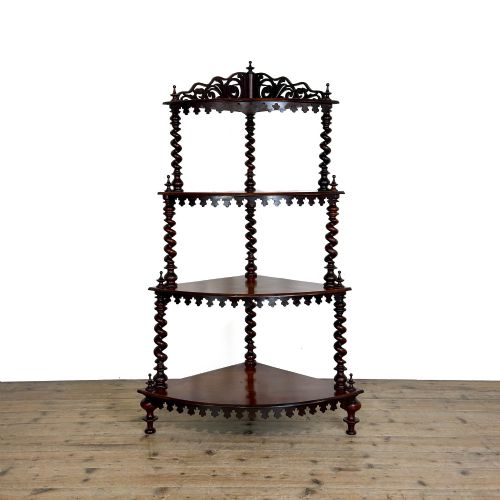
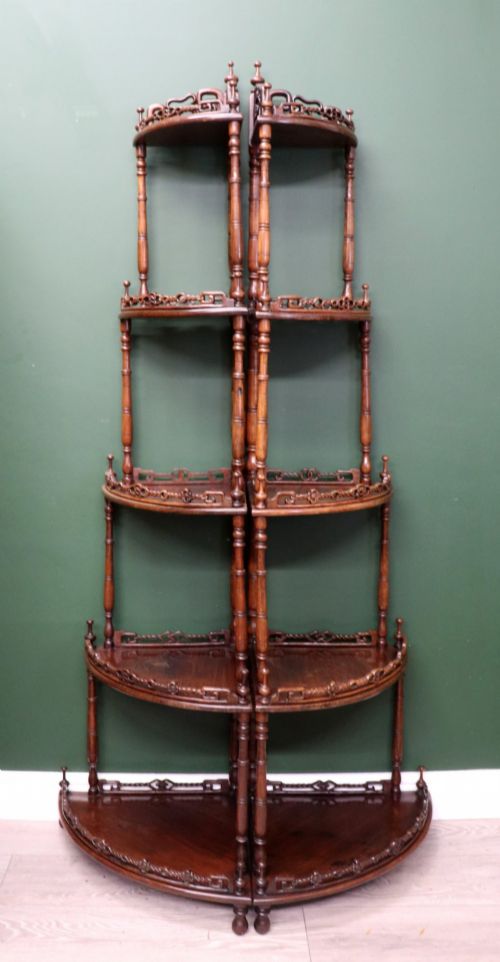
A victorian carved mahogany whatnot is a multi-tiered shelving unit designed for displaying decorative objects, books, and curiosities within the home. The pieces found here range from open corner shelves and three-tier etageres to substantial mirror-backed display cabinets dating from the nineteenth century.
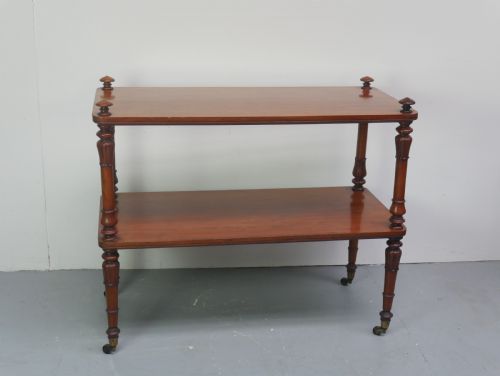
Makers of the period produced both freestanding rectangular stands and clever corner designs to fit domestic spaces efficiently. Mahogany remains the dominant timber, often enhanced by turned supports, carved detailing, and occasionally drawers or mirrored backs.
How they were made
Cabinet makers utilised solid mahogany and polished veneers over secondary timbers, turning upright supports on a lathe to create barley twist or column profiles. Joinery relied on traditional housing and tenon methods to support stacked tiers without losing structural stability.
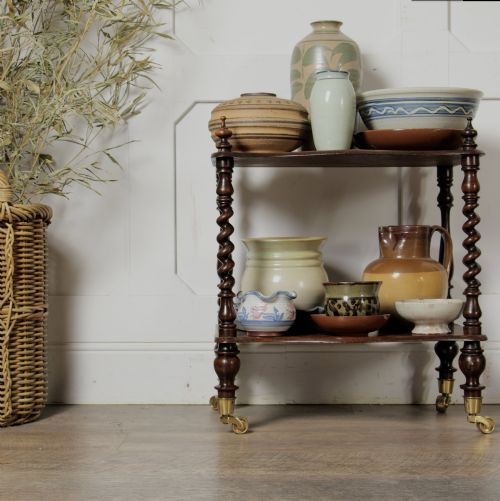
Carved ornamentation was applied by hand to crests and splats, while brass castors and fittings allowed these tall pieces to be moved across carpets safely. Selected examples incorporate inlaid marquetry or ebonised highlights to contrast against the warm red-brown grain of the mahogany.
What varies in quality
The distinction between standard domestic pieces and finer workshop output lies in the crispness of the timber carving and the selection of the mahogany stock. Dense grain figures and substantial timber thickness indicate superior cabinet making.
Complexity of form also separates simpler open shelves from elaborate étageres featuring integrated mirrors, turned pillars, and fitted drawers. Original brass hardware and intact structural joints elevate the standing of an individual piece.
The Victorian Carved Mahogany Whatnot Glossary
- Whatnot
- A multi-tiered piece of furniture designed for holding ornaments or books, developed during the eighteenth century and popular throughout the Victorian era.
- Etagere
- A set of open shelves for displaying small objects, similar in function to a whatnot and often lighter in construction.
- Barley twist
- A decorative turning technique resembling a twisted rope, frequently used for the upright supports of nineteenth-century stands.
- Marquetry inlay
- Decorative patterns formed by fitting contrasting veneers into timber panels to create ornamental designs.
- Ebonised wood
- Timber stained or painted black to imitate ebony, commonly used for contrast on Victorian furniture.
Victorian Carved Mahogany Whatnot: Frequently Asked Questions
What is a whatnot used for?
These tiered stands were originally designed to hold small decorative objects, porcelain, and books in Victorian drawing rooms and parlours.
Today, they serve a similar purpose in modern homes, providing vertical display space for collections without occupying a large floor area.
How do I date a whatnot?
Dating relies on stylistic markers such as turned pillars, applied mirror backs, and the specific grain and colour of the mahogany timber.
Nineteenth-century examples often exhibit hand-cut joinery and traditional French polish finishes that distinguish them from later reproductions.
Are corner whatnots sturdy?
Corner units distribute weight effectively against two walls, making them stable platforms for displaying heavy books or ceramic collections.
Their triangular footprint prevents wobbling when placed correctly into a ninety-degree room corner.
What wood was used?
Mahogany is the primary timber seen across these listings, valued for its strength, rich reddish-brown colour, and ability to take fine carvings.
Some examples combine this with walnut, rosewood, or ebonised wood elements to create visual contrast on the shelves and supports.