


Barley Twist Tier Shelf
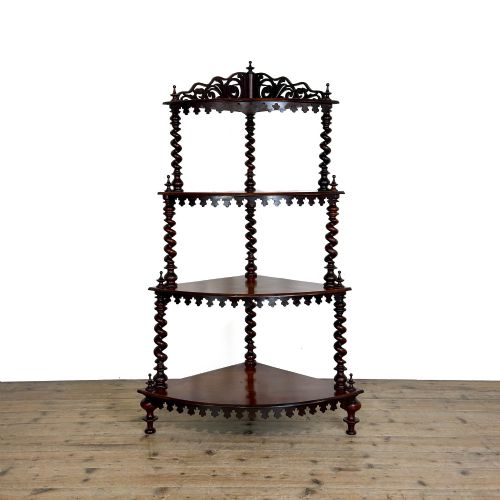
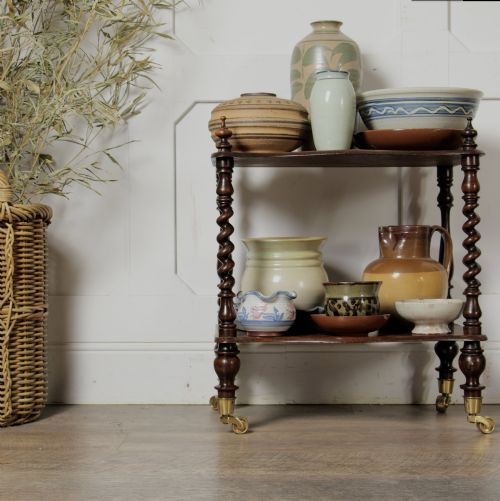
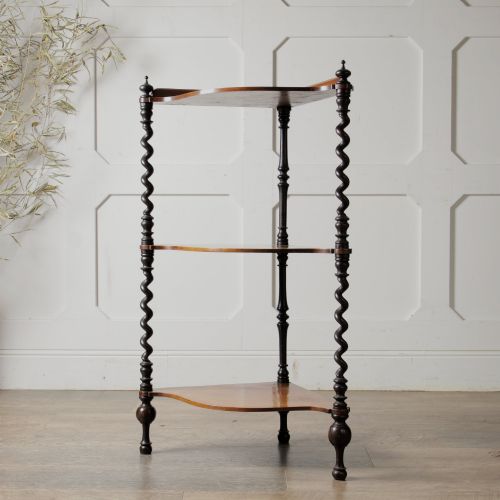
A barley twist tier shelf is a multi-level display piece defined by spiralled supports, sought for vertical storage and rich timber grain.
Barley Twist Tier Shelf
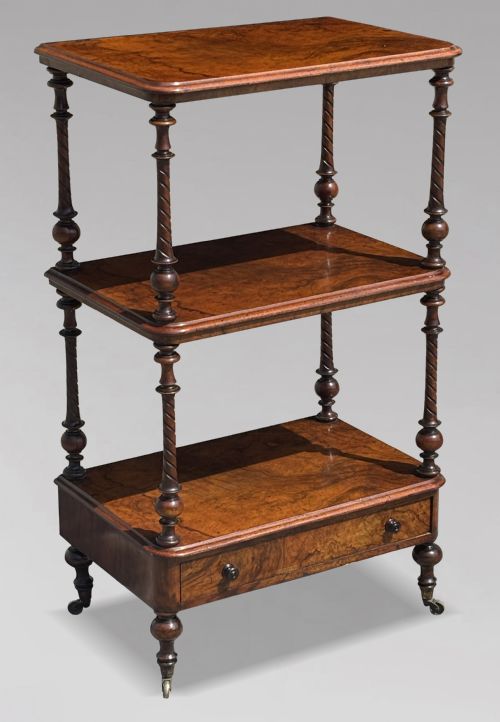
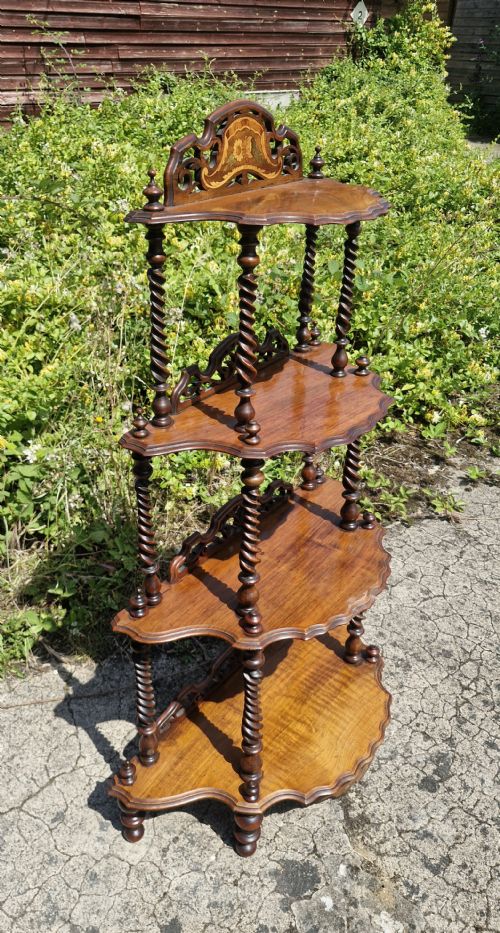
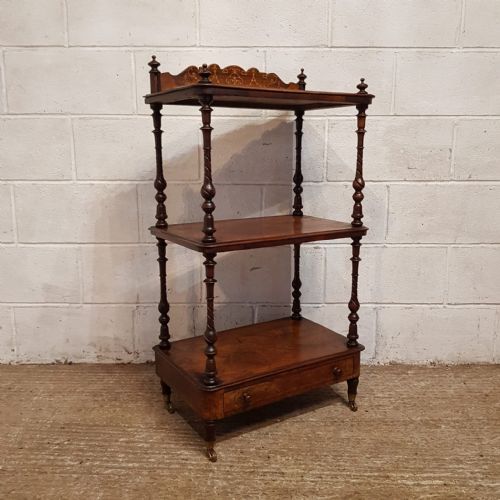
When searching for a barley twist tier shelf, buyers encounter multi-tiered display furniture designed for vertical storage and ornament. These pieces appear predominantly as Victorian whatnots, etageres, and tiered stands featuring distinct spiralled uprights.
The material palette spans walnut, burr walnut, mahogany, and rosewood, alongside oak and teak. Pieces take both linear and corner configurations, often incorporating multiple tiers supported by turned columns.
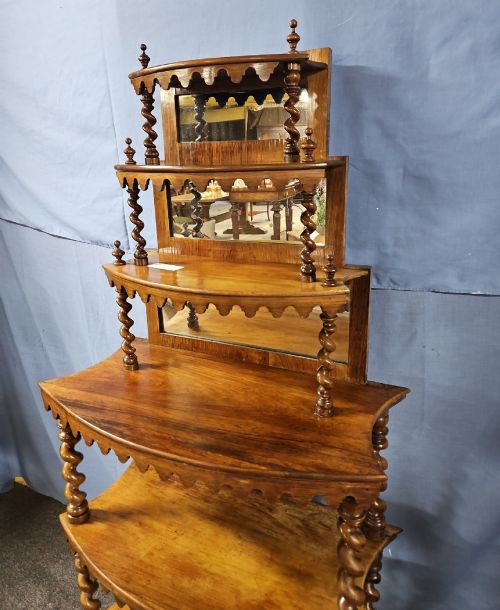
Victorian examples dominate the available selection, accompanied by Edwardian and Regency pieces. Forms range from simple open shelving units to designs fitted with single drawers or lower cabinets.
How they were made
Cabinetmakers constructed these tiers using dense hardwoods such as mahogany, walnut, and rosewood, occasionally employing burr veneers for figured surfaces. Wood inlay and brass details appear alongside marble and glass elements.
The characteristic spiral columns required precise lathe work to shape the twisted uprights. Shelves were joined to these uprights using traditional cabinet joints, sometimes incorporating turned or hollow barley twist members.
What varies in quality
Quality rests in the choice of timber and the crispness of the turned spiral supports. Highly figured burr walnut and rich rosewood elevate a piece above standard mahogany or oak constructions.
Refinement shows in the joinery of multiple tiers and the presence of integrated drawers or delicate wood inlay. Pieces displaying balanced proportions across five or six tiers demonstrate superior workshop execution.
The Barley Twist Tier Shelf Glossary
- Barley twist
- A decorative turning technique resembling a spiralled rope or barley sugar stick. This form provides the defining vertical support for these tiered shelves.
- Whatnot
- A moveable set of open shelves used for displaying ornaments and books. Victorian makers produced these in numerous tier configurations.
- Etagere
- A piece of furniture consisting of a set of open shelves for displaying small objects. These French-influenced stands often match the form of a whatnot.
- Burr walnut
- A specialised wood grain obtained from tree growths, producing intricate patterns. Cabinetmakers used these veneers on high-status display furniture.
- Canterbury
- A low stand traditionally fitted with divisions for holding sheet music or papers. Some multi-tiered examples combine this lower compartment with upper display shelves.
Barley Twist Tier Shelf: Frequently Asked Questions
What is a barley twist tier shelf used for?
These tiered structures serve as display stands for porcelain, books, and decorative objects. Their vertical format allows collectors to present collections without occupying significant floor space.
Historically placed in parlours and drawing rooms, they functioned as mobile display units. Today, they remain practical for organising items in contemporary living spaces.
How do I identify a Victorian whatnot?
Victorian whatnots typically feature three to six stacked wooden shelves held by turned uprights. Look for dense timbers like walnut, rosewood, and mahogany.
Many examples incorporate corner designs or single drawers beneath the lower tier. Dating relies on the timber choice, turning style, and construction methods characteristic of the nineteenth century.
Are these shelves sturdy enough for heavy books?
Most tiers are designed for lighter display items, ceramics, and small volumes rather than heavy reference libraries. The weight is distributed across slender turned columns.
Heavier loads should rest on the bottom tier where support is most stable. Taller multi-tier versions benefit from placement against a wall for added security.
What is the difference between a whatnot and an etagere?
The terms largely overlap in nineteenth-century furniture trade, both describing multi-tiered shelving units. Etagere often implies a French influence and delicate proportions.
Whatnot is the more common English term for these open display stands. Both formats utilise turned columns and multiple platforms for ornament.