
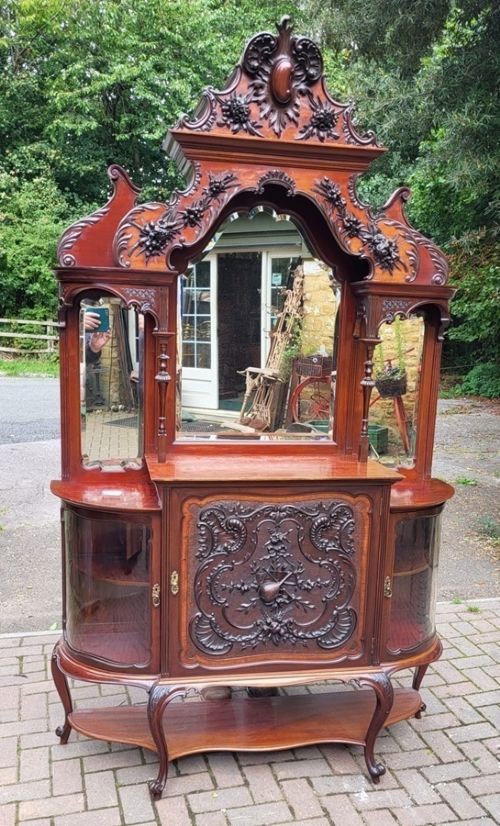


Victorian Carved Mahogany Chiffonier
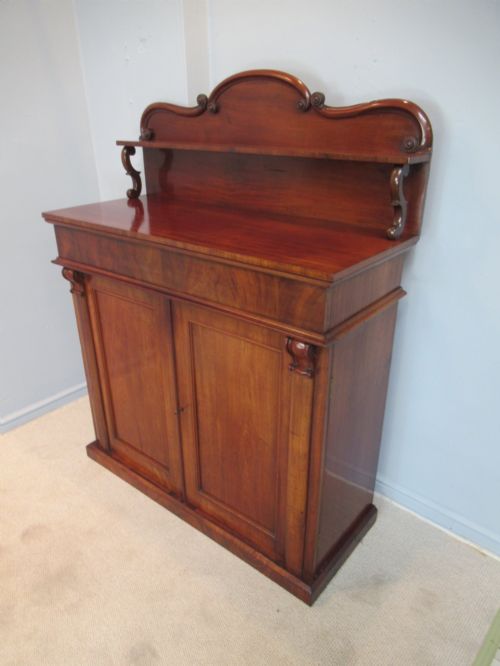
A victorian carved mahogany chiffonier brings sturdy utility and rich timber grain to a dining room or hallway.
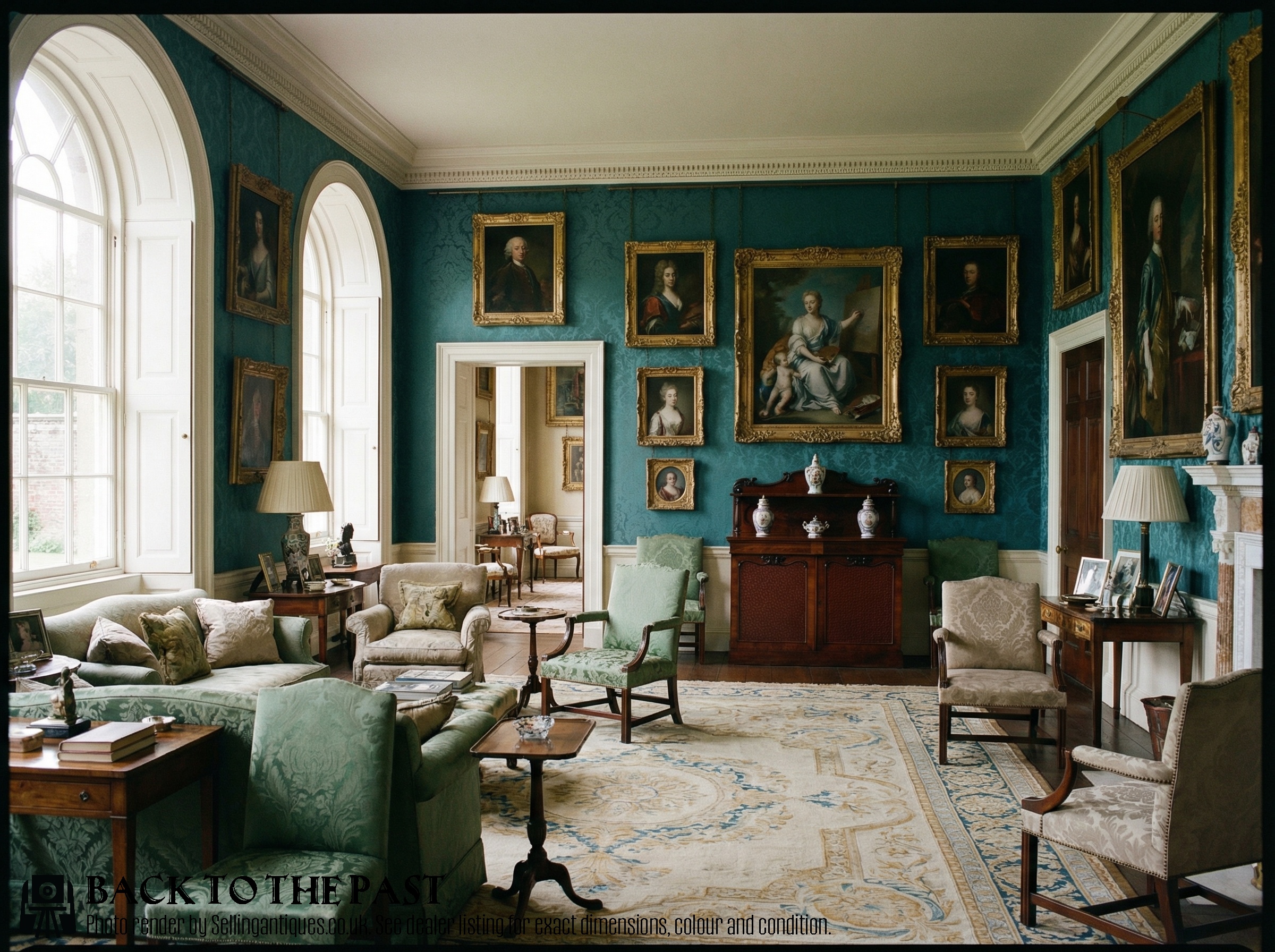
Victorian Carved Mahogany Chiffonier
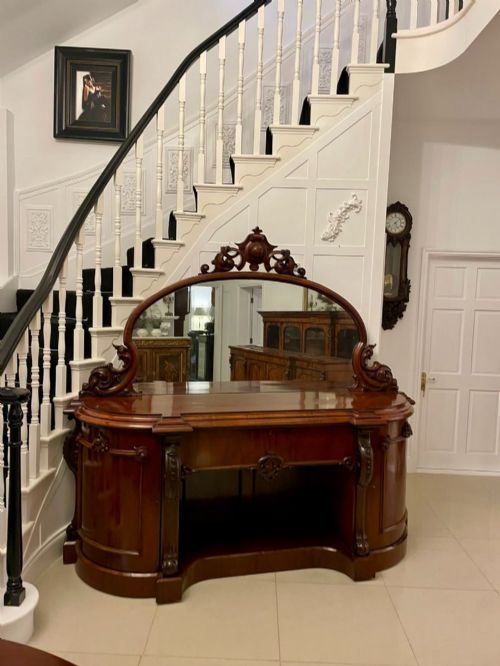
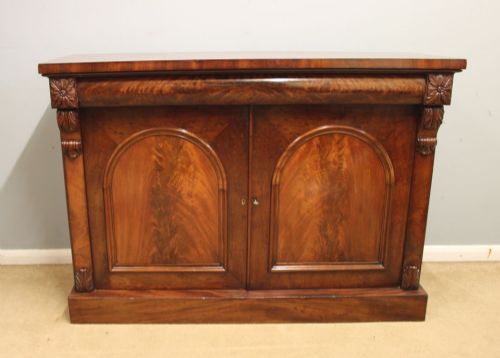
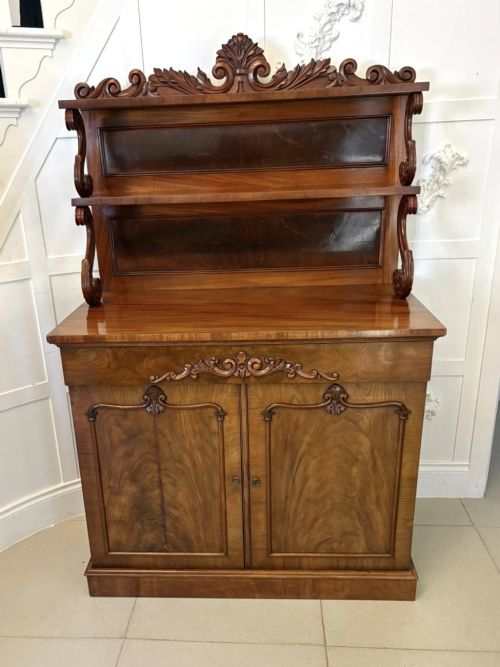
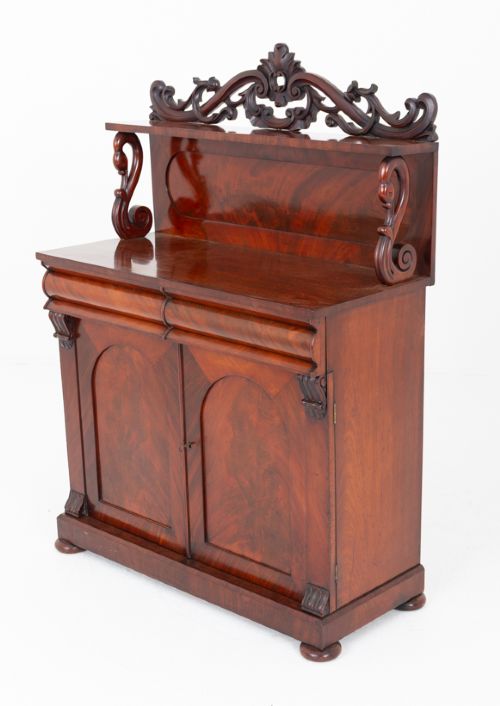
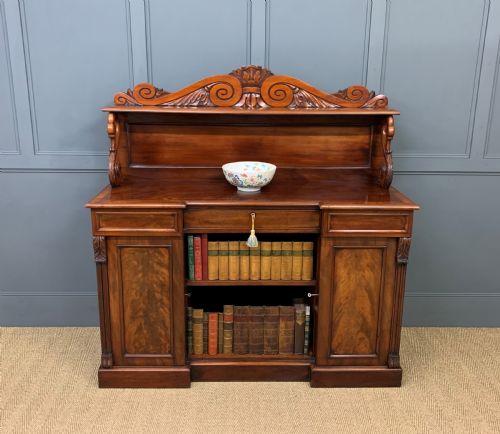
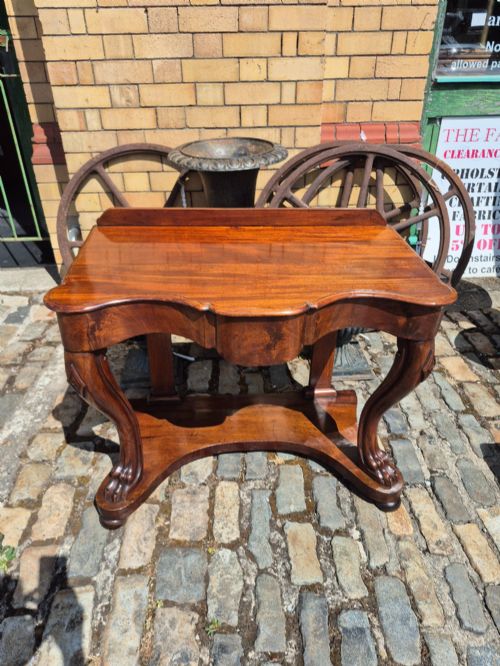
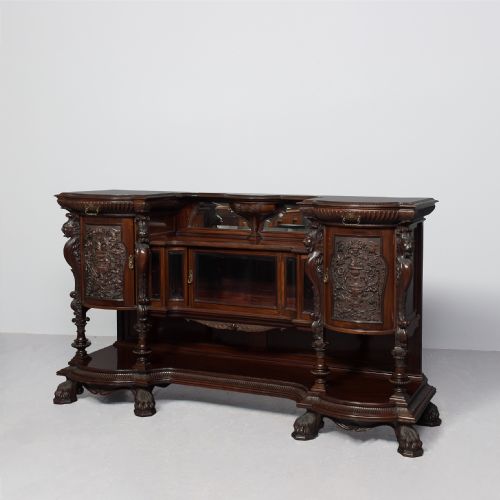
A victorian carved mahogany chiffonier functions primarily as a low sideboard or serving cabinet, combining enclosed lower cupboards with display space or a raised back. The pieces seen span the nineteenth century, with Victorian, Regency, and William IV periods represented alongside specific decades from eighteen-fifty to eighteen-ninety.
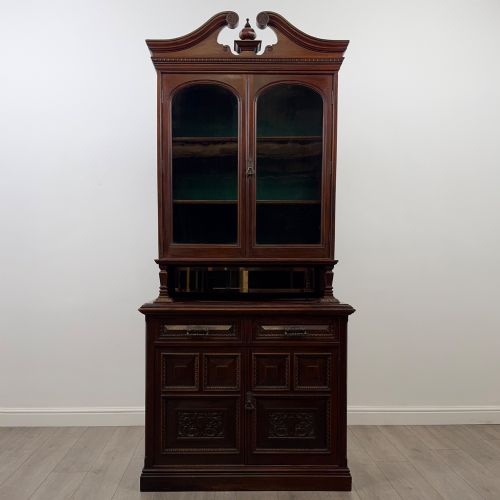
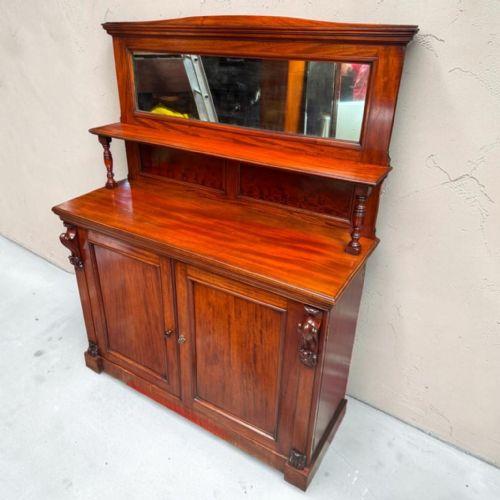
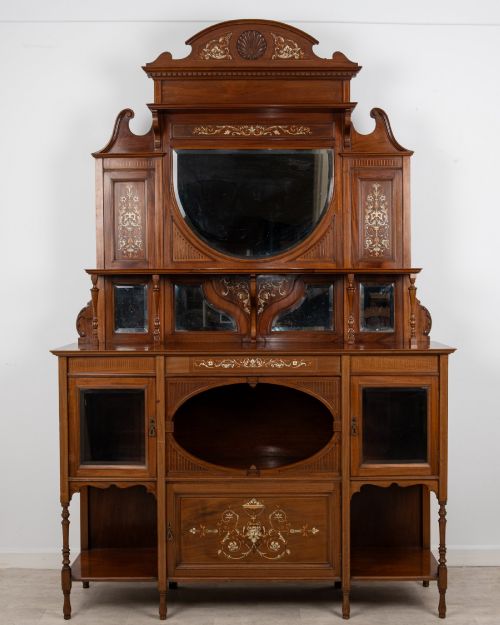
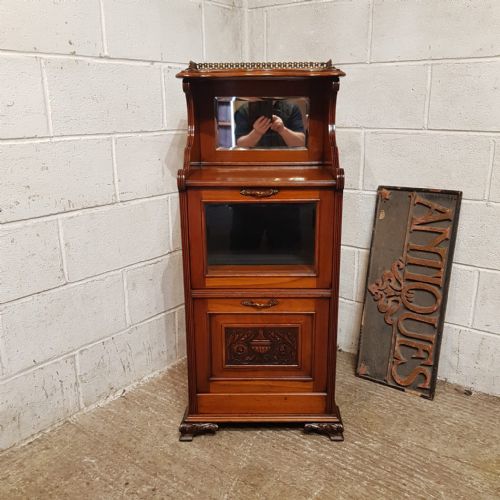
Most examples take the form of sideboards, side cabinets, and bookcase-topped combinations. The typical format encountered includes a solid mahogany or flame mahogany veneer structure, often featuring carved scrollwork and mirror glass within the back panel.
How they were made
Cabinet makers utilised solid mahogany and flame mahogany veneers applied to secondary timbers to achieve rich figured surfaces on door panels and drawer fronts. Carved ornamentation such as scroll motifs and applied moulding required skilled hand chiselling.
Glass panels and mirror glass were integrated into the upper display sections or backing boards, while brass fittings and hardware secured doors and drawers in place.
One solid mahogany chiffonier bears later sign-writing for the Red Lion public house, recording a robust second career.
What varies in quality
The selection of timber grain heavily influences the visual impact, particularly where highly figured flame mahogany veneer is matched across drawer fronts and cupboard doors. Crispness in the hand-carved details and structural robustness also set finer examples apart from plainer utility items.
Integration of original mirror glass and well-fitted internal shelving indicate higher tier workshops. Consistency in proportion between the lower cabinet base and any raised mirror back governs overall visual balance.
Robert Strahan
The Victorian Carved Mahogany Chiffonier Glossary
- Chiffonier
- A low sideboard or cabinet, typically fitted with cupboards below and sometimes a shelf or mirror back above. It evolved from a smaller writing or multi-purpose table into a principal dining room storage piece.
- Flame mahogany veneer
- A thin slice of mahogany timber cut from the fork of the tree where branches meet the trunk, producing a distinctive flickering flame pattern. Cabinet makers laid this over stable secondary woods.
- Breakfront
- A piece of furniture where the central section projects forward from the flanking sides. This layout adds architectural depth and shadow to large sideboards and bookcases.
- Mirror back
- An upright wooden frame fitted with a mirror plate attached to the rear of a sideboard or chiffonier. It reflects light and displays small ceramic or glass objects placed on the shelf beneath it.
Victorian Carved Mahogany Chiffonier: Frequently Asked Questions
What is a chiffonier used for?
A chiffonier serves as a low storage cabinet designed for dining rooms and parlours. It holds tableware, linens, and bottles behind closed cupboard doors.
The upper surface and any associated tier or mirror back provide display space for decorative objects, serving as a secondary sideboard.
How do I date a chiffonier?
Dating relies on stylistic shifts from Regency and William IV heaviness to high Victorian carved ornamentation and late Victorian restraint. Construction methods and wood selection also offer clues.
Screws, backboards, and mirror glass types help narrow the decade of manufacture, matching the broader Victorian and nineteenth century timeline.
Are mirror backs original?
Many Victorian chiffoniers incorporate mirror glass into their raised backs as an integrated component. Assessing the timber framing around the glass helps confirm originality.
Signs of continuous ageing between the base cabinet and the mirror structure indicate whether the upper section belongs to the piece.
How do I care for mahogany?
Mahogany requires stable room humidity and protection from direct sunlight to prevent timber splitting and veneer lifting. Regular dusting with a dry cloth maintains the surface.
Occasional application of appropriate wax polish preserves the depth and sheen of the wood grain without building up heavy residues.